
 By Ali Ikhwan
In the competitive landscape of e-commerce, the "Print-on-Demand" (POD) model has revolutionized how entrepreneurs launch fashion lines and merchandise brands. By eliminating the need for inventory, warehousing, and complex logistics, platforms like Tapstitch and Printful have democratized retail. However, as the market matures, the divide between generalist POD providers and specialized, high-end apparel fulfillment has widened.
Choosing between Tapstitch and Printful is no longer just a matter of price; it is a strategic decision that dictates your brand’s quality ceiling, its global reach, and its ability to scale. This comprehensive analysis breaks down the battle between these two industry titans to help you determine which platform aligns with your business goals.
The Core Conflict: Breadth vs. Specialization
To understand the current market, one must recognize the divergent philosophies behind these two companies. Printful is the industry standard—a massive, global infrastructure designed to support everything from a side-hustle Etsy shop selling mugs to a corporate enterprise requiring custom-branded merchandise at scale.
Tapstitch, by contrast, is a boutique disruptor. It has carved out a niche by ignoring the "everything-store" approach in favor of a hyper-focused apparel strategy. It targets the "streetwear" demographic: creators who demand heavyweight cotton, oversized fits, and garment-grade finishes that feel more like retail-store clothing than promotional merchandise.
A Chronological Perspective: Evolution of the POD Landscape
The Rise of the Generalist (Printful)
Founded in 2013, Printful was a pioneer in the automated fulfillment space. Over the last decade, it built an expansive network of 12+ facilities across North America, Europe, and Asia. Its growth trajectory was fueled by an aggressive integration strategy, connecting to every major marketplace (Amazon, eBay, TikTok Shop, Shopify) and constantly expanding its SKU count to include home goods, wall art, and accessories.
The Rise of the Specialist (Tapstitch)
Tapstitch entered the fray more recently, identifying a "quality gap" in the POD market. Many fashion-forward brands found that while Printful was reliable, the standard blank tees often felt thin or lacked the "premium" drape required for high-end streetwear. Tapstitch emerged by vertically integrating its production, focusing on high-GSM (grams per square meter) fabrics and modern DTG (Direct-to-Garment) and DTF (Direct-to-Film) printing techniques that mimic high-street retail standards.
Supporting Data: By the Numbers
When we look at the operational data, the trade-offs become clear. The following table illustrates the baseline differences in platform capabilities:
| Feature | Tapstitch | Printful |
|---|---|---|
| Catalog Focus | Apparel (Heavyweight/Streetwear) | Generalist (479+ SKUs) |
| Global Reach | US & China facilities | 12+ Global fulfillment hubs |
| Print Tech | Advanced DTG/DTF | DTG, Embroidery, Sublimation, UV |
| Marketplaces | Shopify, Etsy, Wix | 21+ (Amazon, TikTok, API, etc.) |
| Pricing Model | Pay-per-order (Free) | Free + Optional $24.99/mo Growth Plan |
Cost Implications
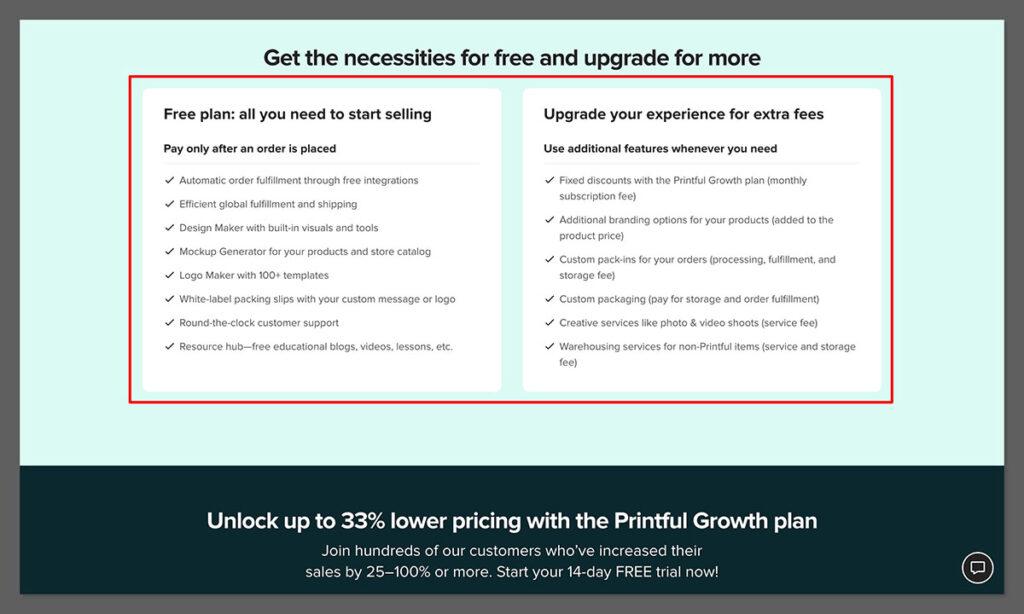
For the average entrepreneur, the cost difference is negligible at low volumes. A standard branded t-shirt shipped within the US costs approximately $22.95 via Tapstitch and $21.73 via Printful. However, for high-volume sellers, Printful’s "Growth" subscription model—which provides up to 33% off—drastically lowers the cost-per-unit, making it the superior choice for scaling businesses.
Official Stances and User Experience
Printful: The Reliable Powerhouse
Printful’s official position has always been one of stability. Their infrastructure is designed to minimize risk. By maintaining multiple global facilities, they ensure that if one site goes offline, production can be rerouted. Their "Growth" plan is marketed as an investment in a seller’s future, offering not just discounts but advanced analytical tools and custom branding features like internal pack-ins and branded packing slips.
Tapstitch: The Fashion-First Challenger
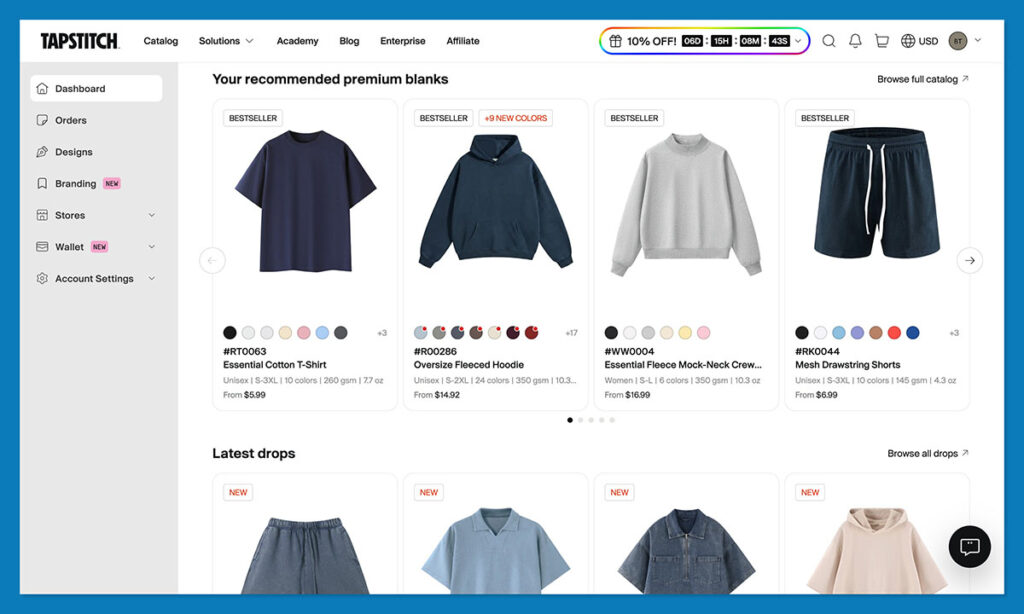
Tapstitch’s messaging centers on the quality of the "blank." They argue that the garment is the primary marketing asset. By utilizing in-house facilities, they claim tighter control over print placement and ink saturation. User feedback generally supports this, with many creators reporting that Tapstitch garments hold up better through repeated wash cycles compared to standard POD industry offerings.
Strategic Implications: Which One Should You Choose?
When Printful is the Smarter Investment
Printful is the "safe" bet and, for 90% of sellers, the correct one. You should choose Printful if:
- You need multi-channel reach: If you plan to sell on Amazon, TikTok Shop, or WooCommerce, Printful’s extensive API and pre-built integrations are non-negotiable.
- You want a diverse product line: If your brand includes phone cases, hats, or posters, Tapstitch cannot support you.
- Your customers are global: If you have a strong customer base in Europe or Australia, Printful’s localized fulfillment is essential to avoid the high shipping costs and long wait times associated with centralized shipping.
When Tapstitch is the Strategic Advantage
Tapstitch is a specialized tool for a specific type of brand. You should choose Tapstitch if:
- You are building a clothing brand, not a merch store: If your business model depends on the "feel" and "drape" of the fabric, Tapstitch’s high-GSM hoodies and oversized tees are vastly superior to standard POD blanks.
- You prioritize print precision: For brands that use large-scale, intricate graphics, Tapstitch’s in-house production offers more consistent print placement than the high-volume model of larger competitors.
- Your audience is US-centric: If your primary market is North America, Tapstitch’s LA-based production ensures high-quality, fast shipping without the need for complex global routing.
The Verdict: A Balanced Approach
The reality is that these two platforms are not strictly competitive; they are complementary. A mature brand might use Printful for its general merchandise and accessory line while reserving Tapstitch for its "Premium Collection" or seasonal streetwear drops.
The "Proof is in the Sample" Rule:
Before committing your brand’s reputation to either platform, order samples from both. Use your most complex design. Wash the samples five times. Check the neck labels. Inspect the print saturation on dark fabrics. While the data suggests Printful for scale and Tapstitch for quality, your specific design file might perform differently on one machine versus the other.
Conclusion: Final Considerations
As the POD industry continues to evolve, the "one-size-fits-all" era is ending. Sellers are increasingly becoming brands, and brands demand specific standards.
If your goal is to build a massive, diversified e-commerce empire, Printful remains the gold standard. Its infrastructure, global footprint, and software ecosystem provide a foundation that is difficult to challenge.
If your goal is to build a high-end, apparel-focused fashion line that prioritizes the tactile experience of the garment, Tapstitch is the clear leader. By sacrificing the broad catalog and global shipping density, you gain a product that feels like a boutique retail item rather than a print-on-demand drop.
The barrier to entry for both is low—neither requires a significant upfront investment. Use that to your advantage: test the products, stress-test the integration, and decide which platform’s limitations are the ones you are most comfortable working around. In the world of modern e-commerce, the right partner isn’t the one that is "best" on paper, but the one that makes your specific business model viable.
 Dwi Wanna
  Lina Irawan
  Basiran