
 By Jia Lissa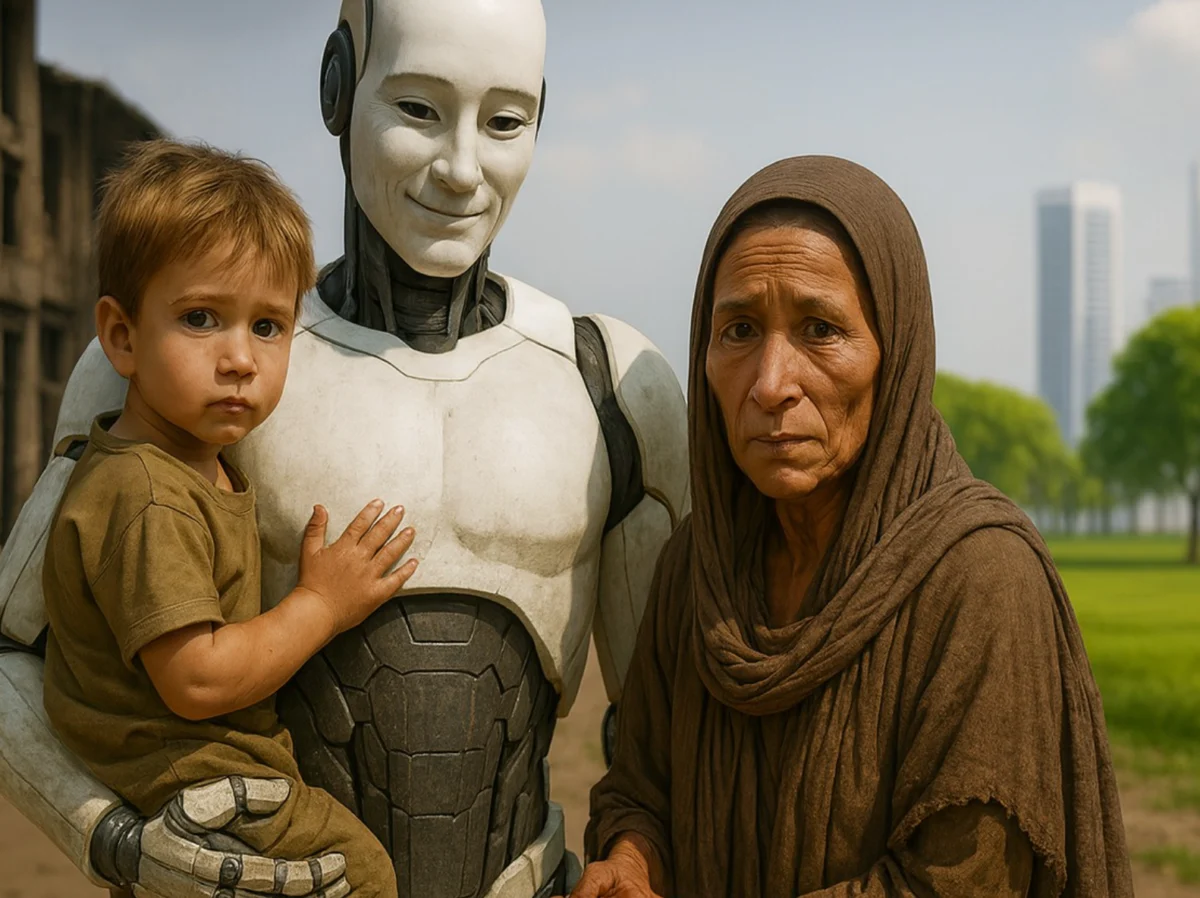
Main Facts: The End of the PR Stunt Era
For decades, the concept of the "android revolution" was a comfortable fixture of science fiction, a distant speculative future safely confined to cinema and literature. However, we have officially transitioned past the era where humanoid robots were mere public relations curiosities. The boundary between human and machine is no longer a clear line; it is a blurring spectrum.
The current landscape is defined by an aggressive pivot from laboratory research to industrial and commercial deployment. Unlike their predecessors—such as Honda’s ASIMO, which was celebrated for the simple act of climbing stairs—today’s humanoid robots are being integrated into the global workforce. Companies like Figure AI and Tesla are no longer building toys; they are building autonomous laborers. Figure AI’s "Figure 02" model recently completed a multi-month deployment at BMW’s Spartanburg plant, handling complex sheet metal components for over 30,000 vehicles. Simultaneously, Tesla is iterating on its "Optimus" humanoid within its own Gigafactories, aiming for a scale that could fundamentally restructure the global supply chain.
The psychological weight of this shift is profound. As these machines adopt hyper-realistic features—artificial skin that mimics human touch and AI "brains" capable of learning through observation—society faces an impending existential shift. We are approaching a threshold where distinguishing an android from a human may become difficult, forcing us to redefine what it means to be a "person" in a world shared with non-biological entities.
Chronology: From Stepping Stones to Industrial Giants
2000–2010: The Novelty Era
The journey began with basic mobility. In November 2000, Honda introduced ASIMO, a robot that became a global icon. While impressive, ASIMO was tethered to rigid, unchangeable code. It required millions of lines of programming to perform specific tasks, and its primary purpose was to demonstrate that a bipedal machine could balance. During this decade, robots were largely "blind" and "deaf" to context, operating in highly controlled environments.
2011–2020: The Intelligence Awakening
The rise of deep learning and neural networks began to change the "brains" behind the bipedal frames. Boston Dynamics pushed the limits of physical agility, while Hanson Robotics introduced Sophia in 2016. Sophia became the first robot to receive citizenship (in Saudi Arabia), signaling the start of the "human-likeness" race. While still limited in utility, these robots began to incorporate facial expressions and natural language processing, moving toward the "Uncanny Valley"—the psychological dip where a near-human appearance triggers unease in observers.

2021–Present: The Commercial Deployment Phase
We are currently in a period of rapid convergence. The development of foundation models for robotics, such as NVIDIA’s GR00T and Figure AI’s Helix, has allowed robots to move away from rigid programming. Modern humanoids now learn through "end-to-end" AI; they can watch a human perform a task—such as folding laundry or sorting automotive parts—and mimic the action, refining their movements autonomously. This has led to the first real-world factory deployments at BMW and Tesla.
2025–2040: The Domestication Forecast
Experts predict that within the next 10 to 20 years, humanoids will exit the factory floor. The trajectory suggests a move into retail environments, then healthcare facilities, and finally, private residences. This phase will be defined by "synthetic empathy," where robots are designed not just to work, but to provide companionship.
Supporting Data: The Tech Behind the Mask
The transition from "machine" to "companion" relies on three primary technological pillars:

1. Neural Architecture and Contextual Learning
In the past, a robot’s inability to handle a "chaotic" environment (like a messy kitchen) was its downfall. Today’s AI "brains" use Large Behavior Models (LBMs). Software like Figure’s Helix allows robots to understand the context of a room. If a robot sees a glass of water on the edge of a table, it doesn’t just see an object; it understands the physics of a potential spill and the human intent of needing a drink.
2. Biomimetic Engineering
To bridge the social gap, scientists are developing artificial skin made from advanced silicone composites. These materials are flexible, can be heated to match human body temperature, and are embedded with sensors to mimic touch sensitivity. Furthermore, micro-actuators attached to the robot’s internal skull structure allow for "micro-expressions." Realbotix’s "Aria" robot, for example, can simulate confusion, tiredness, or happiness with startling realism.
3. The "Flaw" Algorithm
Psychological research suggests that "perfect" robots are more unsettling than flawed ones. Consequently, future AI is being trained to replicate human imperfections: random blinking, subtle breathing motions, and the use of linguistic "fillers" (like "um" or "ah"). This is an intentional design choice to help humans overcome the "Uncanny Valley" and accept robots as social peers.

Official Responses and the Regulatory Landscape
As the technology outpaces legislation, governments and international bodies are beginning to scramble for a framework.
- The EU AI Act: The European Union has taken the lead in categorizing AI risks. Humanoid robots used in "critical infrastructure" or those capable of "emotional manipulation" are facing strict scrutiny. There are ongoing debates about whether hyper-realistic robots should be legally required to have a visible "non-human" marker to prevent public deception.
- The Economic Response: With the threat of mass displacement for "3D" (Dull, Dirty, Dangerous) jobs, some economists are proposing a "Robot Tax." This revenue would ideally fund Universal Basic Income (UBI) for workers in sectors like warehousing and retail who are replaced by bipedal machines.
- The Ethical Consensus: Organizations like the IEEE (Institute of Electrical and Electronics Engineers) are drafting standards for "affective computing," ensuring that robots designed for elderly care or mental health do not exploit the emotional vulnerabilities of their users.
Implications: The Dual-Edged Sword of Autonomy
The Positive Horizon: A World of Abundance
The primary argument for humanoid robots is the liberation of the human spirit. By assuming the "3D" roles—mining, toxic waste handling, and high-voltage repair—robots could virtually eliminate workplace fatalities.
Furthermore, in nations with rapidly aging populations like Japan and South Korea, humanoids could solve the looming healthcare crisis. A robot that looks and acts like a human can provide the physical assistance and social interaction that a stationary monitor cannot, helping the elderly maintain independence. On a macro level, if the cost of labor drops toward zero, the price of housing, food, and manufactured goods could plummet, potentially ending extreme poverty.
The Dark Reality: Social and Existential Risks
However, the risks are equally monumental.

1. The Erosion of Human Connection
There is a significant psychological risk of "Deep Isolation." If an android is programmed to be perfectly agreeable, always patient, and never argumentative, humans may begin to prefer their company over the "messy" reality of human relationships. This could lead to a fragmented society where individuals withdraw from their communities in favor of customized, synthetic companions.
2. The Crisis of Authenticity
When hyper-realistic robots become indistinguishable from humans, the social contract of "trust" may dissolve. If you cannot be certain if the person you are speaking to online—or even in person—is biological, the value of shared human experience is diminished. This provides a playground for criminals; an indistinguishable android is the ultimate tool for identity theft, corporate espionage, or political manipulation.
3. National Security and "Synthetic Infiltration"
On a geopolitical level, the misuse of this technology is a terrifying prospect. Hyper-realistic robots could be used for "Physical Deepfakes"—androids designed to look like world leaders to incite panic or deliver false proclamations. Furthermore, autonomous robot "soldiers" could conduct urban surveillance or warfare without the ethical hesitation of a human soldier.

Conclusion: Preserving the Human Mirror
The arrival of the humanoid robot is not merely a technological milestone; it is a mirror held up to humanity. As machines learn to mimic our walk, our talk, and our facial expressions, they force us to confront the question: What is left that is uniquely ours?
The transition is inevitable. You cannot stop the momentum of progress, but you can build the guardrails. The future of robotics must be built on three non-negotiable pillars:
- Mandatory Transparency: Every humanoid must be identifiable as a machine to prevent the erosion of reality.
- Data Sovereignty: The "eyes" and "ears" of household robots must belong to the user, not the corporation.
- Economic Equity: The wealth generated by robot labor must be redistributed to ensure that the end of "work" does not mean the end of "survival."
The goal of the android revolution should not be to replace the human experience, but to provide the freedom to pursue it more deeply. By offloading the mechanical, we gain the time to invest in the artistic, the philosophical, and the relational. Our task is to ensure that as robots become more like us, we do not become more like them—cold, efficient, and disconnected. We must use this technology to win our humanity back.
 Nana Wu
  Nana
Nana 