
 By Siti Muinah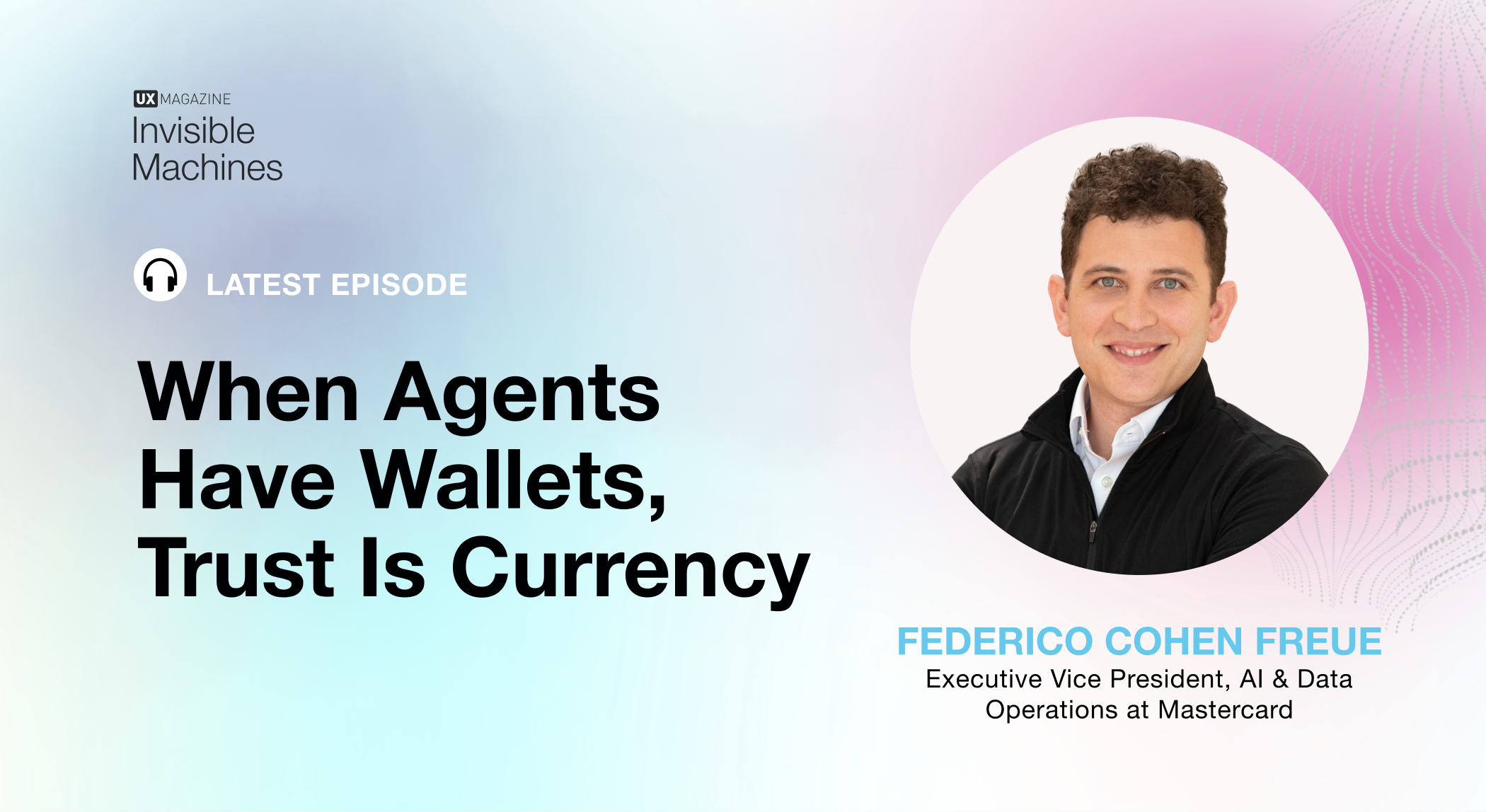
In the high-stakes world of global finance, artificial intelligence is no longer a peripheral experiment; it is the central nervous system of enterprise strategy. At Mastercard, Federico Cohen Freue, the company’s AI lead, oversees a pipeline that would overwhelm even the most robust tech firm: roughly 1,000 internal AI requests annually. These range from nascent conceptual proposals to full-scale deployment plans, all aiming to harness the power of generative models to reshape global commerce.
Yet, as the volume of these requests swells, the nature of the inquiry has undergone a fundamental transformation. A few years ago, the enterprise was obsessed with chatbots—the conversational interfaces that defined the first wave of generative AI. Today, that focus has shifted decisively toward agents. Organizations no longer want to simply query a database; they want systems that act, transact, and operate autonomously within complex workflows.
However, as Cohen Freue is quick to caution, the transition from "wanting" agents to "being ready" for them is a chasm that many organizations are currently failing to bridge.
The Ball Bearing Problem: Why Demos Deceive
To understand the current state of enterprise AI, one must first confront the "Ball Bearing Problem." As Robb, an expert collaborator in this ongoing discourse, illustrates, two ball bearings can appear identical to the naked eye. One, however, is manufactured with precision engineering, the correct materials, and rigorous tolerances. The other is a surface-level imitation.
In a high-speed engine, the difference between these two components is catastrophic. The same principle applies to AI agent demonstrations. A polished demo, presented on a screen, can appear indistinguishable from a robust, production-ready solution. Both exhibit the same fluid, intelligent responses. However, the underlying engineering—the data lineage, the guardrails, the latency management—is often vastly different.
"If you cannot distinguish between a beautifully polished failure and a viable solution, you aren’t ready to deploy," the Mastercard team suggests. This is why Mastercard’s central AI team invests heavily in internal fluency before ever touching the deployment phase. By teaching the organization what "correctly machined" AI looks like, the company ensures that when a request for an agent arrives, it is grounded in technical reality rather than aspirational fantasy.
A Framework for Prioritization at Scale
Managing a thousand incoming ideas while navigating the rapid, unpredictable evolution of AI capabilities creates a massive prioritization bottleneck. How does a global enterprise decide which projects warrant the investment of time, capital, and engineering talent?
Mastercard’s solution is a masterclass in strategic simplicity. They employ a framework that functions not as a rigid compliance checklist, but as a strategic lens: Does this project make commerce more secure, smarter, more personal, and make Mastercard stronger?
This simplicity is the point. When every team across the organization uses the same language to evaluate AI, prioritization ceases to be a grueling negotiation and becomes a clear, productive conversation. If a proposed agent cannot clearly articulate how it moves the needle on security or personalization, it is sidelined. This framework prevents the "shiny object syndrome" that plagues so many AI initiatives, ensuring that resources are concentrated on high-impact, mission-critical infrastructure rather than experimental, disconnected features.
Trust as the New Currency of Transaction
The conversation regarding AI is rapidly shifting from information retrieval to "agentic payments." Consumers are already showing a preference for LLM-mediated search and discovery, meaning the day when AI agents will negotiate, book, and pay for services on behalf of users is arriving faster than many anticipated.
In this new ecosystem, Mastercard is positioning itself as the critical node of trust. While competitors might rush to build the most "exciting" consumer-facing apps—such as autonomous trip-booking or smart replenishment—Mastercard is doubling down on the plumbing. Their priority is the foundational architecture:
- Agent Identity Verification: How does a merchant know they are dealing with a legitimate, authorized AI?
- Delegated Authority Frameworks: Who is legally and financially responsible when an agent initiates a transaction?
- Rules Infrastructure: Creating universal standards that allow every party in the transaction chain to verify the legitimacy of the process.
"Trust is the currency of innovation," Cohen Freue notes. As the transaction chain becomes more complex—involving autonomous agents, dynamic pricing, and cross-border digital handshakes—the role of a trusted, centralized network does not diminish. It compounds. The middleman, far from being rendered obsolete by decentralization, becomes the most critical guarantor of stability in an autonomous economy.
Knowledge Before Action: A Paradigm Shift in Learning
One of the most radical departures in Mastercard’s strategy is their approach to organizational knowledge. Traditionally, enterprises treat knowledge as a static repository: a document library where information goes to be stored until someone asks a question. This "chatbot" model is reactive, placing the burden on the user to know exactly what to query.
Mastercard is exploring an AI-first approach that is proactive. The system does not wait for a question; it identifies what an employee needs to know based on their role and current task, and delivers that knowledge in real-time.
This architecture is built on a "knowledge map" rather than a file system. In this map, every idea exists as a unique entity, connected to related concepts, with a full history of its evolution. From this map, the system generates a "learning twin"—a digital representation of what a specific employee knows and, crucially, what they do not yet know.
The system then solves what can be described as a "traveling salesman problem" for expertise: calculating the most efficient learning path for an individual. It acts as a GPS for knowledge, rerouting in real-time as the employee learns or as the organizational requirements shift.
However, Cohen Freue emphasizes that this is as much a cultural challenge as it is a technical one. "The technology can be ready before the culture is," he observes. Shifting an organization from a model of "one-time onboarding" to "dynamic, ongoing learning" requires a fundamental change in how companies reward growth and define professional readiness.
Implications: The Sequence of Success
The common thread running through Mastercard’s AI strategy is the importance of sequence. Too many organizations fall into the trap of "doing" before "knowing." They build agents to automate processes they don’t fully understand, or they deploy models without establishing the underlying data integrity.
Mastercard’s methodology suggests a different, more disciplined order:
- Understand first: Define the goal through the lens of security, intelligence, and personalization.
- Build fluency: Educate the team on the difference between a demo and a reliable engine.
- Establish infrastructure: Build the rules of trust and identity before unleashing autonomous actors.
- Treat knowledge as infrastructure: Ensure the AI is built on a canonical, structured truth, not a siloed document dump.
When AI initiatives fail, it is rarely due to a deficiency in the models themselves; it is almost always a failure of the knowledge base or a lack of understanding regarding the problem being solved. By reframing AI as an exercise in "knowing" before "doing," Mastercard is creating a blueprint for the enterprise of the future.
The message to the industry is clear: Before you ask what your AI agents can do, you must ask what your organization actually knows. The agents are only as good as the knowledge they are built on—and in an economy driven by autonomous transactions, that knowledge is the only true competitive advantage.
 Ammar Sabilarrohman
  Neng Nana
  Sagoh
Sagoh 