
 By Sagoh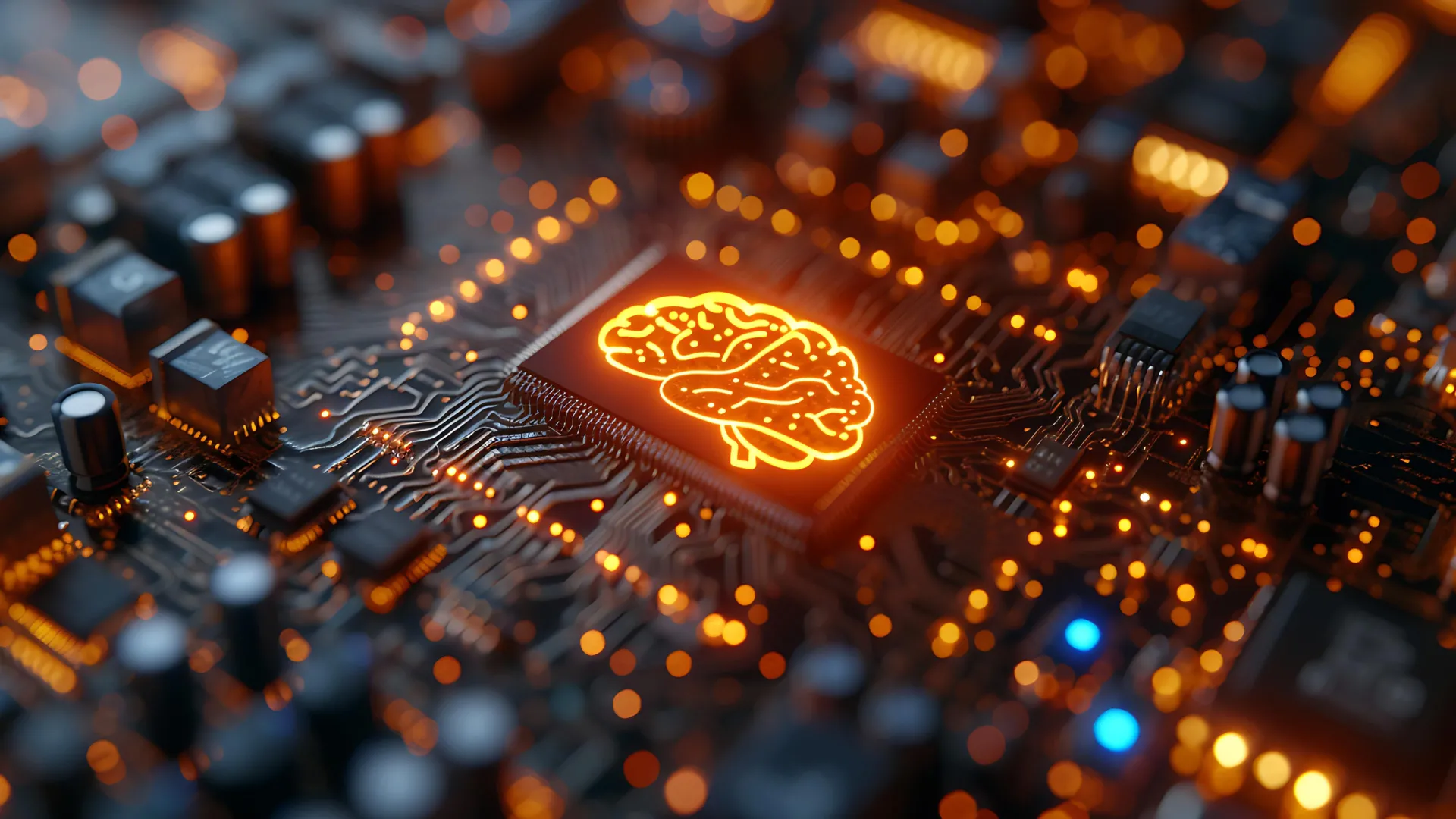
In the quiet, high-security halls of Sandia National Laboratories, a paradigm shift is underway that threatens to upend the future of high-performance computing. For decades, the gold standard for solving the universe’s most complex mysteries—from the dynamics of nuclear fusion to the structural integrity of next-generation aircraft—has been the traditional supercomputer. These colossal machines, powered by racks of energy-hungry silicon chips, have served as the bedrock of scientific discovery. Yet, they face an insurmountable wall: the energy crisis.
Now, a team of computational neuroscientists has unveiled a breakthrough that suggests the answer to our computing limitations has been sitting inside our own skulls all along. As detailed in a study recently published in Nature Machine Intelligence, researchers Brad Theilman and Brad Aimone have developed a groundbreaking algorithm that enables neuromorphic hardware—systems designed to mimic the architecture of the human brain—to solve partial differential equations (PDEs). This development not only bridges the gap between biology and mathematics but signals the arrival of a new era in energy-efficient, high-stakes supercomputing.
The Mathematical Foundation: PDEs and the Complexity of Reality
To understand the magnitude of this achievement, one must first appreciate the ubiquity of partial differential equations (PDEs). They are the fundamental language of the physical world. If you want to model how an electromagnetic field behaves, predict the turbulent flow of air over a wing, or simulate the stress fractures in a nuclear containment vessel, you are using PDEs.
These equations are notoriously "expensive." They require the resolution of millions, sometimes billions, of discrete calculations across time and space. Conventional supercomputers handle these by brute-forcing the data through traditional von Neumann architecture, where the processing unit and memory are physically separated, creating a "bottleneck" that consumes massive amounts of electricity.
"We’re just starting to have computational systems that can exhibit intelligent-like behavior," says Brad Theilman, a computational neuroscientist at Sandia. "But they look nothing like the brain, and the amount of resources that they require is ridiculous, frankly."
The Sandia team’s breakthrough involves a new algorithm that allows neuromorphic chips—which process information through interconnected, neuron-like nodes—to perform these exact calculations. By shifting from the rigid, instruction-based processing of traditional CPUs to the parallel, spike-based communication of brain-inspired hardware, the researchers have discovered a path to solving the world’s most demanding math problems with a fraction of the power.
Chronology of the Discovery: A 12-Year Gap
The road to this discovery began not in a computer lab, but in the field of theoretical neuroscience. The algorithm developed by Theilman and Aimone is rooted in a specific model of cortical networks that has been known to the scientific community for over a decade.
"We based our circuit on a relatively well-known model in the computational neuroscience world," Theilman explains. "We’ve shown the model has a natural but non-obvious link to PDEs, and that link hasn’t been made until now—12 years after the model was introduced."
The chronology of this research highlights the often-siloed nature of modern science. For years, neuromorphic computing was pigeonholed as a niche technology intended for pattern recognition, sensory processing, or accelerating artificial neural networks. The prevailing wisdom in the engineering community was that neuromorphic systems were "fuzzy"—excellent at recognizing a face in a crowd, but incapable of the rigorous, high-precision mathematics required for scientific simulation.
Theilman and Aimone challenged this dogma. They recognized that the human brain, while not a calculator in the traditional sense, is essentially an organic supercomputer capable of performing exascale-level physics simulations in real-time.
"Pick any sort of motor control task—like hitting a tennis ball or swinging a bat at a baseball," says Brad Aimone. "These are very sophisticated computations. They are exascale-level problems that our brains are capable of doing very cheaply."
By mapping the mathematical requirements of PDEs onto the spiking neural networks of neuromorphic hardware, the team proved that the "intelligence" of the brain is not just for pattern matching—it is a robust engine for solving the physics of the universe.
Supporting Data: Efficiency and Performance
The primary driver for this research is the unsustainable energy trajectory of current supercomputing. As the National Nuclear Security Administration (NNSA) and other agencies strive for greater precision in their simulations, the power requirements for traditional supercomputers continue to climb, often necessitating dedicated power plants to support a single facility.
The Sandia team’s findings suggest a path toward massive energy savings. While the current implementation is an early-stage proof of concept, the theoretical implications are clear: by decentralizing memory and processing and utilizing sparse, asynchronous communication—just as neurons do—neuromorphic computers could perform the same simulations as current supercomputers at a significantly lower power cost.
This is not merely about green computing; it is about national security. The NNSA is responsible for the integrity of the nation’s nuclear deterrent, a task that relies entirely on high-fidelity, high-stakes simulations. If the energy barrier to these simulations can be lowered, the threshold for scientific discovery and national safety testing is effectively lowered as well, allowing for more frequent, more detailed, and more responsive modeling.
Official Responses: A New Path Forward
The research, funded by the Department of Energy’s Office of Science and the NNSA’s Advanced Simulation and Computing program, represents a significant investment in the future of domestic computing infrastructure.
The reaction from the scientific community has been one of surprise, largely because the result defied the prevailing intuition regarding "brain-like" versus "math-based" computing.
"You can solve real physics problems with brain-like computation," Aimone notes. "That’s something you wouldn’t expect because people’s intuition goes the opposite way. And in fact, that intuition is often wrong."
The researchers believe that this work is only the beginning. They are actively calling for a broader coalition of mathematicians, neuroscientists, and engineers to explore how other, more advanced applied math techniques can be translated into the language of neuromorphic architecture. The goal is to build the first true "neuromorphic supercomputer"—a machine that doesn’t just mimic the brain’s efficiency, but harnesses its unique computational logic to solve problems that were previously thought to be the exclusive domain of silicon-based giants.
The Broader Implications: From Physics to Neurology
Perhaps the most compelling aspect of this research is the feedback loop it creates between the digital and the biological. By successfully using a model of the brain to solve complex PDEs, the team has inadvertently provided a new lens through which to study the human brain itself.
"Diseases of the brain could be diseases of computation," Aimone suggests. "But we don’t have a solid grasp on how the brain performs computations yet."
If researchers can define the mathematical principles that the brain uses to solve PDEs, they may eventually be able to identify where those processes break down in the onset of neurodegenerative diseases such as Alzheimer’s or Parkinson’s. This elevates the work from a pure engineering success to a potential medical breakthrough. If a "calculation" in the brain can be modeled as a PDE, then a neurological disorder might be viewed as a "computational error" or an unstable simulation, offering a new vocabulary for neurology and drug development.
Conclusion: Building the Next Generation
As the field of neuromorphic computing matures, the Sandia team’s work stands as a testament to the power of interdisciplinary thinking. They have moved past the initial "wow" factor of AI and into the utilitarian, rigorous world of applied physics.
"We have a foot in the door for understanding the scientific questions, but also we have something that solves a real problem," Theilman says.
The journey toward a neuromorphic supercomputer is far from complete. There are hardware constraints to overcome, scaling issues to address, and a vast ecosystem of software to rewrite. However, the path is no longer theoretical. By proving that the brain’s architecture is not just a pattern-matching curiosity but a sophisticated mathematical engine, Theilman and Aimone have opened a door to a future where our most powerful computers are designed not in the image of a spreadsheet, but in the image of the human mind.
In the coming years, as this technology moves from the lab to the server room, we may find that the secret to solving the most complex problems of the 21st century was hidden in the biological design of our own evolution all along. The era of the brain-inspired supercomputer has arrived, and it is poised to change everything we know about the limits of computation.
 Asro
Asro  Siti Muinah