
 By Ammar Sabilarrohman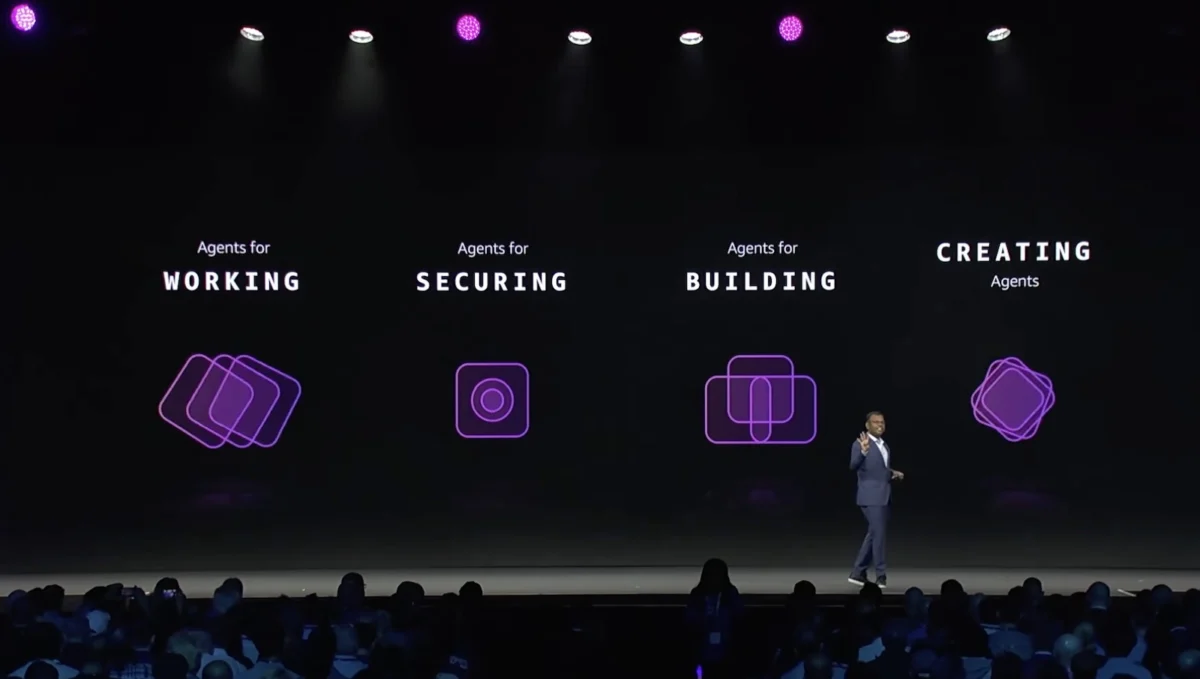
Introduction: A New Paradigm for Generative AI
Last week, the cloud computing world turned its gaze toward New York City, where Amazon Web Services (AWS) hosted its annual AWS Summit. The event, which drew thousands of cloud architects, enterprise leaders, developers, and tech enthusiasts, served as a massive stage for the next evolution of generative AI.
While previous years of AWS Summits focused on infrastructure scalability and foundational model training, the 2026 edition was defined by a singular, ambitious pivot: the rise of "Agentic AI." Dr. Swami Sivasubramanian, Vice President of Agentic AI at AWS, took center stage to outline a future where AI does more than just generate text or images—it acts, executes, and compounds value over time. This report explores the implications of these announcements, the strategic direction of AWS, and what this means for the global developer ecosystem.
Main Facts: The "Agentic" Thesis
The cornerstone of this year’s summit was Dr. Sivasubramanian’s keynote, which moved the conversation beyond the novelty of chatbots. The core thesis presented was simple yet profound: The future of AI lies in agents that possess persistence, autonomy, and the ability to compound value.
Unlike traditional LLMs (Large Language Models) that exist in a vacuum, "Agentic AI" is designed to operate within complex business workflows. These agents are intended to remember past interactions, learn from their outcomes, and iteratively improve their performance without human intervention at every step. By integrating these agents into the AWS ecosystem, the company is effectively shifting from providing raw "compute for intelligence" to providing "intelligent systems that execute tasks."
Key takeaways from the event included:
- Persistent Memory Architecture: New frameworks allowing AI agents to retain context over long-term projects.
- Cross-Service Integration: Enhanced orchestration that allows AI to trigger actions across disparate AWS services (such as S3, Lambda, and DynamoDB) autonomously.
- Enterprise-Grade Security: A reinforced focus on the "governance of agency," ensuring that autonomous agents adhere to corporate compliance and security guardrails.
Chronology: A Week of Innovation
The summit functioned as a high-velocity launchpad. The proceedings began with a series of deep-dive workshops, followed by the main stage keynote, and culminated in a flurry of technical releases throughout the latter half of the week.
Day 1: The Vision
The focus was on setting the stage. AWS leadership emphasized that while foundational models have mastered language, they have yet to master doing. The transition from "Chat" to "Action" was the theme of the day.
Day 2: The Infrastructure
Following the keynote, AWS rolled out technical previews for several agent-orchestration tools. These tools are designed to reduce the "integration tax" that developers currently face when trying to connect LLMs to existing enterprise databases.
Day 3: Optimization and Efficiency
The week concluded with a focus on economics. AWS announced significant price reductions and performance enhancements, reflecting the company’s ongoing commitment to making AI development cost-effective at scale.
Supporting Data: Efficiency and Economic Shifts
A critical part of the summit was the discussion surrounding the economic sustainability of AI agents. As companies scale their AI deployments, the cost of inference and data orchestration has become a primary concern.
AWS responded with a two-pronged strategy:
- Price Reductions: By optimizing the underlying hardware—specifically through advancements in custom silicon—AWS has successfully reduced the cost of compute for specific AI-heavy workloads. These price cuts are not merely symbolic; they are intended to lower the barrier to entry for startups looking to build agentic platforms.
- Performance Benchmarking: AWS shared data indicating that their latest generation of cloud-native AI agents can perform complex, multi-step tasks up to 40% faster than previous iterations. This efficiency gain is driven by reduced latency in memory access and more intelligent token management within the orchestration layer.
These figures are vital for CTOs and CIOs who are currently balancing the "AI hype" against the reality of quarterly budgets. By proving that AI agents can be both more capable and more affordable, AWS is effectively accelerating the adoption cycle across industries like finance, healthcare, and logistics.
Official Responses and Industry Outlook
The industry reception to the "Agentic" pivot has been largely positive. During the summit, several partners and customers—ranging from global logistics firms to retail giants—took the stage to share their pilot projects.
Dr. Swami Sivasubramanian noted during a press briefing:
"We are moving away from the era where a human has to hold the AI’s hand through every prompt. We are entering an era of partnership, where agents are trusted to navigate complex environments, handle error-correction, and deliver outcomes that grow in value every time they run. This isn’t just about speed; it’s about reliability at scale."
Critics, however, have raised valid questions regarding safety. When an agent is given the power to "act" on behalf of a company, the risks—ranging from logic loops to unauthorized data access—increase exponentially. AWS addressed this by highlighting their "Guardrails for AI" initiatives, which provide developers with the tools to set strict boundaries on what an agent can and cannot do.

Implications: The Future of Cloud Development
The shift toward Agentic AI signals a fundamental change in the role of the software developer.
From Coding to Orchestrating
In the past, developers focused on writing functions that performed specific tasks. In the age of agents, the developer’s role is shifting toward orchestration. Instead of writing the code for every logical step, developers will define the "goals" and "boundaries" for agents, and then monitor the agents as they navigate the solution.
The Ecosystem Effect
This development will inevitably reshape the AWS Marketplace. We are likely to see a surge in "Agent Templates"—pre-configured, specialized agents that can be "plugged and played" into existing enterprise workflows. This will democratize high-level AI capabilities, allowing small teams to achieve what previously required massive engineering departments.
Long-term Economic Impact
For AWS, this is a strategic move to lock in the "Agentic Stack." By providing the tools for building, training, and deploying agents, AWS is ensuring that the infrastructure and the intelligence layer are deeply intertwined. This creates a powerful "moat" that favors the AWS ecosystem, provided they can continue to deliver on the promise of reliability and security.
Conclusion: The Road Ahead
As the dust settles on the AWS Summit New York City, it is clear that the industry is at an inflection point. The "Agentic" paradigm is no longer a theoretical concept discussed in research papers; it is a live, deployable technology.
For the developer community, the challenge is now to master these new orchestration frameworks. For businesses, the challenge is to identify which workflows are ripe for "agentification." AWS has provided the tools, the infrastructure, and the vision; the next chapter of the cloud will be written by those who can harness these agents to compound value in real-world environments.
As we look toward the remainder of 2026, the focus will undoubtedly shift from the possibilities of AI to the proven results of agentic deployments. AWS has made its bet, and if the energy in New York was any indication, the rest of the tech world is ready to follow suit.
Stay tuned to the AWS "What’s New" page and the weekly blog roundups for ongoing updates on the deployment of these agentic tools and further price-reduction initiatives as they roll out globally.
 Neng Nana
  Suro Senen
  Lina Hope