
 By rifanmuazin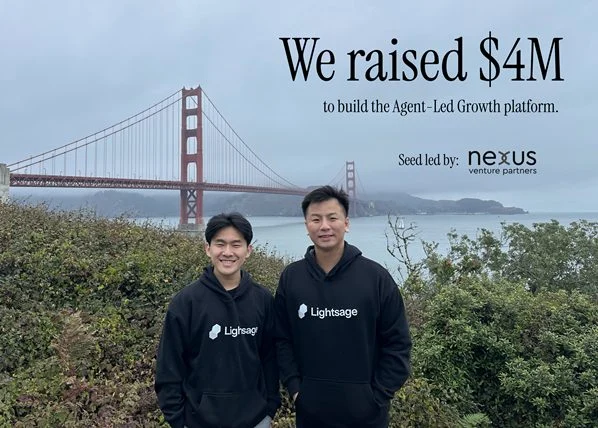
The traditional software sales funnel—a carefully curated journey of blog posts, homepage landing pages, and high-touch product demos—is facing an existential threat. For decades, the primary objective of any B2B software company has been to capture the human attention span. However, as coding agents like Cursor, Claude Code, and GitHub Copilot evolve from simple autocomplete tools into autonomous engineers, the "customer" is increasingly non-human.
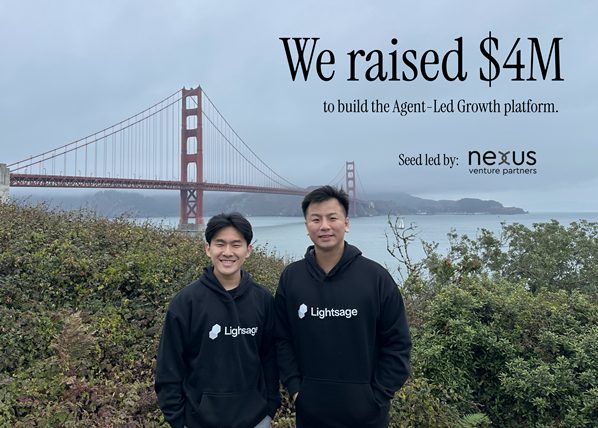
San Francisco-based startup Lightsage is betting that this shift represents the most significant change in software distribution since the advent of the App Store. Today, the company announced a $4 million seed funding round led by Nexus Venture Partners to build the definitive infrastructure for "Agent-Led Growth" (ALG).
The Core Facts: A New Paradigm for Software Acquisition
Lightsage is positioning itself as the "Google Analytics for AI agents." As software becomes the primary interface for machines, the challenge for companies is no longer just search engine optimization (SEO) or product-led growth (PLG); it is about ensuring that an AI agent can discover, integrate, authenticate, and successfully deploy a piece of software without ever interacting with a human marketing team.
The $4 million round features a high-profile syndicate of industry leaders. Beyond the lead investment from Nexus, the round includes contributions from a "who’s who" of the developer ecosystem, including former Salesforce CTO Steven Tamm, Postman CEO Abhinav Asthana, Apollo CEO Matt Curl, and DocuSign President Robert Chatwani, among others. This concentration of veteran industry operators suggests a broad consensus: the way software is sold is about to undergo a radical, machine-driven transformation.
Chronology: From Human-Centric to Agent-Centric
The transition toward Agent-Led Growth did not happen overnight, but rather through a series of incremental advancements in generative AI:
- The Era of Human Discovery (2000–2020): Marketing was dominated by SEO, SEM, and content marketing designed to move human prospects through a "funnel."
- The Rise of Generative Engines (2022–2023): With the arrival of ChatGPT and Claude, AI began acting as a recommendation engine. Companies scrambled to optimize for "Generative Engine Optimization" (GEO), focusing on how these models talked about their products.
- The Agentic Turn (2024–Present): The current phase represents the move from recommendation to execution. AI agents are now capable of navigating terminal interfaces, reading documentation, installing SDKs, and calling APIs autonomously.
- The Lightsage Intervention (2025): With the launch of its platform, Lightsage provides the first structured feedback loop for companies to see how these agents perceive and interact with their technical stack.
Supporting Data: Why Visibility is No Longer Enough
In a human-centric world, "visibility" was the ultimate metric. If a developer saw your product on Hacker News or Google, you had a fighting chance. In an agentic world, visibility is merely the starting line.
Lightsage’s internal data indicates that the "Agent Experience" (AX)—a new metric for software health—is the primary bottleneck to adoption. When a coding agent attempts to integrate a library, it doesn’t care about a company’s mission statement or slick hero imagery. It cares about documentation clarity, the compatibility of the SDK, the reliability of the authentication flow, and the presence of Model Context Protocol (MCP) servers.
Lightsage operates by running large-scale simulations. By tasking various agents with real-world objectives—such as "build a secure authentication module" or "implement this specific API call"—the platform identifies exactly where the "agent journey" breaks down. If a company’s documentation is hallucination-prone or its API structure is unintuitive to a machine, Lightsage pinpoints the failure, allowing developers to treat agent-incompatibility as a technical bug rather than a marketing failure.
Official Responses: The Philosophy of Agent-Led Growth
"We are moving from an internet where AI tells people which software to use to one where AI increasingly uses the software itself," said Jun Liang Lee, CEO and Co-Founder of Lightsage. "That changes what growth means. Visibility still matters, but the real test is whether an agent can understand your product and get to a successful outcome."
For the venture capital community, the investment is seen as a bet on the "intelligence infrastructure" of the future. Abhishek Sharma, a partner at Nexus Venture Partners, emphasized that the shift is as fundamental as the transition to the mobile web.
"The internet brought the economy online, with humans discovering, choosing, and transacting through digital channels," Sharma noted. "AI is now shifting that agency from humans to agents, which can discover, evaluate, and act on a customer’s behalf. Lightsage is building the intelligence infrastructure for this new era of autonomous browsing, helping companies optimize for agent conversion, not just awareness."
Implications for the Tech Industry
The emergence of Lightsage and the concept of Agent-Led Growth suggests several tectonic shifts in the software industry:
1. The Death of the "Marketing-First" Funnel
For B2B software, the traditional "Contact Sales" button is rapidly becoming a relic. If an AI agent cannot self-serve the product, it will simply move on to a competitor that offers a cleaner, more agent-friendly integration. This will force companies to prioritize "Machine-Readable Documentation" over "User-Friendly Copywriting."
2. The Rise of "Agent Experience" (AX)
Just as "Developer Experience" (DX) became a competitive moat for companies like Stripe and Twilio in the 2010s, "Agent Experience" will become the primary differentiator in the 2020s. Companies will need to optimize their SDKs, CLIs, and API documentation specifically for consumption by Large Language Models (LLMs).
3. Analytics Attribution Challenges
Attribution in an agent-led world is significantly more complex. When a human clicks a link, they leave a cookie trail. When an AI agent performs an action, it often happens behind a proxy or via an internal LLM process, making it difficult for traditional marketing tools to attribute the conversion. Lightsage’s platform is designed to bridge this gap, providing visibility into the "black box" of agent-based traffic.
4. Competitive Dynamics
Lightsage is already seeing early traction with companies like Firecrawl, Reducto, and Daytona. These early adopters are discovering that their competitors are already being favored by coding agents. Through Lightsage, they can now conduct competitive intelligence that was previously impossible: seeing in real-time why an agent chooses a rival’s library over theirs, whether it be due to better performance, clearer documentation, or simply faster integration time.
The Road Ahead
Lightsage is currently in a phase of rapid expansion. With its $4 million in fresh capital, the company plans to broaden its reach beyond developer-centric tools. As agents gain the ability to navigate broader enterprise software, from CRMs to ERP systems, the "agent channel" will become a critical component of every company’s revenue stack.
The company is currently scaling its team across technical and commercial roles, signaling an aggressive push to define this new category of software analytics. As CEO Jun Liang Lee suggests, the goal is not merely to track the behavior of agents, but to help companies "close the loop"—feeding insights back into development cycles so that every product update makes the software more autonomous-friendly.
In the near future, the most successful companies will not be those with the best sales teams, but those with the most "agent-readable" products. By building the infrastructure for this reality, Lightsage is effectively writing the playbook for how software will be bought and sold in the age of intelligence. The human buyer is no longer the sole gatekeeper of the software economy; the machine is now in the driver’s seat.
 Iffa Jayyana
  Raul Delapena Setiawan
  Laily UPN