
 By Nana Muazin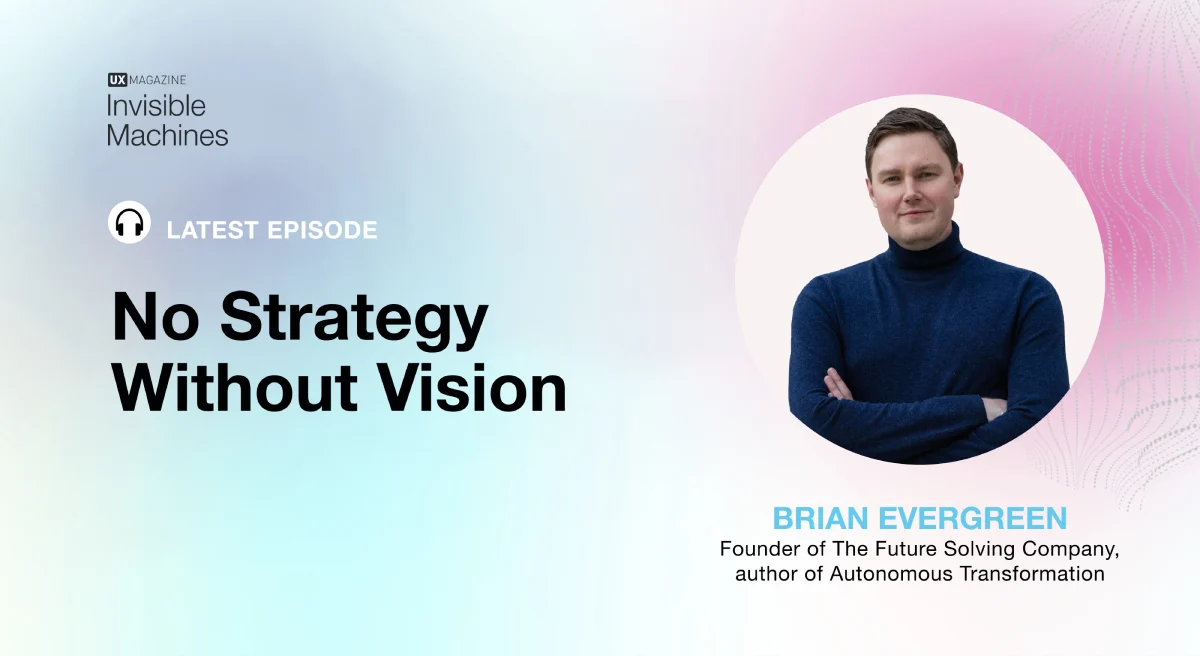
In the rapidly evolving landscape of enterprise technology, a dangerous misconception has taken root: the belief that AI literacy is the same thing as an AI strategy. Executives are currently rushing to build "AI plans"—dense documents filled with vendor shortlists, feature matrices, and procurement timelines—that are fundamentally misaligned with the reality of agentic AI.
According to Brian Evergreen, founder of The Future Solving Company and author of Autonomous Transformation, the modern Request for Proposal (RFP) process is a relic of a bygone era. It is a system built to purchase "SKUs" and defined products, not to navigate the ambiguity of an AI-driven future. As Evergreen argues, when the goal is exploration rather than procurement, the checklist is not just stale; it is a strategic liability.
The Mirage of the Vendor Bake-Off
The current corporate approach to AI is often a two-step process: cultivate enough executive literacy to appear credible in a boardroom, then immediately pivot to a vendor selection process. This "sprint to procurement" is where most digital transformation efforts go to die.
The flaw in the traditional RFP model lies in its assumption of stability. Procurement cycles rely on the ability to compare fixed capabilities—feature A vs. feature B. However, in the age of agentic AI, software capabilities are shifting at an unprecedented velocity. A "missing feature" today may be rendered obsolete or automatically implemented by a model update before a contract is even signed.
Robb Wilson, CEO of OneReach.ai and co-host of the Invisible Machines podcast, highlights that large organizations possess highly evolved processes for buying known solutions. These processes are rational for purchasing office supplies or standardized CRM software, but they are disastrous for innovation. Treating AI as a science fair where the goal is to see "which vendor checks the most boxes" ignores the reality that, in agentic AI, the software itself is evolving mid-flight.
Chronology of the "Future Solving" Shift
The transition from traditional problem-solving to "future solving" represents a fundamental change in how organizations view their path forward.
1. The Era of Efficiency (The Problem-Solving Mindset)
For decades, businesses have operated under a "problem-solving" paradigm. This is an elimination exercise: identify waste, shore up existing workflows, and optimize the value already being produced. This approach is excellent for incremental improvement but inherently resistant to radical change.
2. The Current Deadlock (The Literacy Sprint)
As generative AI exploded, organizations shifted to mass literacy programs. Employees were taught what LLMs are, how they differ from classical machine learning, and how to prompt them. However, as Evergreen notes, "mass literacy plus mass use-case hunting produces motion without architecture." Without a guiding vision, this activity remains hollow.
3. The Future Solving Pivot (The Vision-First Mandate)
The emerging paradigm, championed by Evergreen, begins not with the current org chart or the existing tech stack, but with an imaginative act. It requires leaders to define the most "amazing version" of their work and then work backward to determine what "necessary conditions"—tools, data contracts, and organizational incentives—must be true for that reality to manifest.
Supporting Data and Historical Parables
History serves as a grim warning to those who believe technology alone dictates success.
The Blockbuster Case Study
Evergreen and Wilson revisit the decline of Blockbuster as a cautionary tale of misaligned incentives. Years before streaming became the industry standard, Blockbuster had the capability to build a streaming-shaped pilot. They failed not because they lacked the technology, but because their "customer of record" was the franchisee, not the end user. They viewed new value as a direct threat to their existing balance sheet. The technology was not the missing piece; organizational alignment was.
The Bell Labs Model (1952)
In contrast, Bell Labs demonstrated the power of "forced creativity." Facing a plateau in innovation, leadership instructed their teams to act as if the entire telephone network had been destroyed and needed to be rebuilt from scratch using only modern science. This exercise forced engineers to discard the "sunk cost" bias and design for the future. It proved that breakthrough cadence is not a product of luck, but a product of intentional design.
Implications for Organizational Architecture
If an organization does not author its own future, it will be authored by platform companies. This is the ultimate implication of the current shift toward agentic systems.
1. The Collapse of Interfaces
As agents become more capable, the traditional reliance on siloed applications will diminish. If the end goal is to handle intent end-to-end—moving from a request like "plan a team dinner" to the completed logistics—the need for a dozen disparate, siloed apps disappears. Interfaces will collapse into unified, agentic experiences. Organizations that continue to build siloed workflows will find themselves marginalized by platforms that own the entire relationship.
2. Friction as a Variable
Executives often obsess over "friction mapping" to streamline existing processes. However, Evergreen warns that friction is infinite unless a North Star is present. When employees are enrolled in a compelling vision of the future, they will clear obstacles in its service. Without that vision, friction mapping is merely a way to polish the deck chairs on a sinking ship.
3. Language as a Strategic Asset
A good vision must be visceral. It cannot be a bland corporate goal like "we will be more profitable." It must be a picture that employees can "see" in a room. Whether it is a clinician who can stay focused on a patient because an agent handles the documentation, or a partner who trusts an AI to navigate a complex negotiation, the vision must be something that can be felt. If people cannot feel the outcome, they will abandon the project the moment the pilot concludes.
Toward a New Framework for Strategy
The conclusion for leadership is clear: the era of the "vendor bake-off" must end. Real AI strategy is not about selecting the best tool from a list; it is about authorship.
- Stop Measuring Today: Stop assuming that measuring the current market structure will provide a roadmap for the future. The future does not exist yet; it must be designed.
- Define Necessary Conditions: Once the vision is clear, document the necessary truths that must be established—data governance, ethical policy, and human-machine interaction protocols—before the agents can be deployed.
- Align Before You Buy: Ensure that the organization’s incentives—the franchisees, the departments, the stakeholders—are aligned with the vision, not against it.
- Prioritize Intent over Transaction: Focus on the end-to-end user intent rather than the specific transaction. The winning experience is one that removes the friction of the interface entirely.
As the industry moves deeper into the era of agentic AI, those who rely on the traditional RFP will continue to find themselves trailing the market. The competitive advantage no longer belongs to the firm that can buy the best software; it belongs to the firm that can name the future it wants to create and possess the courage to build the conditions necessary for that future to exist. The RFP is dead; long live the vision.
 Nana Wu
  Sagoh
Sagoh  Nana
Nana 