
 By Nana Wu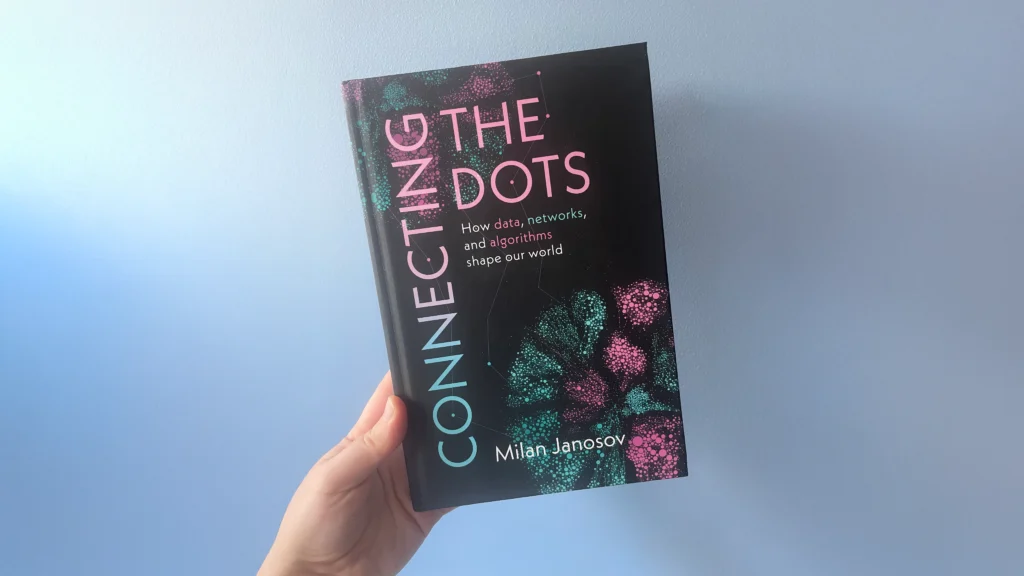
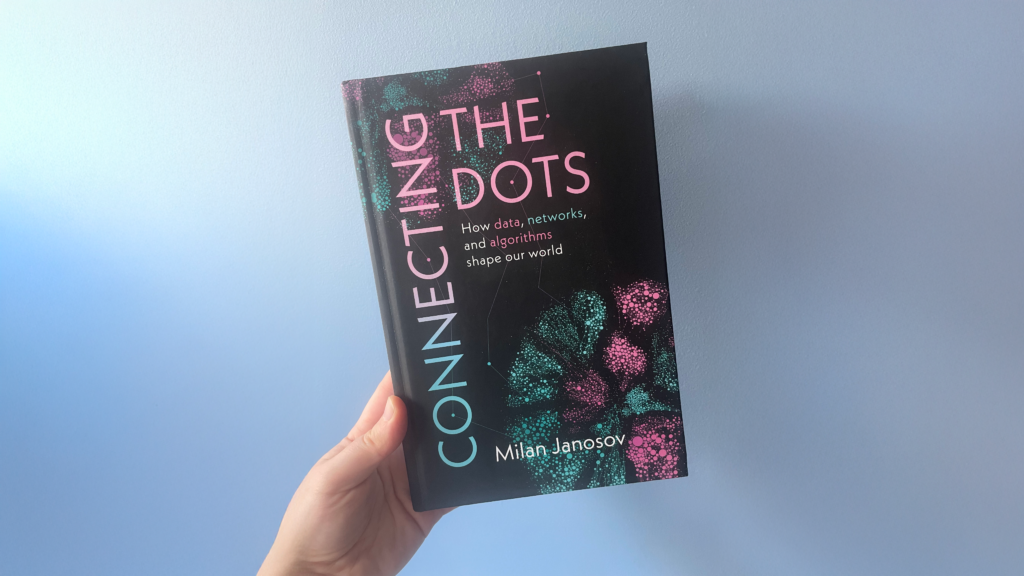
In an era defined by hyper-connectivity, the algorithms that govern our digital lives often feel like inscrutable black boxes. We leave a trail of data with every click, swipe, and purchase, yet few of us possess the vocabulary to understand how those individual breadcrumbs are synthesized into a global architecture of influence. Milan Janosov’s new book, Connecting the Dots: How data, networks, and algorithms shape our world, serves as a vital decoder ring for this complexity. By stripping away the dense, impenetrable jargon typically associated with network science, Janosov offers a masterclass in making the invisible visible.
The Anatomy of the Invisible: Understanding Network Science
At its core, network science is the study of how things are connected—whether those things are people, websites, financial transactions, or biological neurons. Janosov’s premise is straightforward: our world is not merely a collection of isolated events, but a sprawling, dynamic fabric of relationships.
The book is structured into three distinct sections: "Our Data Selves," "Networks Coming to Life," and "Hitting the Big Time, Network Style." This logical progression takes the reader from the micro-level—the individual as a node of data—to the macro-level, where mathematical theories are applied to real-world phenomena like epidemiological outbreaks and the viral spread of social media trends.
Chronology of Datafication
Janosov begins by chronicling the evolution of the "Data Self." In the early days of the internet, users were passive consumers. Today, we are active participants in a perpetual state of datafication. Janosov masterfully details how online profiles—ranging from Amazon shopping habits to Instagram engagement metrics—are aggregated. He explains that data is rarely static; it is dynamic and generative. When we provide a single piece of information, algorithms often infer ten others, creating a predictive model of our future behavior before we have even made a choice. By the time he discusses targeted coupon distribution, the reader understands that these "personalized" offers are not coincidences, but the result of massive, longitudinal datasets that identify patterns invisible to the human eye.
Supporting Data: Complexity Made Accessible
What sets Connecting the Dots apart from dry academic texts is Janosov’s choice of case studies. He avoids the temptation to rely solely on abstract graphs, opting instead for culturally relevant, high-interest examples.
- Pop Culture as a Laboratory: To explain the structural integrity of networks, Janosov analyzes the deaths of characters in Game of Thrones. By mapping the relationships between characters as nodes and links, he illustrates how the "death" of a central node can destabilize an entire ecosystem.
- The Economy of Influence: He turns his attention to the NFT art market and the popularity of electronic music DJs. These examples serve as practical applications for concepts like "preferential attachment"—the phenomenon where "the rich get richer" in a network. As a node gains more links (popularity), it becomes more likely to attract even more links, explaining why certain artists or assets explode in popularity while others remain obscure.
- The Mechanics of Relationships: Through his exploration of weighted and directional relationships, Janosov explains that not all connections are created equal. A "like" on a social media post is a weak link, whereas a direct message or a financial transaction represents a strong, directional bond. Understanding these nuances is essential for anyone looking to navigate—or manipulate—modern digital influence.
Official Perspectives and Expert Methodology
Janosov’s approach is fundamentally "experimentation-forward." Rather than presenting network theory as a set of static laws, he walks the reader through his own process of project development. By sharing the "why" and "how" of his research, he invites the reader into the mind of a data scientist.
This transparency is a significant strength. When he discusses how he devised his analysis of music scenes, he outlines the failures and pivots that led to the final insight. This narrative style demystifies the scientific process, demonstrating that data science is not just about crunching numbers, but about asking the right questions and designing clever frameworks to answer them.
While the book serves as a robust introduction to the field, it is worth noting a minor limitation: the reliance on digital supplements. Because the book links to external projects rather than printing complex diagrams directly on the page, the reader must be prepared to engage with their browser alongside the text. However, Janosov compensates for this by providing a comprehensive, chapter-by-chapter reference list, effectively creating a "network" of knowledge that encourages further exploration.
Implications: The Algorithmic Future
The final section of the book, "Hitting the Big Time," is where the theoretical rubber meets the road. Janosov moves beyond descriptive analysis to predictive utility. He argues that network theory is the primary tool for solving some of our most pressing societal challenges.
Predicting the Future
The applications discussed in the book are vast:
- Epidemiology: By understanding how networks form, researchers can predict the spread of viruses, identifying "superspreader" nodes that need to be isolated to break the chain of transmission.
- Productivity: Janosov explores how corporate networks function, suggesting that increasing workplace efficiency is less about individual performance and more about optimizing the flow of information between team members.
- The AI Frontier: Perhaps most timely is his discussion of Artificial Intelligence. Janosov peels back the curtain on how AI models—which are essentially massive, multi-layered neural networks—process information. By understanding the network-based architecture of AI, readers can better navigate the ethical and technical debates surrounding the technology that is rapidly reshaping the workforce.
Conclusion: A Must-Read for the Digital Citizen
Connecting the Dots arrives at a pivotal moment. As we move deeper into an age where AI and big data influence everything from our political discourse to our career prospects, the ability to think in terms of networks is no longer a niche skill for data scientists; it is a fundamental requirement for digital literacy.
Janosov’s tone is consistently light, humorous, and deeply approachable. He manages to discuss heady, complex concepts without ever making the reader feel small or uninformed. For the reader who has ever felt overwhelmed by the "noise" of the internet or confused by the sudden, targeted nature of their online experiences, this book provides the clarity they need.
By the time the final page is turned, the reader is left with a newfound sense of agency. The world, which once seemed like a chaotic storm of disconnected events, becomes a structured, legible system. Janosov does not just teach us about network theory; he changes the way we look at our own lives, our social circles, and the digital systems that connect us all.
Whether you are a student of data science, a professional navigating the corporate ladder, or simply a curious digital citizen, Connecting the Dots is an essential addition to your bookshelf. It offers a low barrier to entry for one of the most important fields of study in the 21st century, ensuring that when we look at the world, we aren’t just seeing the dots—we are finally seeing the connections between them.
About the Author (Reviewer)
Emilia Ruzicka is a data journalist, researcher, and editor who recently completed their M.A. in Media, Culture, and Technology at the University of Virginia. Their work explores the intersection of human behavior and digital infrastructure. For more insights into data visualization and technology, visit emiliaruzicka.com.
 Lina Irawan
  Nana
Nana 