
 By Laily UPN
For decades, the American manufacturing sector has been a theater of stark technological contrast. On the factory floor, high-precision robotics, automated CNC machining, and state-of-the-art additive manufacturing have turned production into a marvel of efficiency. Yet, just a few feet away in the front office, the process of winning the work that keeps those machines running remains trapped in the analog age—reliant on fragmented email chains, disparate spreadsheets, and manual data entry.
Forgepoint, a burgeoning leader in the industrial AI space, is closing this gap. With the launch of "Frank," an AI-powered Inside Sales Representative specifically engineered for the complexities of the manufacturing sector, the company is transforming the Request for Quote (RFQ) to Purchase Order (PO) pipeline. Having recently secured $9.8 million in a seed funding round led by Primary Venture Partners and a16z speedrun, Forgepoint is signaling a new era where administrative bottlenecks no longer dictate the growth potential of industrial firms.
The Core Problem: The “Office-Shop” Disconnect
The fundamental challenge facing modern manufacturers is speed. In a globalized economy, the customer experience has become a primary competitive differentiator. A 2025 Gardner Intelligence study underscored this shift, revealing that nearly 50% of manufacturers now expect a vendor response to an inquiry within 24 hours.
However, for many job shops and contract manufacturers, meeting that 24-hour window is a monumental task. An incoming RFQ is rarely a clean document. It often arrives as a series of emails with multiple attachments, missing specifications, and ambiguous technical requirements. Before a quote can be issued, an estimator must perform a complex series of tasks: decoding part files, verifying material availability, consulting historical pricing models, securing engineering approvals, applying appropriate margins, and manually entering data into both an ERP and a CRM.
When these steps are performed manually, the “time-to-quote” stretches from hours into days, or even weeks. By the time a quote is finally sent, the customer may have already moved on to a more responsive competitor.
A Chronology of Forgepoint’s Evolution
The genesis of Forgepoint lies in the firsthand experiences of its founders. CEO Jack Strauss spent his early career navigating the industrial landscape at Northrop Grumman and Bain & Company’s Advanced Manufacturing practice, followed by a stint at aerospace systems integrator Xwing. Throughout his tenure, Strauss observed a recurring theme: manufacturers were over-investing in production hardware while starving the administrative “middle-office” of the same level of innovation.
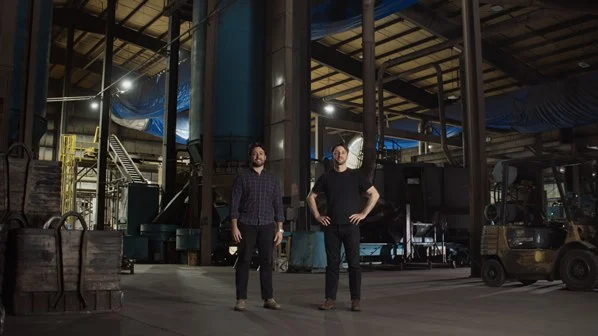
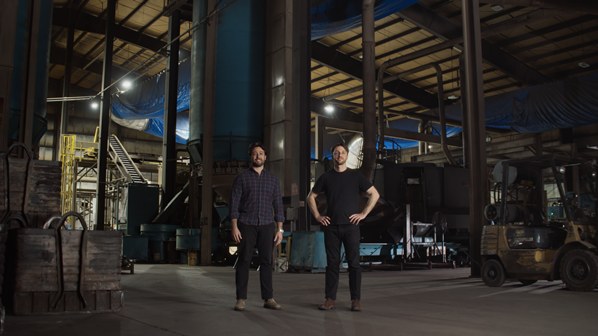
In early 2025, Strauss joined forces with co-founder Alex Pareto, the former Head of Engineering for the Spend Management division at Brex. The duo embarked on an extensive “boots-on-the-ground” tour, visiting dozens of manufacturing plants across the American Midwest. They spent months shadowing estimators, sales reps, and engineers, documenting the exact points where workflows stalled.
“In those early days, we simply wanted to learn, as if we had been hired to do the job ourselves,” said Alex Pareto, Co-Founder and CTO of Forgepoint. “We knew that before we could solve the problem, we needed to understand it deeply.”

By the second quarter of 2025, the vision for Frank crystallized. They recognized that the same frontier AI models being developed in Silicon Valley—capable of parsing unstructured data and reasoning through complex logic—could be applied to the specific, high-stakes requirements of industrial quoting. Within six months of Frank’s official launch, the company had already achieved seven-figure Annual Recurring Revenue (ARR), a testament to the acute pain point they were addressing.
How Frank Operates: The AI Coworker
Frank is not a chatbot in the traditional sense; he is a specialized digital employee. Upon integration, Frank is assigned a corporate email address and begins an onboarding process where he learns the specific pricing rules, approval hierarchies, and operational preferences of the shop.
When an RFQ arrives, Frank’s workflow is surgical:
- Data Ingestion: He analyzes the incoming email and all attached CAD files or drawings.
- Requirement Verification: If specifications are missing or ambiguous, Frank proactively reaches out to the buyer to request clarification, preventing downstream errors.
- Drafting: He applies the manufacturer’s proprietary cost model to the part files and surfaces historical pricing for similar jobs.
- Human-in-the-Loop: Once the draft is prepared, Frank routes the file to the appropriate internal engineer or estimator for final review.
- Execution: After human approval, Frank generates the formal quote in the company’s template, manages the follow-up, and ensures all correspondence is recorded in the CRM.
This approach acknowledges that while AI can handle the heavy lifting of data organization, technical and commercial decision-making must remain with the experts. By offloading the administrative "janitorial" work, Forgepoint allows skilled operators to focus on high-value strategy.
Supporting Data and Performance Metrics
The efficacy of Forgepoint’s model is backed by compelling performance data. Hundreds of engineers, estimators, and sales professionals currently utilize Frank on a weekly basis. Across the board, Forgepoint’s customers have reported a 30% increase in monthly quote throughput and a 55% reduction in time-to-quote.
These numbers translate directly into bottom-line growth. For companies like SIP Manufacturing, the impact has been transformative. “Before Forgepoint, we were building quotes by hand and barely keeping up,” says Chas Aday, Founder and CRO of SIP Manufacturing. “Now, Frank drafts and I can approve it in two minutes. I’m spending less time entering data and more time serving my customers.”
Beyond speed, Frank serves as a corporate knowledge repository. By documenting the rationale behind every quote, email, and attachment, Frank mitigates the risk of “brain drain.” As veteran employees retire, their years of experience—the subtle exceptions, the customer-specific nuances, and the pricing logic—often leave with them. Frank institutionalizes this knowledge, ensuring that a shop’s historical intelligence remains accessible as the company scales.
Official Perspectives: The Investor Rationale
The $9.8 million seed round, featuring participation from luminaries at OpenAI, Brex, Vercel, and SoFi, highlights the confidence in Forgepoint’s trajectory.
“A manufacturer’s ability to grow depends on how much work its team can quote, plan, and manage,” noted Zach Fredericks, Principal at Primary Venture Partners. “Forgepoint is giving those teams more capacity, starting with quoting. We backed Jack and Alex because they understand the details of that work and have a clear ambition to bring the same approach across the entire manufacturing back office.”
This sentiment is shared by the founders, who view the quoting process as merely the “beachhead” for a much larger transformation.
Future Implications: The Automated Back Office
The implications of Forgepoint’s technology extend far beyond the immediate gains in sales efficiency. If an AI can successfully handle the nuances of quoting for a foundry, a machine shop, or an injection molding facility, the potential for applying that same “agentic” intelligence to other administrative silos—such as supply chain management, compliance documentation, and scheduling—is vast.
As the industry faces a persistent labor shortage and an aging workforce, the ability to scale without adding administrative headcount is no longer a luxury; it is a necessity for survival. By automating the friction of the quote-to-cash process, Forgepoint is not just helping manufacturers survive the modern market; it is empowering them to reclaim the speed that once defined American industrial dominance.
With the new capital, Forgepoint plans to deepen its integrations with existing legacy ERP and CRM systems, expand its team, and scale its operations to meet the surging demand from the manufacturing heartland. As Jack Strauss aptly summarizes, “Speed is a competitive advantage. We built Frank to keep jobs moving and free skilled operators to focus on the decisions only they can make.”
In the coming years, the divide between the automated shop floor and the automated office will likely vanish entirely, with Forgepoint serving as the bridge. For manufacturers willing to embrace this shift, the future is not just about making parts faster—it is about winning business at the speed of thought.
 Basiran
 Sagoh
 Nana Wu
