
 By rifanmuazin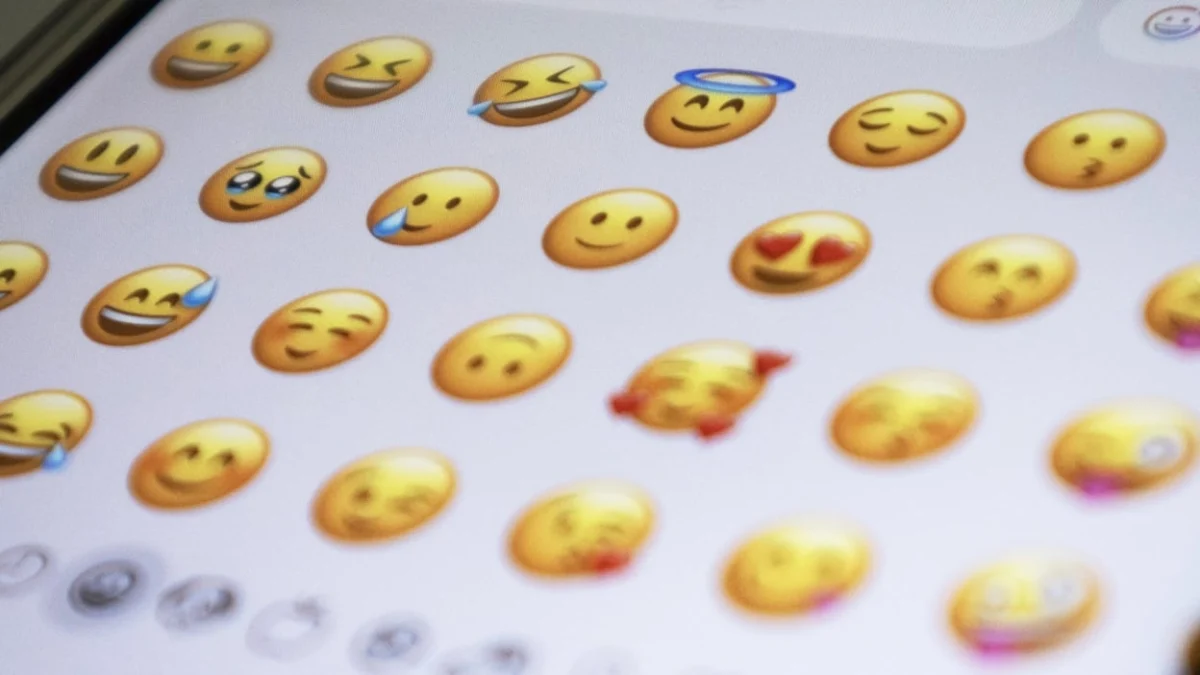
By Jake Peterson, Senior Technology Editor
July 15, 2026
In the spring of 2027, your digital keyboard will receive a modest but significant upgrade. As confirmed by Unicode Emoji Subcommittee Chair Jennifer Daniel, nine new characters are slated to join the global lexicon. This upcoming cohort includes the highly anticipated "Cracking Face," alongside the "Leftwards Thumb Sign," "Rightwards Thumb Sign," "Monarch Butterfly," "Pickle," "Lighthouse," "Meteor," "Eraser," and "Net With Handle."
While this addition is not the most expansive update in the history of Unicode, it highlights the ongoing evolution of how we communicate visually. For the average user, these icons appear seamlessly in software updates from Apple, Google, or Microsoft. However, the path these images take from a conceptual idea to a permanent fixture on billions of devices is a rigorous, bureaucratic, and surprisingly democratic process.
The Mechanics of the Emoji: Fact vs. Fiction
For years, a pervasive myth has persisted that a shadowy board of tech executives at companies like Apple, Google, or Meta dictates which emojis are released. The reality, however, is far more grounded in civic participation.
Emojis are governed by the Unicode Consortium, a non-profit organization founded in 1991 to standardize text across software systems. While the Consortium maintains the technical infrastructure, it does not act as an creative agency. It does not sit in a boardroom dreaming up new ways to express "pickle" or "meteor." Instead, the Consortium functions as a gatekeeper for proposals submitted by the public. When you see a new emoji, you are looking at an idea that originated from a real person—a student, a designer, or a linguist—who navigated a strict, formal submission process.
Chronology of an Emoji: From Concept to Keyboard
To understand how an emoji is born, one must look at the timeline of the Unicode development cycle.
- The Proposal Phase: Each year, the Unicode Consortium opens a window for public submissions. For the 2026 cycle, this window opened on April 2 and is scheduled to close on July 31.
- The Review Phase: Once a proposal is submitted, it undergoes a grueling technical and cultural vetting process. The Subcommittee evaluates the necessity, uniqueness, and potential usage frequency of the icon.
- The Deliberation: Proposals that pass the initial technical requirements are debated. The Committee looks for "distinctiveness"—is the proposed emoji significantly different from what is already available? Does it fill a genuine gap in communication?
- Approval and Encoding: Once approved, the emoji is assigned a code point. This is the technical "DNA" of the icon, ensuring that a "Cracking Face" sent from an Android phone appears correctly on an iPhone.
- Implementation: Finally, tech companies (vendors) take the standardized Unicode data and design their own artistic interpretation of the character, which is then pushed to users via OS updates.
This process is not instantaneous. A proposal submitted today may take 18 to 24 months to reach a user’s smartphone screen.
The Rigorous Standards of the Unicode Consortium
If you believe you have a vision for the next great emoji, you cannot simply send an email with a doodle. The Unicode Consortium requires a formal, evidence-based proposal that often runs several pages long.
Essential Submission Criteria
To be considered, a proposal must meet several high bars:

- Distinctiveness: The proposed emoji cannot be a minor variation of an existing one. For example, a "smiling cat" and a "crying cat" are distinct enough, but a "slightly sadder face" than one already in the set would likely be rejected.
- Usage Evidence: You must prove that people will actually use the emoji. This often involves providing search volume data, social media usage trends, or academic citations showing the cultural relevance of the concept.
- Visual Representation: The proposal must demonstrate that the concept is clearly recognizable even when rendered at a very small size (typically 16×16 or 32×32 pixels).
- Exclusion Criteria: The Consortium explicitly rejects proposals that are overly specific (e.g., a specific brand of shoe), promotional, or offensive. Furthermore, they maintain a "declined" list. If a concept like "mRNA" was rejected in 2022, it is effectively off the table for a period of at least four years, barring a major shift in context.
Analyzing the Data: Why Some Emojis Fail
The "Emoji Proposals Status" page serves as a fascinating archive of human ambition and, occasionally, confusion. A deep dive into the archives since 2015 reveals that thousands of ideas have been proposed, yet only a fraction make the cut.
"Acne" was declined in 2020 due to concerns regarding broad usage and sensitivity. "Cannabis," despite its high cultural prevalence, was declined in 2019 to avoid controversy and maintain a neutral, global standard. The data shows that the Consortium prioritizes utility over trendiness. An emoji that is a passing internet meme today will likely be rejected, whereas an object with universal, timeless utility—like a "Lighthouse" or "Eraser"—has a much higher probability of approval.
Implications for Digital Communication
The process of "democratizing" emoji creation has profound implications for how we view language. By allowing the public to submit proposals, the Unicode Consortium has turned the emoji set into a living, breathing map of human concerns and cultural shifts.
When we see the addition of "Monarch Butterfly," it reflects a growing global interest in climate awareness and biology. The "Cracking Face" represents the evolving landscape of digital emotional expression—a visual shorthand for stress or feeling "on the edge" that resonates with the current cultural moment.
However, the barrier to entry remains high. This ensures that our keyboards don’t become cluttered with thousands of obscure, unusable icons. It maintains a balance between personal expression and the technical need for global interoperability.
How to Get Involved: Your Final Chance
As of mid-July 2026, the clock is ticking. With the submission deadline looming on July 31, there is a very narrow window for aspiring "emoji architects" to get their proposals in.
If you are serious about submitting, the path forward is clear:
- Check the Status: Consult the official Emoji Proposals Status page to ensure your idea hasn’t already been rejected or approved.
- Gather Evidence: Start collecting data. How many people are talking about your subject? Why is this missing from our current digital toolkit?
- Read the Guidelines: The Unicode Consortium’s proposal page provides the exact formatting requirements. Do not deviate from these; the reviewers value precision above all else.
The future of digital communication is not being written by a corporate board, but by the users themselves. Whether it is a mundane object or a complex emotional signifier, the tools you use to talk to your friends and family are yours to shape—if you have the patience and the evidence to back up your vision. The keyboard is yours; you only have to reach out and claim it.
 Layla Zulfa
  Asro
Asro  Reynand Wu