
 By Raul Delapena Setiawan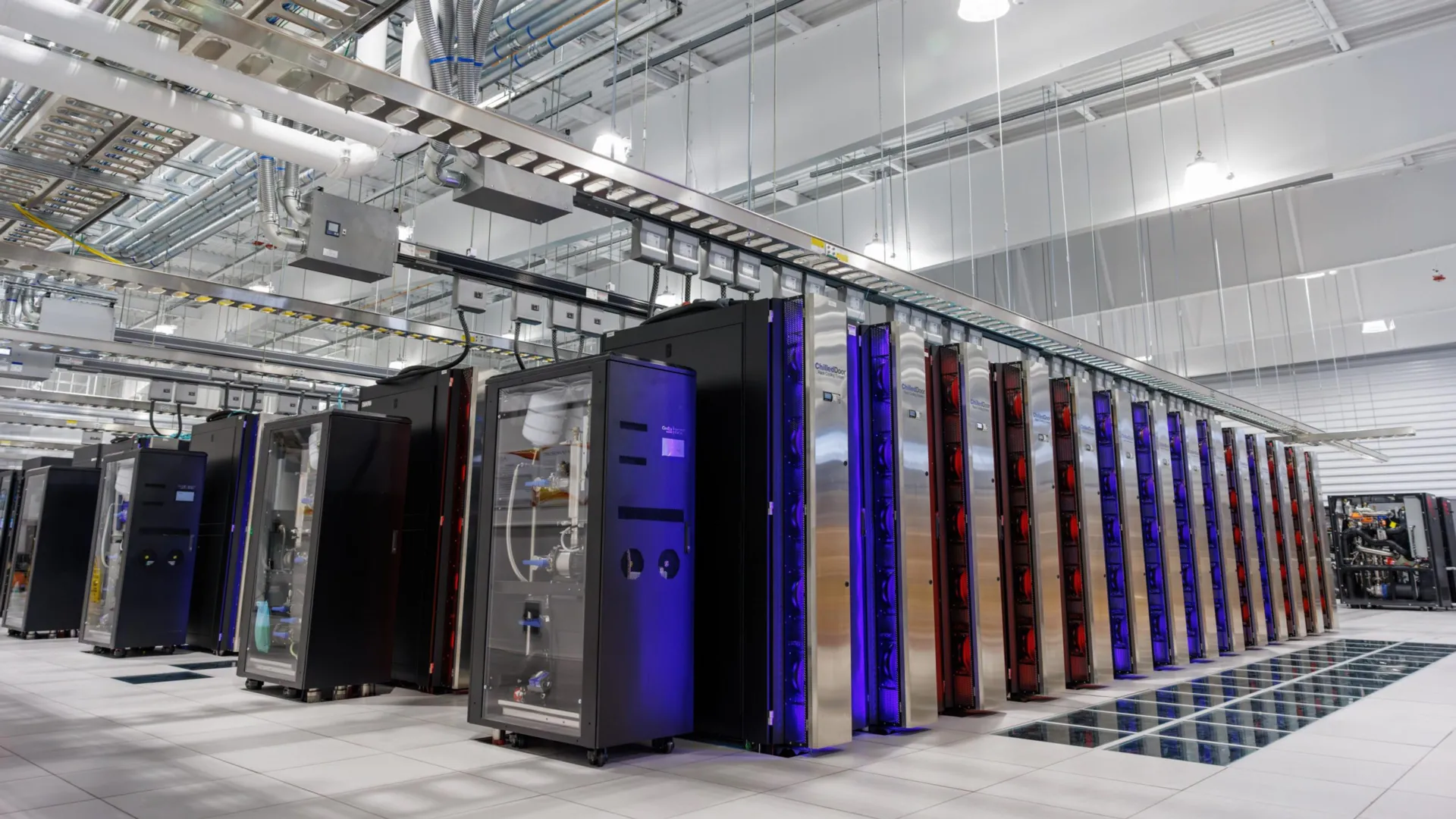
As the world hurtles toward an era defined by artificial intelligence, a quiet, high-voltage crisis is unfolding behind the scenes. In the United States alone, the massive infrastructure supporting AI systems and data centers consumed approximately 415 terawatt-hours of electricity in 2024. This staggering figure represents more than 10% of the nation’s total electricity production—a share that is projected to double by 2030 if current trajectories hold.
The promise of generative AI, while transformative, is currently tethered to an unsustainable energy model. However, a breakthrough from the laboratory of Matthias Scheutz, Karol Family Applied Technology Professor at a leading School of Engineering, may offer a way out. By pioneering a "neuro-symbolic" approach to artificial intelligence, researchers have developed a proof-of-concept system that achieves up to 100 times greater energy efficiency while simultaneously outperforming traditional models in complex tasks.
The Chronology of an Energy Crisis
The rapid escalation of AI energy consumption is a relatively recent phenomenon, largely triggered by the global adoption of Large Language Models (LLMs).
- 2022–2023: The LLM Boom: The public release of generative AI tools sparked an unprecedented arms race among tech giants. To train these models, companies began amassing data centers of historic scale, utilizing tens of thousands of power-hungry GPUs operating 24/7.
- 2024: The Sustainability Threshold: The International Energy Agency (IEA) confirmed that data centers and AI operations had reached a critical threshold, consuming roughly 10% of U.S. power generation. This prompted government agencies and environmental watchdogs to issue warnings regarding the stability of the power grid.
- May 2025: The Path Forward: The research team led by Professor Scheutz is scheduled to present their findings at the International Conference of Robotics and Automation (ICRA) in Vienna. Their work marks a departure from the "bigger is better" ethos that has defined the industry for the last three years.
Supporting Data: Why Current Models Fail
To understand the energy crisis, one must first understand the inefficiency of current Visual-Language-Action (VLA) models. Unlike standard LLMs, which process text, VLA models are designed for robotics, interpreting visual data from cameras and physical instructions to control mechanical limbs, wheels, and grippers.
The Trial-and-Error Trap
Conventional VLA systems function through brute-force statistical pattern matching. To teach a robot to stack blocks, developers expose the system to thousands of hours of video and sensor data. The robot learns through relentless trial and error.
This process is fraught with two major vulnerabilities:
- Hallucinations and Errors: Much like a chatbot might invent a legal precedent, a VLA robot may misinterpret a shadow as a physical object or misjudge the center of gravity, causing a structure to collapse.
- Resource Inefficiency: Because these systems do not inherently "understand" physics or logic, they require astronomical amounts of training to master even rudimentary tasks.
Professor Scheutz notes the disparity in energy usage between a standard Google search and an AI-generated summary. The latter, driven by generative AI, consumes up to 100 times more energy than the traditional list of website links. This "energy tax" is paid every time a query is made, multiplied by millions of users daily.
The Neuro-Symbolic Revolution
The solution proposed by Scheutz’s team—Neuro-Symbolic AI—seeks to bridge the gap between machine learning and human cognition.
How It Works
Traditional neural networks are excellent at recognizing patterns but struggle with abstract reasoning. Symbolic AI, conversely, operates on explicit rules and logical frameworks (e.g., "If an object is unbalanced, it will fall"). By combining these two approaches, the team has created a hybrid architecture that mimics how humans solve problems: we don’t guess a million times; we use experience to recognize the pattern and logic to structure the solution.
Empirical Performance
The team’s testing, based on the classic "Tower of Hanoi" puzzle, yielded results that challenge the industry standard:
- Success Rate: The neuro-symbolic VLA achieved a 95% success rate, compared to a dismal 34% for traditional models.
- Adaptability: When presented with a novel, more complex version of the puzzle, the hybrid system maintained a 78% success rate, whereas standard models failed every single attempt.
- Training Velocity: Perhaps most impressively, the new system mastered the task in just 34 minutes. Traditional models required more than 36 hours of continuous computing to reach a baseline level of competency.
Official Responses and Scientific Implications
The academic community has received these findings as a necessary "reset" for AI development. Industry analysts have long warned that the current path—building massive data centers that consume as much electricity as small cities—is hitting a physical ceiling.
"We are reaching a point where the energy cost of AI is beginning to outweigh its utility in certain sectors," says an industry observer. "If we continue to rely on statistical brute force, we are effectively choosing between AI advancement and climate targets. Professor Scheutz’s work provides a middle path: a way to maintain progress without the exponential energy growth."
The implications for robotics are particularly profound. As robots move from controlled factory environments into unpredictable homes and hospitals, they cannot afford to "learn" through trial and error—the risk of damage to property or people is too high. A neuro-symbolic robot that understands rules is inherently safer and more reliable.
Implications for the Future of Tech
As the findings from the Vienna conference begin to permeate the industry, the implications for the future of AI are broad and urgent.
1. The End of the "Data Hunger" Era
For years, the gold standard for AI performance has been the volume of data fed into a model. The neuro-symbolic approach suggests that quality and logic are more important than sheer volume. This could lead to a decoupling of AI capability from energy consumption.
2. Infrastructure Resilience
If companies adopt neuro-symbolic architectures, the pressure on the national power grid could be significantly mitigated. Reducing the energy cost of training by 99% and operational costs by 95% would effectively transform the economics of AI deployment. It would allow smaller, regional data centers to perform tasks that currently require massive, centralized server farms.
3. A Shift in Corporate Strategy
Major tech corporations are currently incentivized to build larger models to maintain market share. However, as energy prices rise and carbon regulations tighten, the "energy-per-task" metric will likely become a key indicator of corporate performance. Companies that prioritize efficiency will not only be more sustainable but will likely be more profitable, as they will spend less on the electricity required to maintain their models.
Conclusion: A Sustainable Path Forward
The "AI-energy paradox" is not a permanent feature of technological evolution, but rather a byproduct of the initial, experimental phase of generative AI. The transition from pure statistical models to neuro-symbolic systems represents a maturation of the field.
By integrating human-like logical reasoning into machine learning, the research from Scheutz’s lab offers a glimpse into a future where AI is not only smarter and more reliable but also fundamentally more compatible with a sustainable planet. As the industry gathers in Vienna this May, the focus will likely shift from how much power we can throw at a problem, to how much logic we can bake into the solution. The era of brute-force AI may soon be coming to a close, replaced by a smarter, leaner, and more intentional approach to artificial intelligence.
 Sagoh
Sagoh  Asro
Asro  Siti Muinah