
 By Nana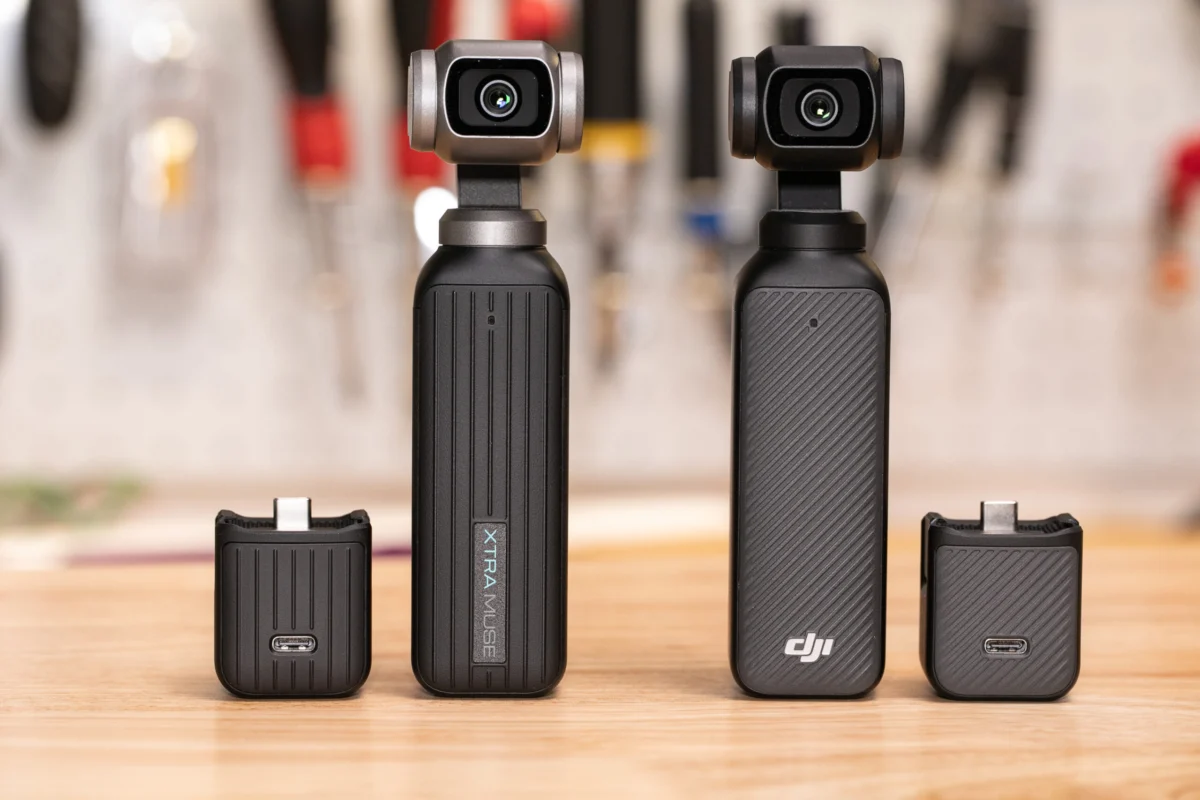
In a move that marks a significant escalation in the ongoing geopolitical tug-of-war over technology supply chains, the Federal Communications Commission (FCC) is preparing to exercise a controversial new authority: the power to retroactively revoke equipment authorizations. This unprecedented regulatory shift is aimed squarely at a network of entities the Commission identifies as “front companies” for the Chinese drone giant DJI, accused of circumventing U.S. national security prohibitions.
This development signals a pivot from passive regulation to active market enforcement. For years, the FCC acted primarily as a gatekeeper, vetting devices for technical compliance before allowing them to enter the American market. Now, the agency is positioning itself as a proactive watchdog, willing to reach back into the marketplace to strip approvals from products already circulating in the hands of consumers and sitting in domestic warehouses.
The Genesis of a Regulatory Power Grab
The foundation for this crackdown was laid last October, when the FCC granted itself the authority to retroactively ban gadgets that had previously cleared its regulatory hurdles. The policy was framed as a national security imperative, designed to close loopholes that allowed companies to mask the true origin of their hardware.
The current target is a collection of eight specific entities—including the firms behind the Skyrover drone line and Xtra camera equipment—that the FCC alleges are acting as proxies for DJI. These companies, the FCC claims, have been instrumental in sneaking Chinese-manufactured technology past the federal ban on certain foreign-origin drone equipment. While the FCC previously proposed a $25,000 fine against these entities, the current proposal represents a massive escalation: a full-scale prohibition on the import, marketing, and distribution of their entire existing inventory.
Chronology of the Escalation
The trajectory of this enforcement action has been swift, characterized by a rapid succession of warnings and administrative maneuvers:
- October 2024: The FCC officially establishes its policy to retroactively ban previously approved devices based on national security concerns.
- Early July 2025: The FCC issues an ultimatum to eight identified “front companies,” demanding detailed information regarding their operations and ownership structures, with a hard deadline of July 20th.
- Mid-July 2025: The Commission proposes a $25,000 fine against these companies for alleged non-compliance and deceptive filing practices.
- Late July 2025: The FCC formalizes its intent to ban these companies from the U.S. market, effectively moving to nullify their existing equipment authorization codes.
- Current Status: The agency has “temporarily deferred” the grantee codes of these firms—a nebulous administrative status that effectively halts their ability to secure future authorizations while the current products face a potential market-wide purge.
The Mechanics of the "Front Company" Network
The exposure of these entities was not solely the result of federal intelligence gathering, but rather a crowdsourced investigation. Security researcher Konrad Iturbe, who published a detailed analysis titled To Catch a Vibe, was instrumental in identifying the patterns that linked these shell entities to DJI.
The list of firms currently in the FCC’s crosshairs includes Cogito Tech, Fixaxo Technology, Lyno Dynamics, Skyhigh Tech, Spatial Hover, SZ Knowact, WaveGo Tech, and Xtra Technology. Notably, these entities have largely remained silent, failing to respond to official FCC inquiries. The exception is the agricultural drone manufacturer XAG, which did submit a response to the Commission, though the FCC characterized the submission as insufficient and lacking the specific data required for regulatory transparency.
Furthermore, the FCC is systematically dismantling the infrastructure that enabled these products to reach American shelves. In a related action, the Commission is severing ties with SGS-CSTC Shenzhen, a Chinese testing lab that provided the compliance certifications for several of these products. The FCC argues that the lab’s ownership structure—specifically, that 15 percent of the entity is held by a Chinese state-affiliated firm—violates U.S. regulations that prohibit entities with more than 10 percent foreign control from certifying radio equipment for the American market.

The Human and Economic Cost
The implications of this policy for the consumer market are profound. Take, for example, the Xtra Muse, a camera that functions as a direct clone of the DJI Osmo Pocket 3. Until recently, this device was widely available on major e-commerce platforms like Amazon, often with the promise of next-day delivery.
Under the proposed ban, these products would be purged from online marketplaces. For companies like Xtra, the fallout is catastrophic: they face the forced write-off of millions of dollars in inventory currently sitting in U.S.-based fulfillment centers. While the FCC has clarified that the ban would not reach back to punish individual consumers who already own these devices, the secondary market for these items would effectively evaporate, and software support for these devices—often tethered to the manufacturer’s cloud—could be crippled by the sudden regulatory hostility.
Official Responses and Public Skepticism
The FCC justifies these actions through the lens of national security, though it has yet to release specific, publicly verifiable evidence that these specific consumer cameras or drones pose an immediate threat to the American public.
Critics argue that the FCC’s transparency in this matter is lacking. The agency is currently opening a 30-day window for public comment, claiming it will consider “specific evidence” provided by the accused companies. However, historical precedent casts doubt on the weight of such public discourse. In the past, the FCC has been accused of ignoring massive volumes of public comments on major policy shifts, such as net neutrality, and even misleading the public regarding the nature of cyberattacks on its own systems.
The phrase "temporarily deferred the grantee codes" remains a point of contention. Industry experts and former FCC officials have noted that this terminology is not standard regulatory language. It occupies a grey area that creates immediate legal uncertainty, preventing businesses from functioning while stopping short of a final, litigated order.
Broader Implications for Global Trade
This crackdown represents a paradigm shift in how the United States manages "dual-use" technology. By targeting the supply chain at the point of authorization rather than just at the border, the FCC is effectively creating a "blacklist" that can evolve in real-time.
- The End of Passive Approval: Manufacturers can no longer rely on a one-time approval. Compliance is now a continuous state, subject to ongoing geopolitical assessment.
- Increased Due Diligence: Retailers and importers must now conduct deep-level investigations into their suppliers. If a product is later found to be linked to a restricted entity, the cost of the recall or inventory write-off will fall entirely on the distributor.
- Fragmented Markets: We are seeing the early stages of a "Splinternet" for hardware, where Chinese-developed or Chinese-manufactured consumer electronics are increasingly excluded from the North American ecosystem.
Conclusion: A High-Stakes Game
The FCC’s aggressive posture toward these front companies is a clear signal that the agency is willing to endure legal challenges and market disruption to fulfill its mandate of national security. Whether this strategy will successfully mitigate the perceived risks posed by foreign-manufactured technology, or whether it will lead to a protracted period of litigation and market instability, remains to be seen.
As the July 20th deadline passed without meaningful cooperation from the identified entities, the FCC appears poised to move toward a final order. For now, the "front companies" are in a state of suspended animation, and the tech industry is bracing for a new era where an FCC certification is no longer a permanent guarantee of entry, but a fragile status that can be revoked at the stroke of a pen.
 Raul Delapena Setiawan
  Siti Muinah
  Asro
Asro 