
 By Ali Ikhwan
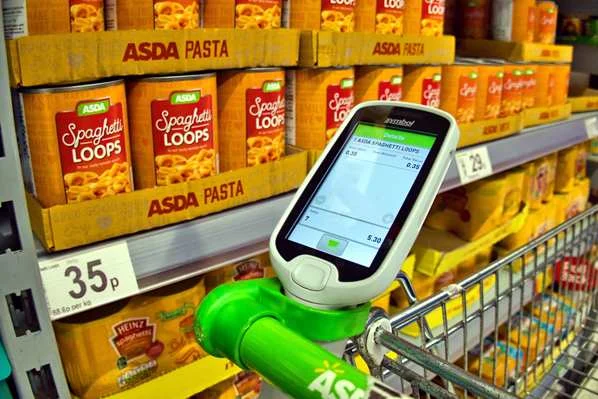
Self-service technology has long been perceived as a mere convenience—a way for time-strapped consumers to bypass traditional queues. However, the retail landscape is currently undergoing a structural metamorphosis. No longer confined to the checkout counter, self-service is rapidly emerging as the digital backbone of modern physical retail.
According to a seminal report titled "Self-Service Technology: Powering the Modern In-Store Experience and Operations," published by Coresight Research in collaboration with Zebra Technologies and Elo Touch Solutions, the retail sector is standing on the precipice of an aggressive, industry-wide deployment wave. Based on a comprehensive survey of 150 U.S. retail executives, the data suggests that 80 percent of retailers are preparing to either launch or significantly expand their self-service capabilities over the next 24 months. Despite recent media narratives highlighting the friction and "shrink" (theft) issues associated with self-checkout, the industry is not retreating. Instead, retailers are doubling down, evolving the technology, and weaving it into every facet of the customer journey.
The Expansion Landscape: Moving Beyond the Kiosk
While the ubiquitous self-checkout kiosk has become a staple of grocery stores and big-box retailers, the current state of adoption reveals a surprising reality: only 23 percent of retailers have achieved full-scale implementation across their entire store fleets. The vast majority—roughly 77 percent—are still navigating the complexities of pilot programs, regional rollouts, or hybrid testing models.
This "adoption gap" is not a sign of stagnation, but rather a reflection of the significant headroom for growth expected through 2028. Retailers are moving beyond the stationary, "point-of-sale-only" mindset. The next generation of self-service technology is diversifying into several high-impact areas:
- Smart Fitting Rooms: Retailers are integrating touchscreens and RFID sensors that allow customers to request different sizes or styles without leaving the fitting room, simultaneously providing staff with real-time data on inventory interest.
- Mobile Point-of-Sale (mPOS): Empowering store associates to check out customers anywhere on the floor, effectively eliminating the "last-mile" wait.
- Automated Returns Kiosks: Streamlining the high-friction process of reverse logistics, allowing customers to drop off returns via automated lockers, which reduces the administrative burden on store staff.
- Endless Aisle Tablets: Interactive kiosks that allow shoppers to order out-of-stock items for home delivery, effectively bridging the gap between physical inventory and the digital warehouse.
The Economic Engine: Labor Redeployment and Operational Efficiency
One of the most persistent misconceptions regarding self-service technology is that its primary objective is to eliminate headcount. While cost-cutting is a factor, the research suggests a more nuanced reality. The primary drivers for this massive investment are labor shortages and the escalating costs of human capital.
Retailers are facing a "perfect storm" of high turnover rates and rising wage pressures. In this environment, self-service technology is being utilized as a tool for labor redeployment rather than mere staff replacement. By automating repetitive, low-value tasks—such as scanning items or processing simple returns—retailers are freeing up human associates to focus on high-value interactions. This includes personalized sales assistance, complex problem-solving, and building brand loyalty, which are areas where human capital significantly outperforms machines.
Furthermore, the ROI on these systems is becoming increasingly rapid. By optimizing floor operations and reducing the number of hours spent on administrative checkout processes, retailers are reporting improvements in store throughput, better data collection on shopper behavior, and a more consistent operational standard across diverse geographic locations.
Chronology: The Evolution of the Self-Service Model
To understand where retail is headed, one must look at how the technology has evolved over the past two decades:
- Early 2000s (The Experimental Phase): Self-checkout is introduced in select grocery chains. It is viewed as an experimental, high-friction technology often reserved for small baskets.
- 2010–2019 (The Standardization Phase): Kiosks become standard equipment in supermarkets. Retailers focus on hardware reliability and reducing software "hangs" that require human intervention.
- 2020–2022 (The Pandemic Acceleration): COVID-19 mandates social distancing, forcing a rapid, forced adoption of touchless and self-service technologies. The technology moves from "optional" to "essential."
- 2023–2024 (The Security/Shrink Crisis): The industry experiences a backlash due to rising theft rates. Retailers begin testing advanced loss-prevention AI, computer vision, and weight-sensitive shelving.
- 2025–2028 (The Integration Phase): Current projections show a shift toward "Connected Retail," where self-service, inventory management, and personalized CRM data merge into a single, seamless ecosystem.
Supporting Data: By the Numbers
The Coresight Research study provides a clear quantitative picture of the industry’s trajectory:
- 80%: The percentage of retailers planning to increase investment in self-service technology over the next two years.
- 23%: The percentage of retailers who have successfully scaled these solutions across their entire store fleet.
- 50%: The increase in operational efficiency reported by retailers who have integrated AI-driven loss prevention alongside their self-checkout kiosks.
- 72%: The proportion of executives who cite "customer experience improvement" as a primary driver for technology implementation, ranking it higher than "cost reduction."
Operational Hurdles: Addressing Shrink and Friction
The path toward a fully automated store is not without significant obstacles. Retailers must manage two primary categories of friction:
1. The "Shrink" Challenge
Loss prevention remains the most cited concern. The ease of bypassing traditional checkout has, in some instances, led to higher inventory shrinkage. However, the industry is responding with sophisticated AI-driven surveillance. Computer vision systems can now detect "sweethearting" (when an associate or customer intentionally fails to scan an item) and item-mismatch errors in real-time, alerting staff before the transaction is finalized.
2. System Friction
Technical downtime, unintuitive user interfaces, and the constant need for "intervention codes" from store associates create a frustrating experience for the shopper. If a machine requires a human to "unlock" the transaction every two minutes, the value proposition of self-service is effectively nullified. Retailers are now moving toward "frictionless" hardware that prioritizes speed and reliability over complex, multi-step software flows.
Official Responses and Strategic Implications
Industry leaders from the companies behind the research emphasize that the future of retail is not "human vs. machine," but rather "human-plus-machine."
- Zebra Technologies perspective: The focus is on the "connected worker." By giving associates mobile devices that sync with self-service kiosks, store employees can oversee multiple checkout points from a distance, intervening only when necessary.
- Elo Touch Solutions perspective: The emphasis is on "durable design." As self-service moves into high-traffic areas, the hardware must be resilient, modular, and capable of being updated without ripping out the entire kiosk structure.
The strategic implication for retail leadership is clear: stop thinking in silos. The most successful retailers will be those who treat their checkout kiosks, mobile POS, and digital inventory systems as one cohesive architecture.
Recommendations for Future Success
Coresight, Zebra, and Elo offer a strategic roadmap for retailers looking to move from experimental pilots to fleet-wide maturity:
- Adopt an Architectural Approach: Do not deploy self-service as a standalone island. Ensure that your kiosk software communicates directly with your ERP (Enterprise Resource Planning) and CRM systems. Data collected at the kiosk should immediately update inventory counts and shopper loyalty profiles.
- Prioritize Loss-Prevention AI: Do not rely on manual security. Invest in computer vision and weight-sensing technology that provides a "frictionless" safety net, allowing honest customers to pass through while flagging suspicious activity.
- Redesign the "Associate Role": Change the job description of your floor staff. Instead of being "cashiers," they should become "customer success managers" who are trained to navigate the store, assist with technology, and provide the human touch that a kiosk cannot replicate.
- Listen to the Customer: Use the data from your pilots to identify the specific pain points of your clientele. If a demographic finds the technology too difficult, simplify the interface; if they find it slow, invest in faster scanners.
Conclusion
The findings from the latest industry reports underscore a decisive shift: self-service is no longer viewed as an isolated, niche alternative to the traditional checkout. It has become the primary operating model for modern retail. As the industry moves beyond the pilot phase and into full-scale implementation, success will belong to those who seamlessly blend smart hardware, loss-prevention AI, and empathetic human service into a cohesive, high-functioning ecosystem. The retailers that win in 2028 will be those who understand that technology is not meant to remove the human element, but to elevate it, allowing brands to focus on the one thing that truly matters: the customer experience.
 Basiran
 Sagoh
 Nana Wu
