
 By Asro
In the modern digital economy, the quality of customer support is no longer just a "cost center"—it is the primary driver of retention and brand loyalty. As e-commerce businesses scale, the software they choose to manage their customer relationships becomes the backbone of their operations. Among the industry heavyweights, HubSpot Service Hub and Zendesk stand as the two most prominent contenders.
While both platforms are designed to resolve customer inquiries, they originate from fundamentally different philosophies. HubSpot is the titan of the "all-in-one" customer platform, while Zendesk is the gold standard for high-volume, specialized ticket management. Choosing between them is not merely a technical decision; it is a strategic one that dictates how your business will handle growth for years to come.
The Core Positioning: Two Philosophies of Support
To understand the difference, one must look at the origin stories of both platforms.
HubSpot: The CRM-Centric Ecosystem
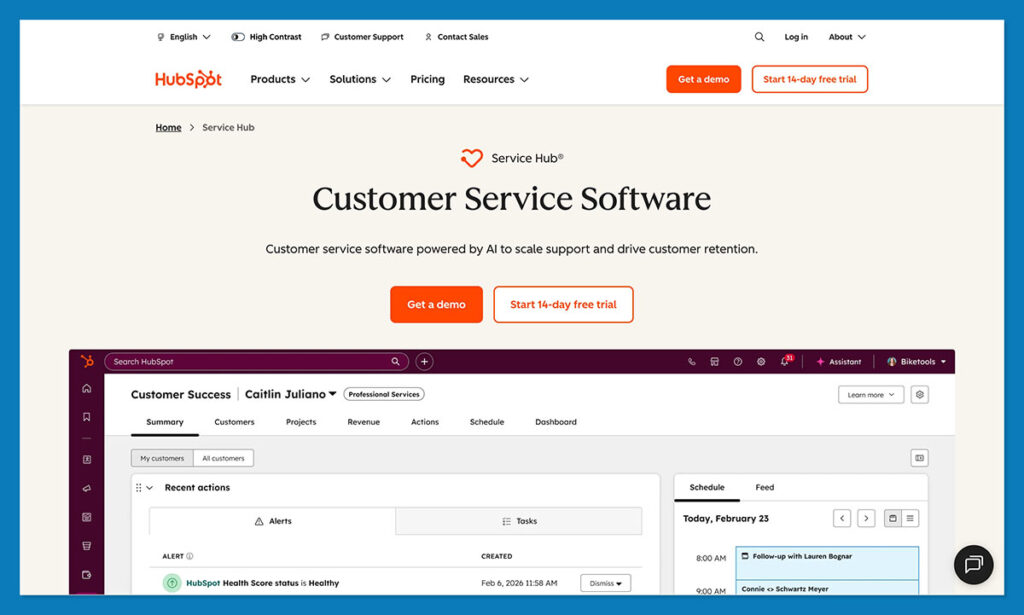
HubSpot began as an inbound marketing pioneer. Their approach to service is an extension of their "Flywheel" model, which posits that marketing, sales, and service should exist in a unified, virtuous cycle. For a business using HubSpot, the Service Hub is not an isolated tool; it is a window into the HubSpot CRM. Every ticket is enriched by data regarding past purchases, marketing email interactions, and sales notes. This integration creates a holistic "customer context" that is difficult to replicate in siloed systems.
Zendesk: The Dedicated Support Powerhouse
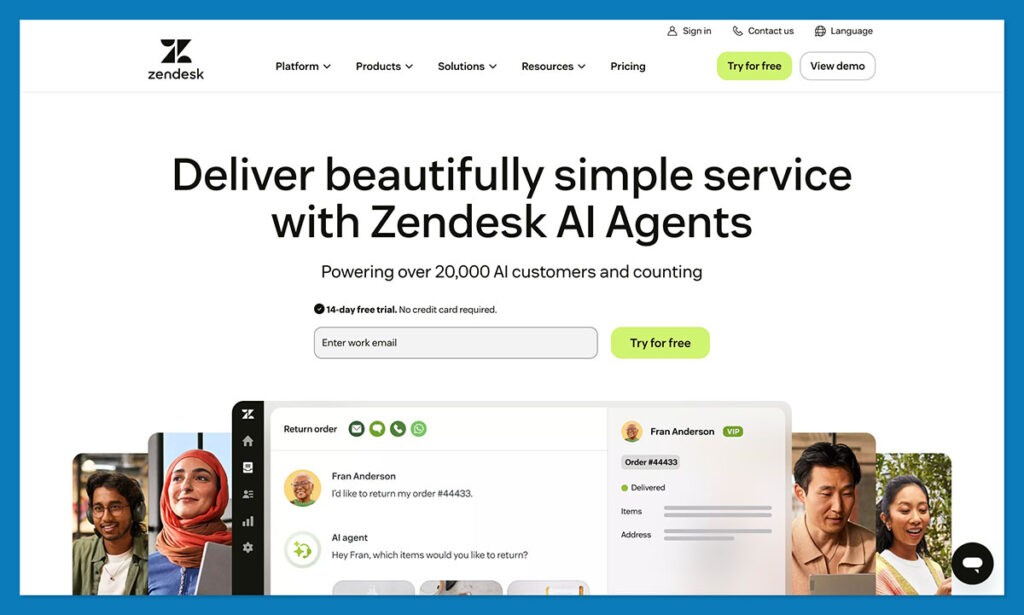
Zendesk, by contrast, was built specifically for the contact center. It treats support as a craft, focusing on the efficiency of the "agent experience." If your organization manages thousands of tickets daily, requires complex routing, or relies heavily on multi-channel voice support, Zendesk is engineered to handle that pressure. It is a "pure-play" support solution that excels in high-volume, high-velocity environments where ticket throughput is the primary metric of success.
Chronology and Evolution of the Platforms
The trajectories of these two companies offer insight into their current capabilities.
- The Early Years (2007–2012): Both companies established themselves during the explosion of SaaS. Zendesk focused on making ticket management "cleaner" and more accessible than the bloated legacy systems of the time. HubSpot focused on automating the marketing funnel.
- The Mid-Market Pivot (2013–2018): HubSpot expanded from marketing into sales and service to capture the entire customer lifecycle. Zendesk focused on deepening its "Suite" capabilities, acquiring voice and messaging tools to become an omnichannel destination.
- The AI Era (2019–Present): Both companies have pivoted aggressively toward Artificial Intelligence. HubSpot introduced Breeze AI, embedding intelligence into the very fabric of the CRM. Zendesk launched its own advanced AI agents and workforce management tools, aiming to automate the "human" element of support as efficiently as possible.
Supporting Data: Why Context Matters
The difference in approach is best illustrated by a real-world case study. Liquidity Services, a global marketplace, transitioned to the HubSpot ecosystem to consolidate its operations. By centralizing their customer journey, they reduced support costs by 50%. This success story highlights a key implication: when support is connected to sales and marketing, you resolve issues faster because you already know who the customer is.
In contrast, organizations like large-scale BPOs (Business Process Outsourcing) frequently prefer Zendesk. In these environments, the objective is to handle the maximum number of tickets per hour. Zendesk’s reporting dashboards—specifically those found in Zendesk Explore—offer granular, deep-dive analytics into agent performance and queue bottlenecks that are arguably more advanced than what the average user finds in HubSpot’s more generalized reporting suite.
Deep Feature Comparison
Ease of Use and Onboarding
Zendesk feels like a high-performance vehicle: it is fast, responsive, and rewards those who learn its intricacies. Its mobile app is among the best in the industry, allowing agents to manage a ticket queue from anywhere.
HubSpot, however, wins on "time-to-value" for smaller teams. Because it shares the same interface as the CRM and marketing tools, an employee who knows how to update a lead in the CRM already knows how to navigate the service record. The learning curve is flatter, provided the organization is already committed to the HubSpot ecosystem.
AI and Automation: The Intelligence Gap
HubSpot’s Breeze AI is designed for "intelligence across the board." It generates responses that sound like your brand because it has access to your entire CRM history—not just the support ticket. It can identify a VIP client based on their lifetime value and automatically route them to a senior agent.
Zendesk’s Service AI is focused on "operational efficiency." It excels at auto-triage, categorizing complex tickets before they even reach a human. Its workforce management tools and QA (Quality Assurance) scoring are superior for managers who need to monitor the health of a 50-person support department.
Omnichannel Support
Zendesk is the undisputed champion of channel diversity. If your business operates across WhatsApp, SMS, Facebook Messenger, Instagram, and a specialized IVR (Interactive Voice Response) phone system, Zendesk’s unified workspace is designed to handle this chaos without breaking a sweat.
HubSpot handles all these channels as well, but it treats them as "data sources" for the CRM. If you are an e-commerce brand that needs to see the correlation between a "wrong size" complaint and a "refund rate" on a specific product, HubSpot makes that insight visible. In Zendesk, you would likely need to export data to a third-party BI tool to see the same correlation.
Implications for Your Business
Choosing between these two platforms implies a choice about your business culture.
- If you choose HubSpot: You are committing to a unified data strategy. You believe that support, sales, and marketing should be one team. This reduces friction in the customer journey but requires a higher investment in the HubSpot platform and a willingness to "buy into" their ecosystem.
- If you choose Zendesk: You are committing to a specialized support strategy. You believe that your support team needs the best possible tools for high-volume queue management, even if those tools live in a "silo" separated from your CRM or marketing automation software.
FAQ: Frequently Asked Questions
Q: Which platform is better for e-commerce?
A: HubSpot is generally superior for e-commerce because it natively connects order history, shipping status, and customer lifetime value (LTV) to the support ticket. This empowers agents to make informed decisions without switching tabs.

Q: Does Zendesk have a CRM?
A: Yes, Zendesk offers Zendesk Sell. However, it is a separate product from the support suite. It does not feel as deeply integrated as HubSpot’s CRM, often requiring agents to toggle between windows to find full customer context.
Q: Can I use both?
A: While possible, it is not recommended. Integrating them requires complex API work or third-party middleware like Zapier, which can lead to data latency and "broken" syncs during high-volume periods, such as Black Friday.
Q: Is there a cost-effective path for startups?
A: HubSpot is often more attractive for startups due to its robust "Free" CRM tier and tiered pricing that scales alongside the business. Zendesk does not offer a free tier, meaning the entry cost is immediate.
The Verdict
If you are a mid-to-large enterprise running a dedicated, high-volume contact center where support efficiency is the primary KPI, Zendesk remains the industry gold standard. Its ability to manage complex queues, voice traffic, and agent performance is unmatched.
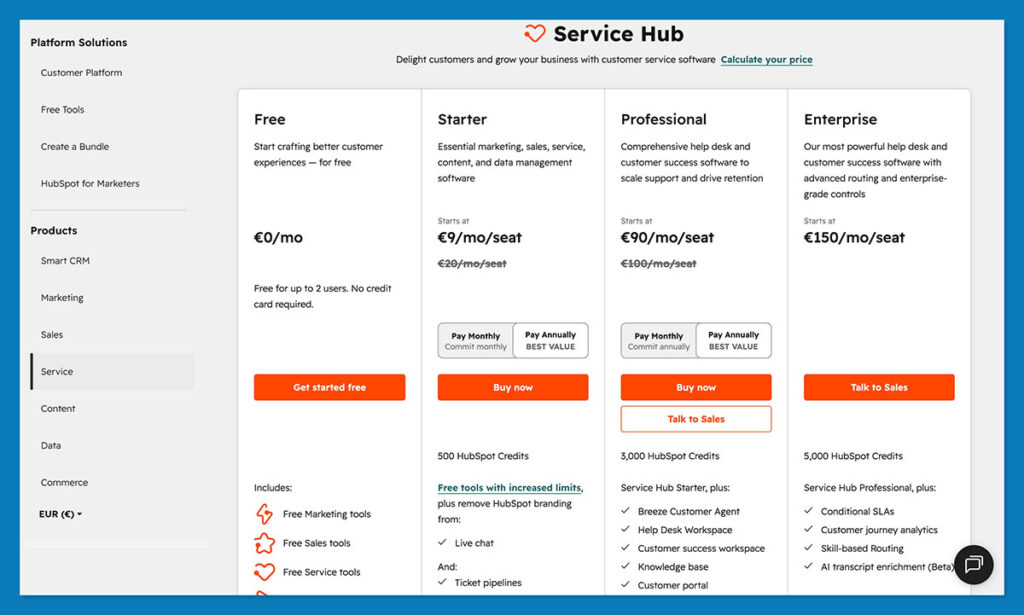
However, for the majority of modern e-commerce businesses, HubSpot Service Hub is the more strategic choice. By unifying your support data with your sales and marketing efforts, you move beyond "handling tickets" and start "building relationships." In a market where customer loyalty is the ultimate currency, the ability to see the entire customer journey in one place is not just a feature—it is a competitive advantage.
Before committing, take advantage of the free trials offered by both. Load your actual data, simulate a high-volume scenario, and see which interface your agents prefer. The best tool is the one that your team will actually enjoy using every single day.
 Dwi Wanna
  Lina Irawan
  Basiran