
 By Jia Lissa
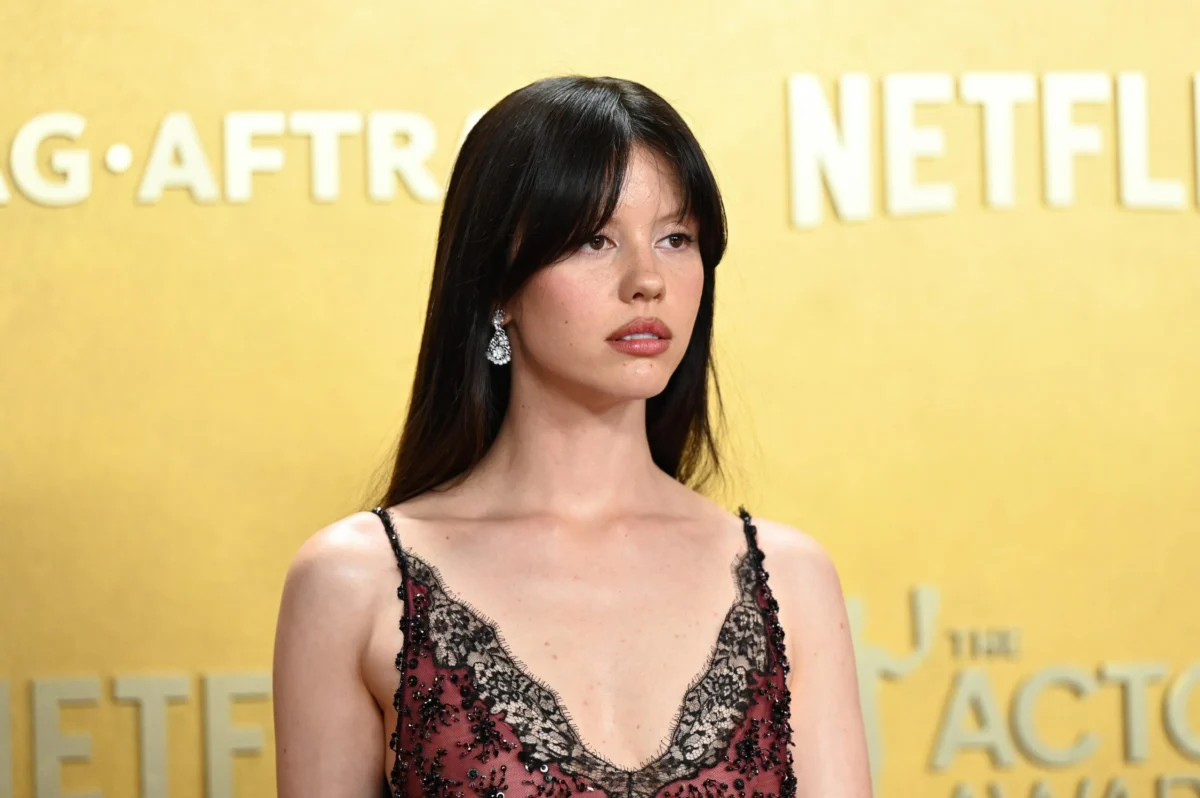
In the hyper-connected digital landscape of the 21st century, the line separating reality from synthetic fabrication has grown dangerously thin. Earlier this month, a digital firestorm erupted across the internet following unverified reports that actress and horror icon Mia Goth had filed for divorce from her husband, actor and filmmaker Shia LaBeouf. While celebrity splits are standard fodder for the tabloid cycle, this particular narrative took a surreal and technologically alarming turn.
At the center of the controversy was an Instagram post from a verified account under the handle @miagoth_. The image depicted Goth wearing a provocative black t-shirt emblazoned with the bold, unmistakable statement: “MY EX IS MY BIGGEST FAN.” Accompanying the visual was the tongue-in-cheek selection of Beyoncé’s empowerment anthem, “Single Ladies (Put a Ring on It).”
Within hours, the post accumulated hundreds of thousands of likes, capturing the attention of casual scrollers, industry insiders, and major entertainment publications alike. Outlets such as OK! and People rushed to publish articles treating the post as an authentic personal statement from the actress. Screenshots rapidly migrated across platforms, cascading onto Facebook, X (formerly Twitter), and TikTok.
There was just one catch: the entire thing was fake. Mia Goth does not use social media, and the viral photograph was entirely AI-generated.
The incident has since ignited a fierce debate regarding the integrity of digital verification, the ethical boundaries of generative artificial intelligence, and the complicity of major tech conglomerates in the proliferation of digital misinformation.
Main Facts: Dissecting the Hoax
The anatomy of the Mia Goth AI hoax reveals a systemic vulnerability in how social media platforms authenticate users and manage synthetic media.
- The Perpetrator: The image originated from the Instagram account
@miagoth_, a page boasting over a million followers. Although the account was technically labeled as a "fan-run" page, it possessed a coveted blue verified checkmark. - The Content: A photorealistic, AI-generated image of Mia Goth wearing a specific, culturally charged slogan shirt ("MY EX IS MY BIGGEST FAN"), paired strategically with a viral audio track to maximize algorithmic engagement.
- The Fallout: Prominent media outlets reported on the image as factual news, demonstrating how quickly synthetic content can weaponize traditional entertainment journalism.
- The Truth: Representatives for Goth forcefully clarified that the actress maintains zero presence on social media platforms and had no involvement in the creation or dissemination of the post.
The ease with which a fake account secured high-level credibility—and subsequently fooled both the public and professional journalists—highlights a profound failure in digital platform governance.
Chronology of an AI-Driven Viral Loop
Understanding how a fabricated image crippled journalistic standards requires examining the timeline of its rapid deployment and mainstream absorption.
Phase 1: The Setup and Verification
Prior to the incident, the @miagoth_ account successfully navigated Meta’s verification parameters. By subscribing to paid verification programs introduced by Meta in recent years, the fan-run page secured a blue checkmark. Historically, this badge served as a gold standard of authenticity, denoting a real public figure or official entity. Under modern platform rules, however, it merely signals that an account has paid a fee and confirmed its identity as a distinct entity—leaving wide latitude for impersonation or misleading fan pages.
Phase 2: The Drop and Algorithmic Amplification
Capitalizing on real-world news surrounding Goth and LaBeouf’s reported divorce proceedings, the account deployed the synthetic image. Utilizing Instagram’s recommendation algorithms and audio integration features, the post was fed directly into the feeds of millions of users. The blue checkmark acted as a psychological shortcut, signaling to viewers that the content was trustworthy.
Phase 3: Journalistic Capture
As engagement metrics skyrocketed into the hundreds of thousands of likes, digital newsrooms monitoring trending topics took the bait. Major outlets, operating under the relentless pressure of the 24-hour news cycle, published articles analyzing Goth’s purported "swipe" at her ex-husband.
Phase 4: The Backlash and Deletion
As public scrutiny intensified, Goth’s legal and public relations representatives intervened, contacting technology journalists and platform moderators. They revealed that repeated complaints to Instagram had previously fallen on deaf ears. Following renewed media inquiries, the @miagoth_ account was abruptly wiped from Instagram by Tuesday morning, though the digital footprint of the hoax had already spread across the broader internet ecosystem.
Supporting Data: The Scale of Synthetic Misinformation
The Mia Goth incident is far from an isolated anomaly; it is part of a tidal wave of generative AI manipulation washing over social media platforms.

Data compiled across various digital watchdog organizations indicates that AI-generated imagery and deepfakes targeting public figures have surged by several hundred percent over the past two years. Platforms like Instagram, Facebook, and TikTok have become primary incubators for these synthetic assets.
A critical factor in this growth is platform policy. Meta’s current guidelines require AI-generated labels for certain dynamic mediums, such as photorealistic AI videos of people. However, the company maintains a glaring policy carve-out: still images generated by AI do not universally require a label.
This regulatory blind spot allows AI-generated photographs to circulate freely without structural warnings. Because these images regularly rack up millions of views, they generate substantial engagement and ad revenue for the hosting platforms. For tech executives, synthetic content has evolved into a lucrative traffic driver, creating a perverse financial incentive to tolerate—if not actively encourage—digital deception.
Official Responses: A War of Words with Meta
The most damning critique of Meta’s current infrastructure came directly from Goth’s representative, Christine Tripicchio, who pulled no punches in a scathing email to technology publication The Verge.
"Mia Goth does not have ownership of, nor does she engage in social media on any platform," Tripicchio stated. "We have filed multiple complaints with Instagram to remove the verified fan account which continues to post counterfeit, AI images of Mia Goth."
Tripicchio zeroed in on the absurdities of Meta’s verification system, calling out the platform’s administrative negligence:
"The fact that this fan account meets Instagram’s criteria to qualify for a ‘blue check’ is disconcerting on a fundamental level. Beyond that, it is incomprehensible that Instagram evidently prioritizes the dissemination of forged and manipulated images over the protection and integrity of a public figure’s likeness."
As of press time, Meta has declined to issue a direct statement regarding the specific mechanics of the @miagoth_ account’s removal, leaving critics to wonder whether platform interventions are driven by proactive safety protocols or merely reactive damage control when stories break in the press.
Broader Implications: The Crisis of Likeness and Trust
The manipulation of Mia Goth’s image underscores a terrifying reality for artists, politicians, and everyday citizens alike: the unauthorized commodification and distortion of human identity.
We have entered an era where visual evidence can no longer be trusted at face value. This crisis of verification has forced high-profile figures into defensive postures:
- Scarlett Johansson and OpenAI (2024): Johansson was forced to take public action after OpenAI allegedly used a soundalike voice for its ChatGPT system despite her explicit refusal to participate in the project. The incident raised urgent questions about voice cloning and intellectual property rights.
- Taylor Swift and Political Deepfakes (2024): Following the circulation of AI-generated images falsely suggesting her endorsement of a political candidate, pop superstar Taylor Swift publicly announced her intention to combat digital misinformation, noting how easily generative tools can manipulate public perception during high-stakes events.
The case of Mia Goth shifts the battlefield from audio and politics directly into the realm of daily tabloid culture and social media engagement farms. If a fake image can trick multi-million-dollar entertainment publications into reporting a fictional narrative, the barrier to weaponizing AI for defamation, harassment, or financial fraud is practically non-existent.
Conclusion: A Regulatory Reckoning Awaits
The disappearance of the @miagoth_ account does little to resolve the underlying systemic rot. Meta and other social media giants find themselves at a historic crossroads. By monetizing verification badges and lowering the friction for synthetic content distribution, platforms have built an ecosystem where truth is systematically outcompeted by algorithmic shock value.
Unless regulatory bodies step in to enforce strict liability for deceptive synthetic media, or tech companies overhaul their verification algorithms to strictly differentiate between human subjects and fan-run simulations, Mia Goth will not be the last victim. As generative AI tools become more sophisticated and accessible, the illusion of reality will only grow more convincing—leaving the public to navigate a digital wilderness where seeing is no longer believing.
 Raul Delapena Setiawan
 Pevita Pearce
 Sagoh
