
 By Laily UPN
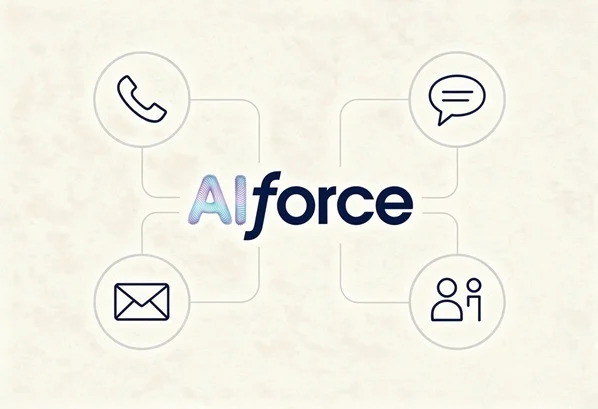
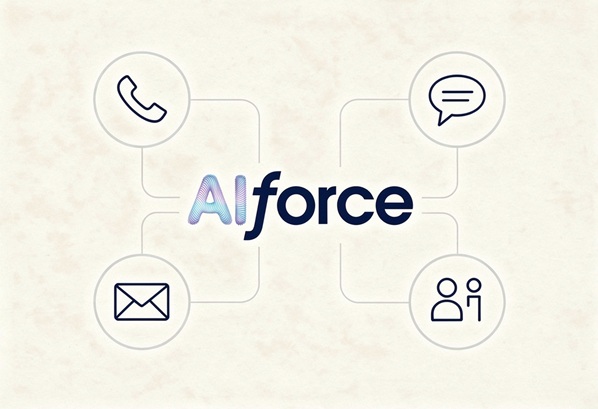
At its annual Dreamforce conference—the global epicenter of CRM innovation—Salesforce has signaled a tectonic shift in how enterprises interact with their data. The company officially unveiled AIforce, an innovative interface layer designed to strip away the traditional constraints of software layouts, extending Salesforce’s robust data, logic, and workflows directly into third-party environments and agentic AI tools.
This move represents a departure from the "static UI" era. By moving toward a dynamic, composable workspace, Salesforce is effectively unbundling the CRM, allowing users to access, manipulate, and visualize enterprise data wherever they are—whether that is inside Anthropic’s Claude, within the collaboration hub of Slack, or through native Salesforce Lightning interfaces.
The Architectural Pivot: From Static Dashboards to Fluid Workflows
For decades, the "swivel-chair" effect—where employees must manually navigate between multiple tabs, windows, and legacy interfaces to synthesize information—has acted as a tax on productivity. Salesforce’s AIforce is the company’s definitive answer to this friction.
By functioning as a "headless" integration layer, AIforce acts as a bridge between foundational enterprise systems and the new generation of generative AI models. It does not merely push data; it brings the logic of the Salesforce platform to the point of need. Users and autonomous agents can now query complex records, trigger multi-step automations, and generate on-the-fly, custom-built interfaces within the tools they already use daily.
Marc Benioff, Chair and CEO of Salesforce, framed this announcement as the dawn of a new era. "AI is creating an interface revolution," Benioff stated during the keynote. "We are combining model intelligence with all the context that customers have built into Salesforce to create an intelligent, dynamic, composable system that is securely governed, built with Zero Data Retention, and designed to work with the core systems that already run your business."
Chronology: The Road to the "Headless" CRM
The evolution toward AIforce was not an overnight development but the result of a multi-year strategy focused on API-first architecture and agentic AI.
- 2023: Salesforce begins heavy investment into the "Agentforce" framework, focusing on autonomous AI capable of executing tasks rather than just generating text.
- Early 2024: The company deepens its partnership with Anthropic, exploring the Model Context Protocol (MCP) as a standard for AI to "read" enterprise data securely.
- Mid-2024: Salesforce expands its "Headless" toolkit, exposing deep-tier platform APIs to developers to allow for custom UI generation.
- Dreamforce 2024: The official launch of AIforce, consolidating these efforts into a unified interface layer spanning Claudeforce, Slackforce, and the Agentforce Coworker.
Architectural Integration: Security at the Core
A common concern regarding the democratization of data via AI is security. Salesforce has addressed this by ensuring that AIforce operates strictly under the existing Permissioning and Governance protocols of the Salesforce ecosystem.
The architecture is built to ensure "Data Gravity" without compromising privacy. The platform utilizes a Zero Data Retention model, meaning that while AI models are provided with the context necessary to solve a problem, the data is not ingested into the model’s long-term training set. The system checks user authorization in real-time; if a user does not have permission to view specific sensitive financial records in the CRM, the AI agent will be similarly blind to that information, even when operating in a third-party environment like Slack.
The Three Pillars of AIforce
Salesforce is rolling out AIforce across three distinct but interconnected solutions, each tailored to a specific work environment.
1. Claudeforce: Intelligence at the Source
Through the Model Context Protocol (MCP), Claudeforce bridges the gap between Anthropic’s Claude interface and the Salesforce CRM. Instead of copying and pasting data from Salesforce into a prompt, users can simply ask Claude to analyze a lead, draft a contract based on specific account history, or summarize recent support interactions. The MCP server ensures that the model has "eyes" on the live data, allowing it to perform tasks that require up-to-the-minute accuracy.
2. Slackforce: Collaborative Context
Slackforce is designed to eliminate the information silos that occur during team communication. By pulling CRM context into Slack, teams can discuss, troubleshoot, and resolve customer issues without ever leaving the chat interface.
Elia Wallen, Founder and CEO of Engine, provided a powerful testimonial on the utility of this integration. "We handle over 800,000 customer inquiries a year, so getting our people the right context fast is everything," Wallen explained. "Slackforce makes that possible—instead of waiting on someone else’s time and expertise to turn data into a dashboard or report, anyone on our team can just describe what they need and get a real, working interface back, built from data we already have, without ever leaving the conversation."
3. Agentforce Coworker: The Native Accelerator
For those who prefer to work within the Salesforce Lightning environment, Agentforce Coworker acts as an intelligent assistant that can handle complex, multi-step workflows. It is not a chatbot that simply provides answers; it is an agent that can take action. Whether it is updating a case record, triggering a follow-up email sequence, or summarizing a complex audit trail, the Coworker works alongside the human employee to reduce manual entry.
Brandon Bernard, Senior Vice President and Sales Technology Strategist at Fulton Bank, noted the speed of adoption. "In just weeks, we went from zero to more than 20 use cases live in production, supporting approximately 3,000 users," said Bernard. "We’re already seeing substantial daily usage and real examples of how Coworker is helping teammates find information faster, prepare more effectively, and move work forward."
The Headless Toolkit and the Power of Ecosystems
The backbone of AIforce is the Headless Toolkit, a suite of developer resources that effectively turns Salesforce into a modular engine. By exposing platform APIs, plug-ins, and developer tooling, Salesforce is inviting its vast ecosystem of partners to build their own integrations.
The AgentExchange marketplace is the destination for this, connecting the platform to global tech leaders including AWS, Google, Vercel, DocuSign, and Ramp. This "Headless" approach is a strategic move to ensure that Salesforce remains the "Source of Truth" for enterprise data, even as the "Interface of Work" shifts to external platforms.
Implications for the Future of Customer Experience (CX)
The introduction of AIforce marks a critical pivot for the CX industry. The traditional contact center has been defined by "swivel-chair friction"—the mental and physical fatigue caused by toggling between CRM dashboards, ticketing systems, and external communication tools.
A Transition to Context-Aware Service
As AIforce gains traction, the definition of a "service workflow" will change. It will no longer be defined by the rigid constraints of a vendor-built UI. Instead, workflows will become fluid and context-aware.
- Reduction in Handle Time: By providing both human agents and AI coworkers with instant, governed access to CRM data, organizations can drastically reduce the time spent searching for information.
- Decreased Agent Fatigue: When the interface adapts to the task—rather than forcing the user to adapt to the interface—cognitive load is minimized.
- Coherent Resolution: With the AI and human agent operating from the same "data fabric," the customer receives a more consistent, personalized experience, regardless of which channel they use to contact the company.
Conclusion: The New Paradigm of Enterprise Computing
Salesforce’s AIforce is more than just a new product launch; it is a declaration that the future of enterprise software is invisible. By prioritizing the data and the logic over the pixel-perfect UI, Salesforce is positioning itself to be the operating system for the AI-driven enterprise.
As businesses continue to navigate the complexity of the digital age, the ability to decompose and recompose work environments will be the ultimate competitive advantage. With AIforce, Salesforce has provided the tools to do just that, empowering companies to build a future where data works for the user, not the other way around. As the partner ecosystem continues to expand and the "Headless" toolkit matures, the barriers between systems, agents, and humans will continue to dissolve, ushering in an era of unprecedented organizational agility.
 Basiran
 Sagoh
 Nana Wu
