
 By Basiran
By Stephen Johnson
Senior Staff Writer, Lifehacker
September 25, 2026
Main Facts
Snap Inc. is making a major push to recapture the spotlight in the consumer wearable technology market with the upcoming release of Snap Specs, a standalone pair of spatial-computing glasses designed to overlay digital graphics directly onto the physical world.
Unveiled and demonstrated at the Snapdragon 2026 Summit, the new device moves far beyond the company’s original camera-equipped Spectacles introduced back in 2016. While Snap was an early pioneer in the smart glasses category—beating competitor Meta to market by five years—competitors like Meta have since dominated consumer mindshare with audio-and-camera-based eyewear like their Ray-Ban and Oakley collaborations.
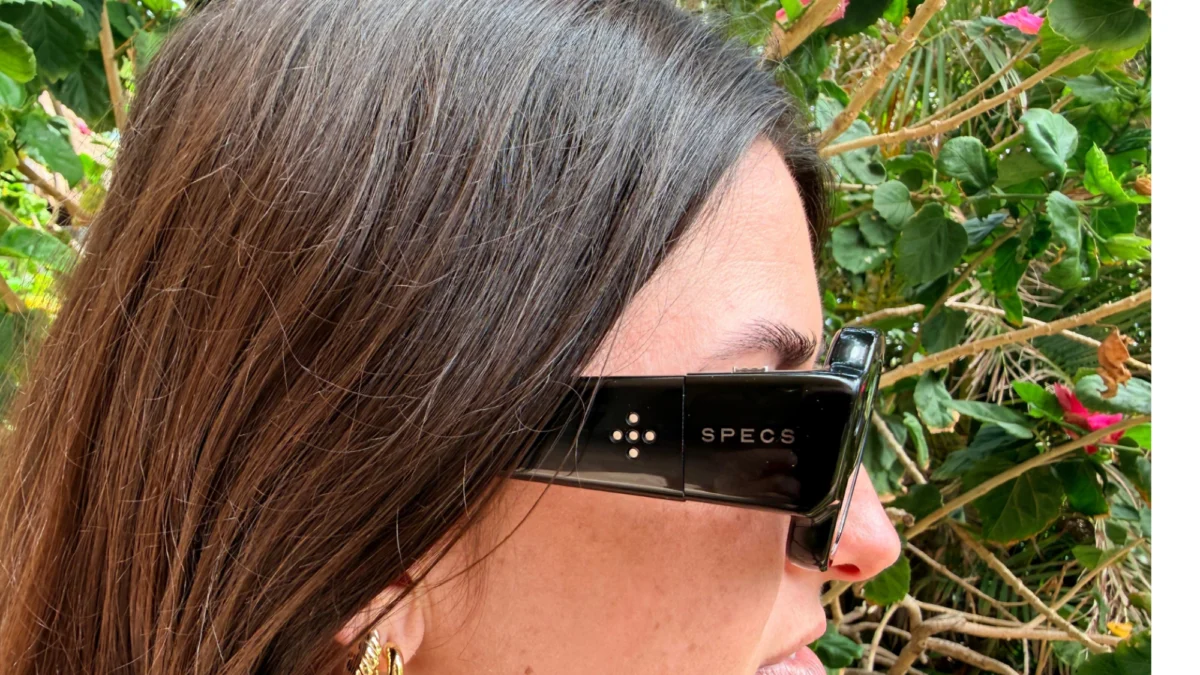
Snap Specs seek to bridge that gap by offering genuine augmented reality (AR) capabilities. Powered by dual Snapdragon processors and featuring a standalone design free of external cords or wired pucks, the polymer frames pack full-color high-resolution outward-facing cameras, 6-degrees-of-freedom (6DOF) hand-tracking capabilities, and a proprietary liquid crystal on silicon (LCoS) display system.
Set for a consumer release in the fall of 2026, the advanced hardware will retail for $2,195.

Chronology of Smart Eyewear and Snap’s Evolution
To understand the significance of the Snap Specs launch, it helps to look back at the trajectory of the wearable tech market over the last decade.
- 2016: Snap introduces its first-generation Spectacles, featuring a built-in video camera designed primarily to record short clips for social media sharing. The product garners novelty status but fails to capture mainstream productivity or everyday utility.
- 2021–2024: Meta enters the smart glasses arena in partnership with EssilorLuxottica, releasing stylish frames powered by voice-activated artificial intelligence and high-definition cameras. These lightweight devices capture massive consumer mindshare, though they lack true optical displays or spatial computing interfaces.
- 2025: Rumors and developer previews mount as tech companies race to develop standalone augmented reality glasses that combine high-end computational power with ergonomic form factors.
- September 25, 2026: Snap officially showcases the consumer-ready Snap Specs at the Snapdragon Summit, highlighting spatial computing apps, hand-tracking technology, and a standalone processing architecture.
- Fall 2026 (Upcoming): Snap Specs are scheduled to hit the market with a retail price tag of $2,195, targeting early adopters, productivity enthusiasts, and niche AR developers.
Supporting Data and Technical Specifications
Packing true spatial computing capabilities into a wearable device usually results in bulky, helmet-like headsets. However, Snap’s engineering team has managed to condense a significant amount of computing power into a traditional sunglasses form factor.
Weight and Ergonomics
Weighing in at approximately 135 grams, Snap Specs are certainly heavier than standard everyday eyewear, but the weight distribution is carefully balanced across the polymer frames. During hands-on testing in conference environments, users reported that the weight distribution makes the glasses remarkably comfortable for short-to-medium durations, feeling closer to a heavy pair of sunglasses than a virtual reality headset.
Processing and Hardware Architecture
- Processors: Dual Snapdragon chipsets handle the device’s heavy computational lifting locally.
- Tracking: Outward-facing hi-res cameras power a robust 6DOF (Six Degrees of Freedom) tracking system, supporting natural gesture controls and hand tracking.
- Tethering: Fully standalone architecture—no external processing pucks, wires, or connected smartphones are required to run the core software.
- Battery Life: Snap promises approximately four hours of mixed-use battery life on a single full charge.
Display and Visual Performance
One of the most notable engineering hurdles in AR glasses is balancing transparency with display brightness. Snap addressed this by designing lenses clear enough to ensure the wearer’s eyes remain visible to people around them, complemented by electrochromic dimming technology. This system allows users to seamlessly transition between clear and dark lenses depending on lighting conditions and privacy preferences.
Visual output is driven by a proprietary liquid crystal on silicon (LCoS) micro-display system, generating a 51-degree field of view. Even under bright, indoor conference room lighting, text, user interfaces, and multimedia applications remain vibrant. Testing high-definition video streams, such as YouTube playback, revealed a color range supporting up to 16 million colors with crisp clarity.

Official Responses and Demonstrations
During the Snapdragon 2026 Summit, developers and press members were given firsthand access to early software demos designed to highlight the practical use cases of spatial computing.
Rather than limiting the user interface to floating flat screens, Snap’s launch software suite emphasizes context-aware, real-world interactivity. Among the first-party and third-party applications demonstrated were educational tools designed to teach music and improve physical drawing skills.
A standout demonstration involved a customized golfing application. By integrating spatial data with the physical environment, the glasses projected a virtual flag marking the location of a distant hole and displayed directional lines indicating optimal putting angles. Early testers noted an immediate improvement in accuracy, raising questions—and amusement—regarding whether augmented reality assistance in sports crosses the line into technological cheating.
Snap representatives emphasize that the goal of Specs is not just to replace the smartphone screen, but to contextualize digital information within the physical environment, making everyday physical tasks more intuitive and interactive.
Implications for the Wearable Technology Market
The introduction of Snap Specs at a $2,195 price point signals a clear shift in market strategy. Unlike cheaper, audio-and-camera-only frames that retail for a few hundred dollars, Snap is positioning its product as a premium, standalone spatial computer aimed at high-end tech enthusiasts, enterprise developers, and early adopters.

1. Direct Competition with Heavyweights
While Meta currently dominates the lightweight smart glasses category through lifestyle-focused products, Snap is staking its claim in the more advanced augmented reality sector. By avoiding the need for external tethering cables—a limitation that has historically hampered devices like early generation AR headsets—Snap is paving the way for truly untethered personal computing.
2. Social Acceptance and Transparency
One of the primary roadblocks for wearable cameras and tech-heavy eyewear has been social friction—people often feel uncomfortable around cameras that are constantly recording. Snap’s incorporation of clear lenses that reveal the user’s eyes, alongside rapid electrochromic dimming controls, is a deliberate design choice aimed at mitigating privacy concerns and humanizing the technology.
3. The Future of Practical AR
The success of Snap Specs will ultimately depend on software development and real-world battery longevity. Four hours of mixed-use battery life is sufficient for targeted tasks, but daily all-day wear will require future iterations to achieve greater power efficiency. Nevertheless, if application ecosystems continue to grow around practical, context-aware use cases—such as guided training, spatial navigation, and hands-free productivity—devices like Snap Specs may well accelerate the transition from flat screens to spatial computing.
 Nila Kartika Wati
 Nana
