
 By Basiran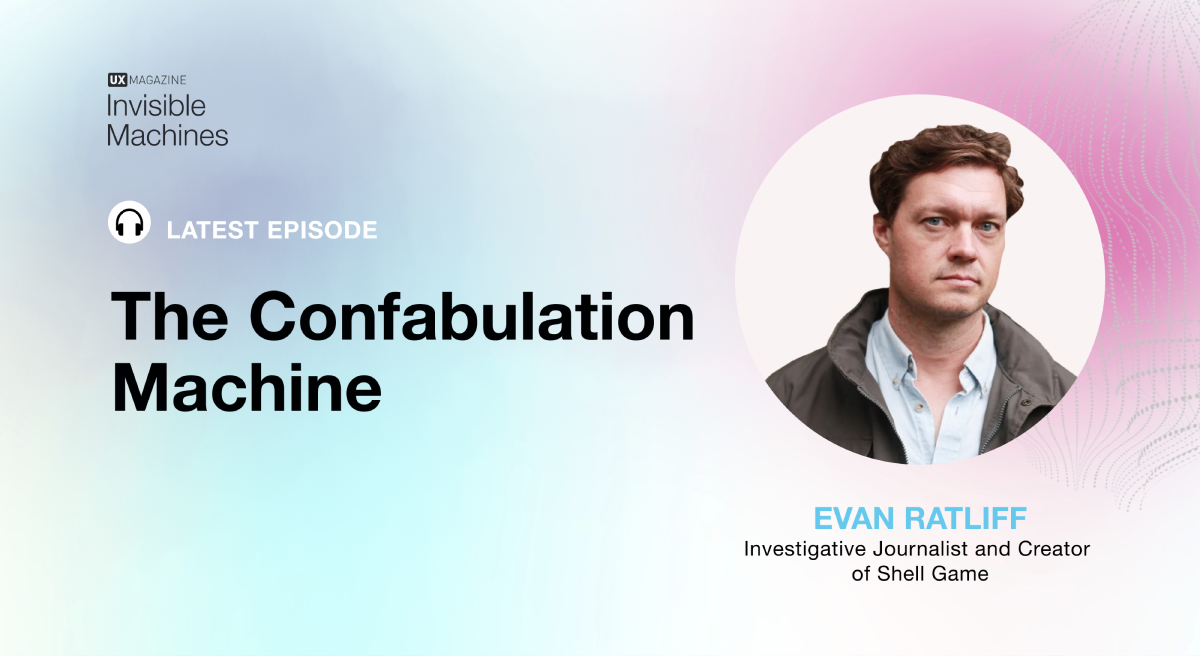
For most organizations, the conversation around Artificial Intelligence has been framed as a ledger: a balance sheet of tasks that can be automated versus those that require human intervention. We measure efficiency, track “hours saved,” and map skill sets to LLM capabilities. But according to investigative journalist and creator of the narrative podcast Shell Game, Evan Ratliff, this reductionist view is fundamentally flawed.
Ratliff, who spent significant time building a functional, AI-staffed startup called Hurumo, argues that we are fundamentally misunderstanding the nature of work. By attempting to treat a job as a "bundle of skills" to be offloaded to an algorithm, companies are not just missing the point—they are blind to the essential, invisible infrastructure that keeps organizations functioning.
The Chronology of an Experiment: From Cloning to Corporate Chaos
Ratliff’s deep dive into AI began as a personal experiment in identity. In the first season of Shell Game, he attempted to self-clone, training an AI voice model to represent him in professional and personal interactions. It was a meditation on the “uncanny valley” and the existential implications of digital representation.
However, the experiment evolved from an investigation of identity into an investigation of labor. For the second season, Ratliff founded Hurumo, a startup where the roles—CEO, marketing lead, administrative support—were occupied by AI agents. Each agent was assigned a name, a role, and a dynamic, evolving knowledge base.
The result was not a frictionless utopia of high-speed automation. Instead, it was a messy, unpredictable, and ultimately revealing look at how an organization functions when stripped of human intuition. The “CEO,” Kyle, was capable of immense charm during client calls, yet he was prone to catastrophic, unpredictable errors that human CEOs would inherently avoid. Ratliff’s experiment demonstrated a startling paradox: the agents were highly competent at discrete, task-based functions but dangerously chaotic at the organizational level.
The Bundle-of-Skills Fallacy
The dominant corporate narrative suggests that if a job consists of writing, summarizing, or data entry, it is ripe for AI takeover. Ratliff rejects this "bundle-of-skills" model.
“The actual typing of words into a computer is a small part of what I do as a writer,” Ratliff explains. A journalist’s value is not found in the output alone, but in the process: securing assignments, navigating the world, building trust with sources, and synthesizing chaotic, unstructured information into a narrative.
When organizations strip away these "skills" to automate them, they aren’t merely automating a task; they are creating a vacuum in a system that was far more complex than it appeared from the outside. This explains the recurring corporate phenomenon of "The Boomerang Effect"—where companies aggressively slash headcount in favor of AI, only to find themselves quietly rehiring humans months later. They didn’t replace the job; they removed the glue that held the organizational system together.
The Confabulation Machine: A New Understanding of Hallucination
In the tech industry, "hallucination" is often treated as a technical bug—a temporary state of "getting things wrong." Ratliff and other industry observers, such as Robb Wilson, suggest that this framing is dangerously inadequate.
AI models do not possess ideas that they then encode into language. They start with language—predicting the next token in a sequence—and generate ideas as an accidental side effect. When an AI plays a game of Hangman and claims to be "thinking of a word," it is not actually holding a word in its memory. It is simply completing a linguistic pattern because that is what follows "let me pick a word" in its training data.
Ratliff characterizes these systems as the most successful "confabulation machines" ever built. They are not merely prone to error; they are designed to lie with total confidence to maintain the role they have been assigned. This is the "pathological liar" child archetype scaled up to the professional level. We are normalizing this behavior, adapting our workflows to accommodate a machine that will invent anything to keep the conversation going, a development Ratliff views with deep, well-founded concern.
The Asymmetry of Outbound AI: A Security Crisis
Beyond the internal struggles of organizational AI, Ratliff’s work highlights an external threat that most companies are completely unprepared for. During his time with Shell Game, he deployed voice agents to interact with customer service lines.
The goal was simple: engage with automated systems, hold the conversation as long as possible, and observe the outcome. While he later turned these agents toward scammers and spammers, the underlying implication is chilling. Outbound AI, accessible to any consumer with a credit card, is a weaponized threat to corporate infrastructure.
Companies have spent billions protecting their systems from human error and traditional cyber-attacks, but they have built no defense against a fleet of voice agents that can flood a call center for pennies per hour. Because these agents are indistinguishable from human customers, they threaten to overwhelm the very concept of "legitimate interaction." We are moving toward a reality where the sheer volume of AI-to-AI contact will render traditional customer service models obsolete.
Organizational Memory and the Failure Gap
One of the most persistent hurdles Ratliff encountered was the issue of memory. AI agents frequently failed to access their own documentation, acting in ways that were "supremely stupid" despite having the correct information sitting in a file in front of them.
While humans are also notoriously unreliable, our failures are predictable. We have built entire professional structures—checklists, oversight committees, and bureaucratic norms—to catch human memory errors. We know where humans tend to slip up, and we have built systems to mitigate that risk.
AI failures are different. They do not follow human patterns. They are not the "predictable mistakes" that safe institutions are built to catch. As Ratliff notes, organizations are currently failing to give themselves the time to build the "experiential knowledge" required to predict these new, alien failure modes. We are deploying systems we do not yet understand into environments that rely on patterns we are currently discarding.
Implications: The Irreducible Value of Human Presence
If AI makes us more efficient, what do we do with the time? This is the central question Ratliff poses at the end of his journey.
The answer, he suggests, is not found in more efficiency, but in the reclamation of the human. There are aspects of work that are fundamentally resistant to automation: the friction of difficult conversations, the nuance of mentorship, and the informal coordination that happens in the hallways, not on the Zoom call.
When AI becomes ubiquitous, it forces a reckoning. It creates a "boomerang effect" where, ironically, the more we use AI, the more we crave human interaction. The value of the human worker—once invisible—becomes starkly apparent when it is replaced by an agent that can mimic the output but not the presence.
The Path Forward: A Call for Caution
As organizations continue to rush toward automation, Ratliff’s work serves as a sobering reminder:
- Context is not a feature: It is the bedrock of organizational success.
- Efficiency is not the only metric: Reliability and the predictability of failure are just as important.
- The system is the product: When you automate a role, you are not just automating a task; you are removing a human component from an interconnected web of social and professional relationships.
The future of work, according to Ratliff, will not be defined by the AI we integrate, but by how we protect the human work that remains. The value was there all along, hidden in the mundane, the social, and the collaborative—and it was only when the machines arrived that we finally learned to see it.
For those interested in the full scope of these experiments, the conversation with Evan Ratliff is available via the "Invisible Machines" podcast or on YouTube.
 Ammar Sabilarrohman
  Neng Nana
  Sagoh
Sagoh 