
 By Siti Muinah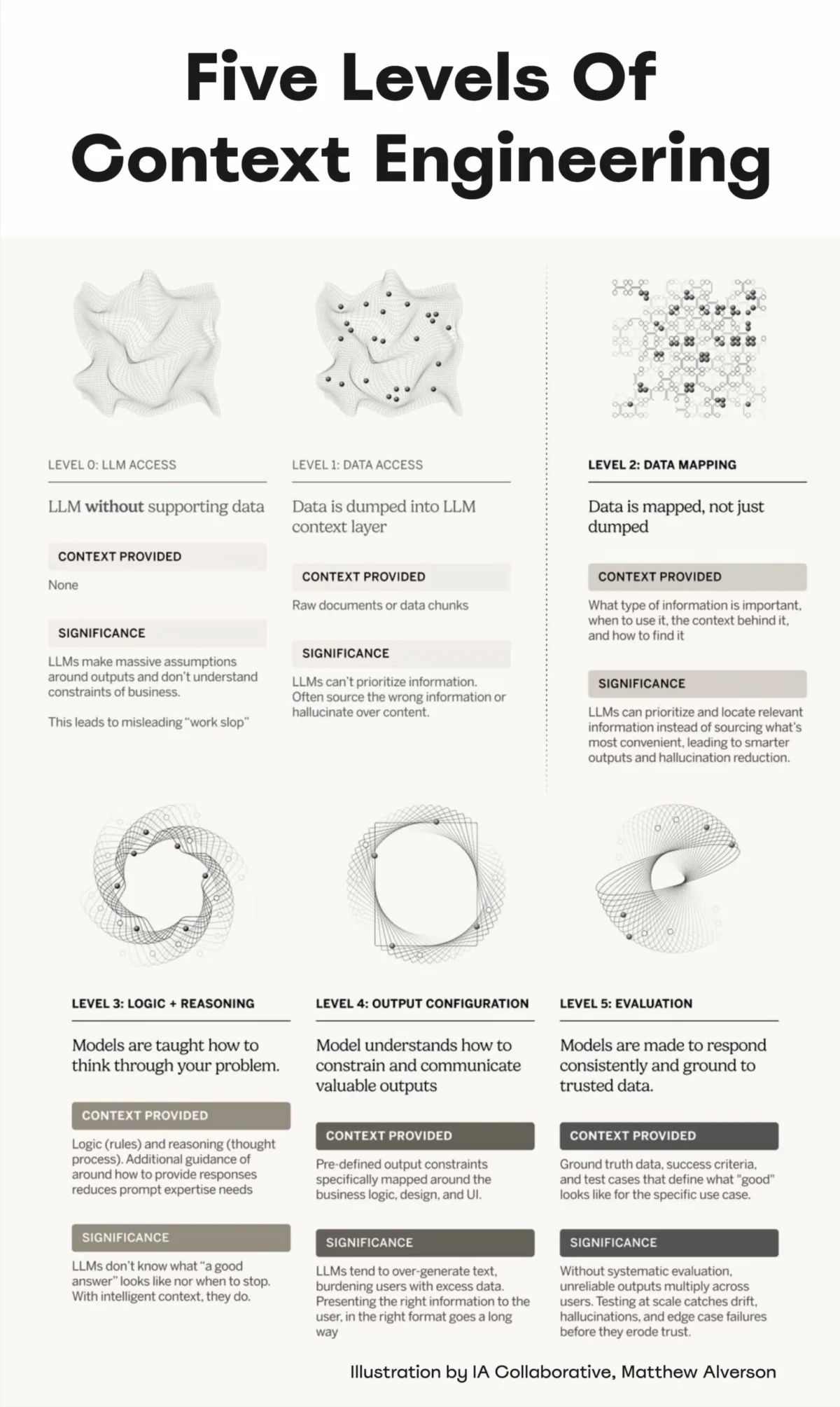
In the rapidly evolving landscape of digital product design, a significant friction point has emerged: the gap between the creative potential of Artificial Intelligence and the rigid, often undocumented nuances of human-centric design systems. While AI-generated prototypes promise to accelerate the development lifecycle, they frequently fall short of production-grade quality, plagued by "design drifts"—tiny inconsistencies in spacing, color, and component logic that erode user trust and increase technical debt.
Recent insights from industry leaders, including Hardik Pandya of Atlassian and UX expert Vitaly Friedman, suggest that the solution lies not in more powerful AI models, but in a fundamental restructuring of how design systems are built. By treating design decisions as "infrastructure" and moving toward LLM-readable documentation, organizations can finally unlock the true potential of AI-assisted design.
Main Facts: The Crisis of "Design Drift" in AI Prototypes
The current state of AI-generated UI is characterized by a paradox: Large Language Models (LLMs) can write complex code in seconds, yet they struggle to consistently apply a specific brand’s spacing scale or accessibility requirements. This phenomenon, often referred to as "design drift," occurs when an AI makes assumptions based on incomplete data or ambiguous visual mock-ups.
At the heart of this issue is the nature of traditional design systems. Most are built for humans—relying on visual intuition and tribal knowledge that isn’t explicitly documented. When an AI attempts to interpret a Figma file or a set of components, it often encounters:
- Undocumented Decisions: Choices regarding when to use a specific modal versus a drawer that exist only in a designer’s mind.
- Hard-Coded Values: "Magic numbers" in the CSS that bypass the design token system.
- Ambiguous Context: A lack of clear hierarchy or "do’s and don’ts" that would guide an AI in choosing the correct interactive state.
To combat this, a new movement is advocating for "AI-Ready Design Systems." This approach shifts the focus from purely visual libraries to structured, machine-readable "spec files" that provide the AI with a definitive source of truth. By minimizing assumptions and reducing ambiguity, these systems allow AI to generate prototypes that are not only visually consistent but also technically sound and accessible.
Chronology: From Static Style Guides to AI-Ready Infrastructure
The evolution of design documentation has reached a critical turning point, driven by the sudden ubiquity of generative AI.
The Era of Static Guides (Pre-2010s):
Design systems began as PDF style guides—static documents that were difficult to update and often ignored by developers. They were purely human-readable and relied on manual implementation.

The Rise of Atomic Design and Tokens (2013–2022):
With the introduction of Brad Frost’s Atomic Design and the widespread adoption of design tokens, systems became more modular. Documentation moved into tools like Storybook and Figma, allowing for better synchronization between design and code. However, these systems still required a human "translator" to bridge the gap.
The Generative AI Explosion (2023–Early 2024):
As designers began using tools like v0.dev, Galileo AI, and various Figma plugins, the limitations of current systems became apparent. AI could generate "plausible" designs, but they rarely matched an organization’s specific design language perfectly. The industry realized that AI was "hallucinating" design choices because the underlying systems were too opaque.
The Shift to AI-Infrastructure (Late 2024–Present):
Following the publication of practical guides by experts like Hardik Pandya, the industry is now moving toward a "three-layer" architecture. This involves establishing design decisions as a form of digital infrastructure—structured Markdown files and audit scripts that act as a "brain" for the AI, ensuring it understands the logic behind the design, not just the pixels.
Supporting Data and Methodologies: The Three-Layer Architecture
The transition to an AI-ready design system is built upon three technical pillars designed to provide maximum context to LLMs while maintaining strict quality control.

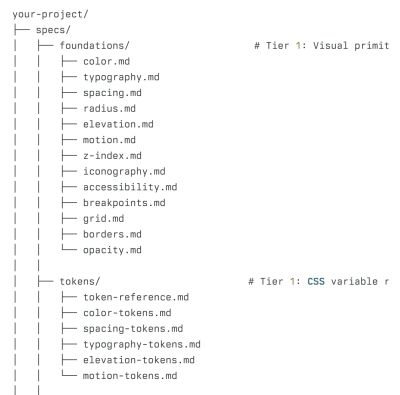
1. Spec Files: The Machine’s Handbook
Instead of asking an AI to "make it look like this image," designers are now creating structured Markdown files. These "spec files" are text-based, making them incredibly cost-effective for AI to process. They include:
- Spacing Rules: Explicit definitions of padding and margin scales.
- Component Logic: Guidelines on when to use specific UI patterns (e.g., "Use a Primary Button only once per view").
- Accessibility Standards: Hard requirements for color contrast and screen-reader labels.
By providing these rules in text format, designers bypass the AI’s need to "guess" patterns from visual mock-ups, which is a frequent source of error.
2. The Token Layer: Eliminating Hard-Coded Values
A robust AI-ready system relies on a closed set of named variables—design tokens. When an AI has access to a comprehensive token layer, it is forced to choose from existing values (e.g., $color-surface-primary) rather than inventing hex codes. This ensures that the generated code is immediately compatible with the existing production environment.
3. Automated Auditing: The Role of FigmaLint
To maintain the integrity of these systems, human designers are increasingly employing automated auditing tools. One such tool, FigmaLint, has become a cornerstone for preparing documentation. As a free Figma plugin, it allows teams to:
- Audit for detached instances and hard-coded values.
- Identify missing interactive states (hover, focus, disabled).
- Standardize layer naming to ensure AI can correctly identify the hierarchy of a design.
Industry data suggests that designs "cleaned" by linting tools before being fed into AI models result in a 40% reduction in manual post-generation fixes.
Perspectives and Professional Insights: Design Decisions as Infrastructure
The push for AI-ready systems is championed by veteran designers who argue that the role of the designer is shifting from "pixel pusher" to "systems architect."
Hardik Pandya’s Infrastructure Philosophy:
Hardik Pandya, a prominent voice from Atlassian, posits that we must treat design decisions as infrastructure. He argues that every time a team makes a decision—even a prioritization or workflow decision—it must find a path into a spec file. "We shouldn’t assume that AI knows how to choose the right component," Pandya notes. By documenting the "why" behind a design, teams create a roadmap that AI can follow without deviation.
Vitaly Friedman’s Context Engineering:
Vitaly Friedman, founder of Smashing Magazine and creator of the "Design Patterns For AI Interfaces" course, emphasizes the importance of "Context Engineering." He highlights that there are five levels of context that an AI needs to function effectively within a design ecosystem. Friedman’s work suggests that AI cannot magically resolve design debt; rather, it amplifies existing debt. If a design system is messy, the AI’s output will be exponentially messier.

The Developer Perspective:
From a software engineering standpoint, AI-ready design systems represent the "Shift Left" movement—moving quality control earlier in the process. When AI generates code based on a well-defined spec file, developers spend less time "cleaning up" the CSS and more time focusing on complex application logic.
Implications: The Future of the Design Profession
The move toward machine-readable design systems has profound implications for the future of the tech industry, affecting everything from cost efficiency to the very definition of a "designer."
1. The Reduction of Design Debt:
Historically, design debt has been a silent killer of product velocity. AI-ready systems force a level of rigor and documentation that was previously easy to skip. By mandating that decisions be documented in Markdown for the AI, teams inadvertently create better documentation for their human colleagues as well, leading to a cleaner, more sustainable codebase.
2. The Designer as Curator and Auditor:
The traditional workflow of manually drawing every screen is being replaced. Designers will spend more time defining the rules of the system and auditing the AI’s output. This requires a deeper understanding of information architecture, logic, and "prompt engineering" for design systems.

3. Cost-Effective Prototyping:
Using text-based spec files significantly reduces the "token cost" of using LLMs like GPT-4 or Claude. Because text is more dense and less ambiguous than image-based inputs, companies can generate high-fidelity prototypes at a fraction of the previous cost and time.
4. The Continuous Sync Requirement:
The "shipping" of a design system is no longer a one-time event. To remain AI-ready, systems must have a "sync routine." When a design update occurs, the corresponding spec files must be updated immediately. If the AI reads outdated specs, the resulting prototypes will be obsolete before they are even built.
Conclusion: A New Era of Deliberate Design
The integration of AI into the design workflow is not a magic wand that will instantly grant perfect interfaces. As the insights from Pandya and Friedman suggest, the quality of AI output is a direct reflection of the quality of human guidance.
By transitioning to LLM-readable design systems—treating decisions as infrastructure, establishing rigorous token layers, and employing automated auditing—the design community is laying the groundwork for a more efficient, consistent, and accessible digital future. The designers who thrive in this new era will be those who embrace precision, documentation, and the deliberate engineering of context. As the industry evolves, one thing remains clear: we will be busy for years to come, not just designing screens, but building the intelligent systems that generate them.
 Nana Wu
  Nana
Nana 