
 By Nana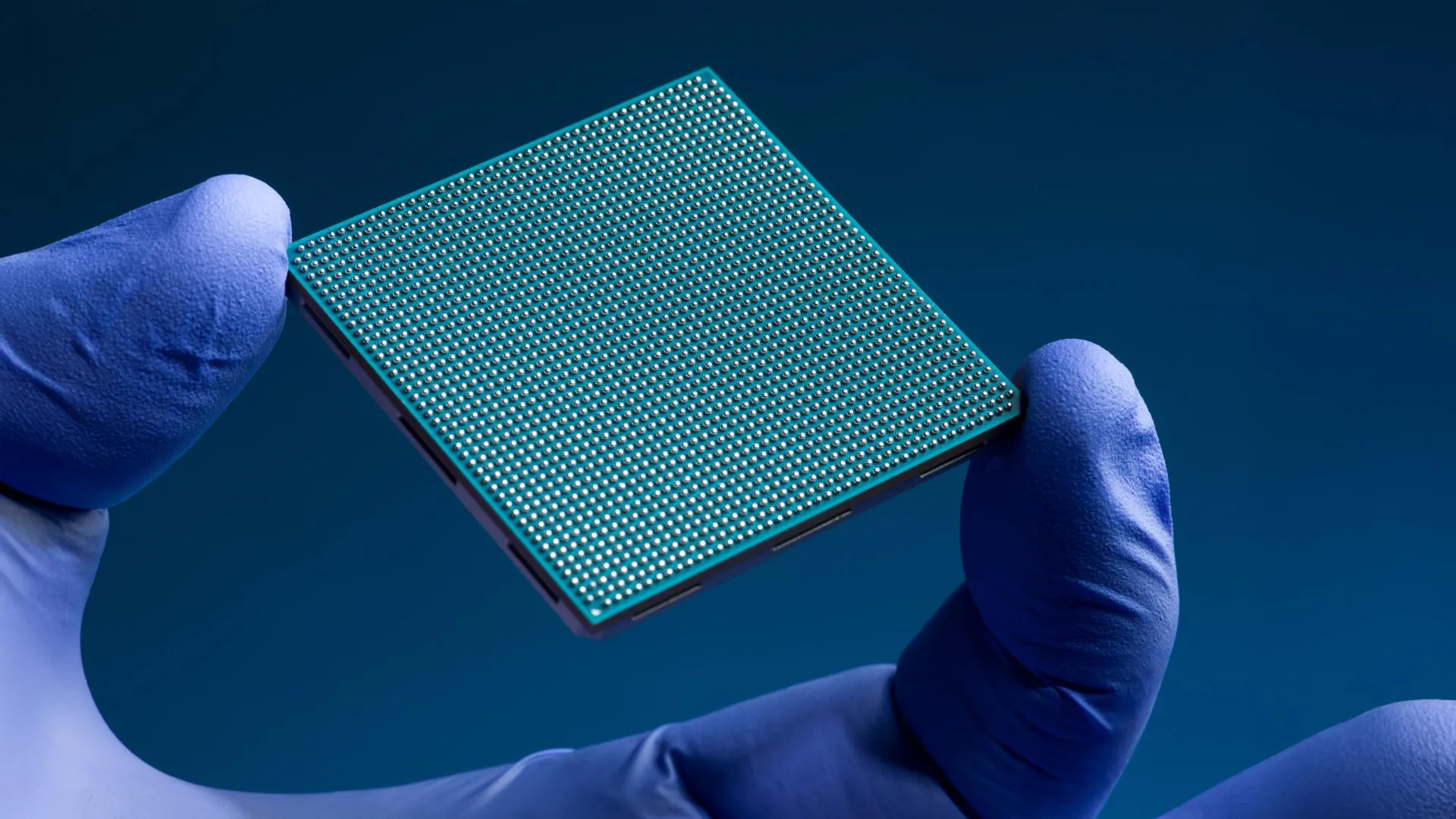
In the silent, unforgiving vacuum of deep space, the difference between a successful mission and a catastrophic failure often comes down to a matter of milliseconds. For decades, NASA’s spacecraft have relied on "hardened" computing architecture—technology that prioritizes durability over raw speed. While this approach has safely guided probes to the edge of the solar system, it has imposed a "digital ceiling" on what those machines can achieve.
That ceiling is about to shatter. Through the High Performance Spaceflight Computing (HPSC) project, NASA is developing a revolutionary multicore processor that promises to deliver up to 100 times the computing power of current space-rated chips, with early tests suggesting a staggering 500-fold increase in performance. This leap in processing power is not merely an incremental upgrade; it is the cornerstone for a new era of autonomous exploration, enabling spacecraft to "think" for themselves in environments where a signal from Earth can take minutes or even hours to arrive.
The Chronology of a Digital Revolution
The journey toward this next-generation processor began in earnest with the realization that the hardware currently powering our planetary rovers and deep-space probes is, by modern standards, antiquated. Historically, NASA has favored older, proven chip designs because they are resilient against the intense radiation of space, which can flip bits in memory and cause system-wide crashes.
The Roadmap to Implementation:
- 2022: NASA formally selects Microchip Technology Inc., based in Chandler, Arizona, as its commercial partner for the HPSC project. The partnership is structured as a cost-sharing initiative, with Microchip funding a significant portion of the R&D.
- 2023: Design and fabrication of the prototype system-on-a-chip (SoC) are completed, marking the transition from theoretical models to physical hardware.
- February 2024: The Jet Propulsion Laboratory (JPL) in Southern California commences a rigorous testing campaign. This phase marks the first time these high-fidelity chips are subjected to the brutal physical realities of space simulation.
- Mid-2024 to Present: The "Hello Universe" testing phase. Engineers have successfully initiated functional testing, with results showing the processor performing at levels far exceeding initial expectations.
- Future Milestones: Following certification, NASA intends to integrate these SoCs into a diverse array of platforms, ranging from Earth-orbiting satellites to future crewed habitats on the Moon and Mars.
Engineering for the Abyss: The Technical Challenge
The core of the HPSC project is a radiation-hardened system-on-a-chip (SoC). An SoC is an integrated circuit that consolidates all the components of a computer—CPU, memory, networking, and input/output interfaces—onto a single, compact silicon die. While the technology is common in the smartphones in our pockets, the leap from a commercial smartphone to a deep-space processor is immense.
The "Radiation Hardened" Requirement
Space is a hostile environment for electronics. High-energy particles from the Sun and cosmic rays can penetrate a spacecraft’s hull, striking sensitive semiconductors and causing "single-event upsets." These errors often force a spacecraft into "safe mode," a state where non-essential systems are powered down, effectively leaving the vehicle paralyzed while ground control attempts to diagnose the issue.
To combat this, the HPSC team has engineered the chip to be inherently fault-tolerant. It is designed to handle dramatic temperature fluctuations—the searing heat of sun-facing maneuvers and the cryogenic cold of the shadow of a planet—without sacrificing clock speed or memory integrity.
Rigorous Stress Testing at JPL
The testing protocols at JPL are designed to be exhaustive. Engineers subject the chips to:
- Radiation Exposure: Bombarding the processors with simulated high-energy particles to ensure the error-correction algorithms hold firm.
- Thermal Cycling: Pushing the hardware to extreme temperatures to test physical expansion and contraction of the microscopic circuits.
- Functional Landing Scenarios: Using high-fidelity datasets from previous planetary landings, the team tests how the chip handles the "data deluge" of real-time landing sensors. Because landing is a mission-critical phase, the ability of a processor to handle these volumes of data without latency is vital for autonomous navigation.
Official Perspectives: The Voices Behind the Chip
The project represents a triumph of public-private synergy. By leveraging the expertise of commercial partners like Microchip Technology, NASA is able to modernize its infrastructure while maintaining the specialized oversight required for mission-critical aerospace applications.
Eugene Schwanbeck, program element manager in NASA’s Game Changing Development (GCD) program, emphasizes the evolutionary nature of the hardware. "Building on the legacy of previous space processors, this new multicore system is fault-tolerant, flexible, and extremely high-performing," Schwanbeck noted. "NASA’s commitment to advancing spaceflight computing is a triumph of technical achievement and collaboration."
The project’s lead at JPL, Jim Butler, describes the testing phase as a "baptism by fire." According to Butler, the goal is to ensure the hardware can withstand the "wringer" of space environments. "To simulate real-world performance, we are using high-fidelity landing scenarios from real NASA missions that would typically require power-intensive hardware to process huge volumes of landing-sensor data," Butler said. "This is an exciting time for us to be working on hardware that will enable NASA’s next giant leaps."
The team’s morale was highlighted during the project’s early testing success, where they sent a symbolic "Hello Universe" email—a nod to the foundational "Hello World" scripts that have launched the careers of generations of computer programmers.
Implications for the Future of Exploration
The deployment of this new processor will fundamentally alter the architecture of future space missions in three critical ways:
1. True Autonomy and Artificial Intelligence
Currently, most deep-space decisions must be vetted by human operators on Earth. As we venture further, communication latency makes this model unsustainable. With the processing power of the new HPSC chips, spacecraft will be able to run advanced AI models onboard. This allows for real-time obstacle avoidance, autonomous navigation, and the ability to detect and respond to unexpected anomalies without waiting for a signal from mission control.
2. Enhanced Scientific Throughput
Deep space probes are currently limited by the amount of raw data they can process before transmitting it to Earth. By utilizing the HPSC processor, spacecraft can perform complex onboard scientific analysis, filtering and compressing massive datasets before transmission. This effectively increases the "scientific bandwidth" of our missions, allowing us to receive more meaningful information from the same data stream.
3. Sustainability and Versatility
The energy efficiency of the SoC design is a game-changer for long-duration missions. Because the chip combines multiple functions into a single unit, it reduces the overall mass and power consumption of the spacecraft’s computer suite. This allows engineers to dedicate more of the spacecraft’s power budget to scientific instruments or life-support systems, extending the operational life of rovers and probes that must function for years or even decades without maintenance.
A Legacy Beyond the Stars
While the primary mission is to explore the cosmos, the HPSC project is also expected to yield significant terrestrial benefits. Microchip Technology intends to leverage the designs created for NASA to improve the reliability of electronics in other demanding sectors. Industries such as aviation and automotive manufacturing—where reliability and safety in extreme conditions are paramount—stand to benefit from the "spinoff" technologies born from this development.
By bridging the gap between current space-rated hardware and modern, high-performance computing, NASA is ensuring that its next generation of explorers—both robotic and human—will possess the digital intuition required to navigate the unknown. As we look toward the Moon, Mars, and beyond, the "Hello Universe" message serves as a promise: we are no longer just sending cameras and sensors into the dark; we are sending intelligent, adaptive partners capable of witnessing the wonders of the deep solar system with unprecedented clarity and independence.
 Sagoh
Sagoh  Asro
Asro  Siti Muinah