
 By Basiran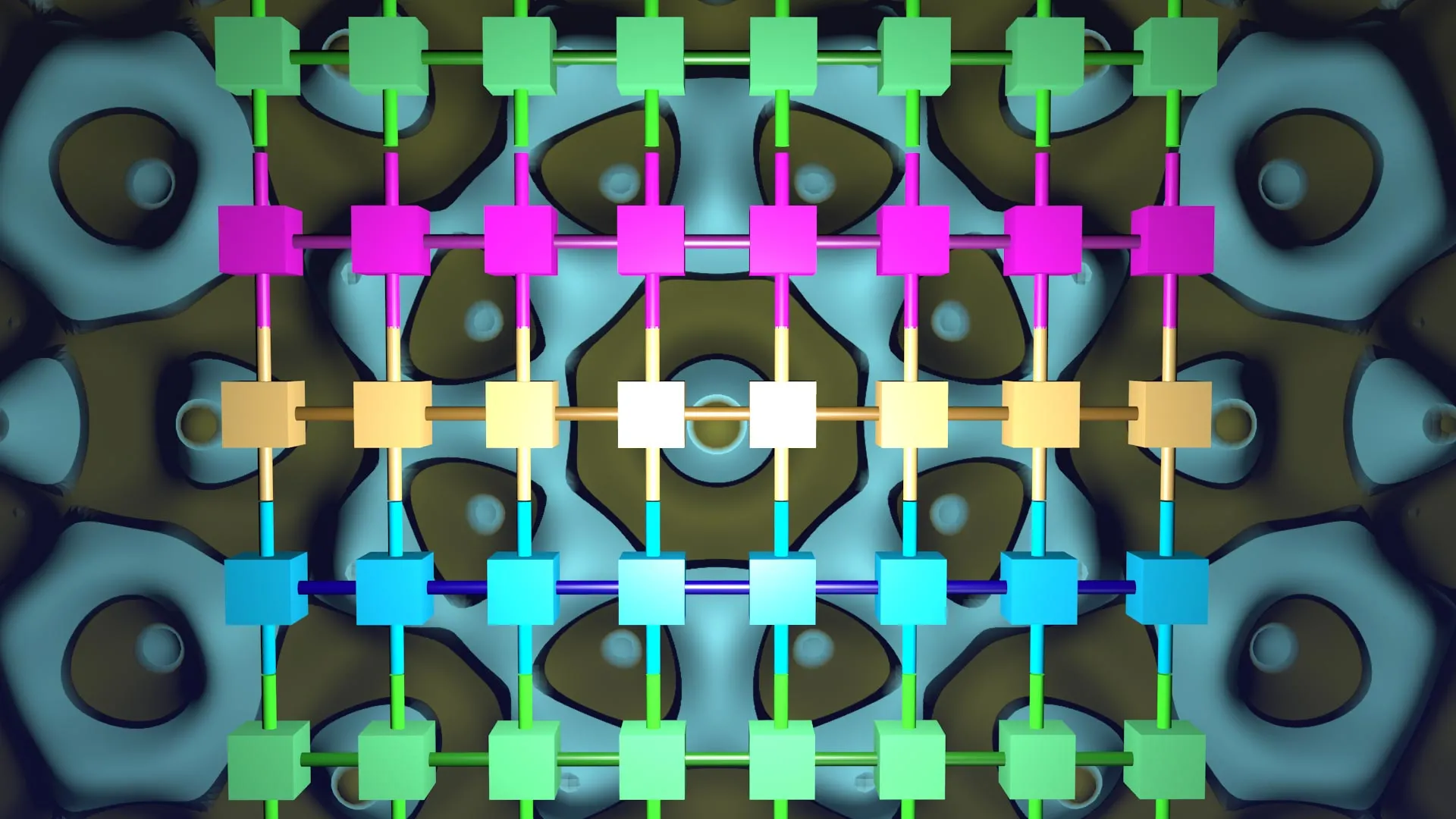
In the race to build the next generation of computing power, scientists have long faced a "chicken-and-egg" dilemma: to build better quantum computers, we need exotic, highly stable quantum materials; yet, to design these materials, we require the very computational power that those future devices are intended to provide.
A breakthrough from Aalto University’s Department of Applied Physics has effectively cracked this paradox. By developing a sophisticated quantum-inspired algorithm, researchers have successfully simulated the behavior of topological quasicrystals—materials so complex that they were previously considered computationally unreachable. This development not only provides a roadmap for engineering the next generation of superconductors but also establishes a self-reinforcing "feedback loop" that could accelerate the evolution of quantum technology.
The Complexity Barrier: Why Quasicrystals Defy Traditional Computing
Quantum materials are the backbone of advanced technology, ranging from ultra-efficient power grids to the processors that will power future quantum computers. These materials exhibit "quantum behavior"—phenomena that defy classical physics—often triggered by precise structural manipulation. A famous example is "twistronics," where two layers of graphene are stacked and rotated to a "magic angle," transforming the material from a standard conductor into a high-temperature superconductor.
As scientists venture beyond simple bilayer stacks, they have begun experimenting with "quasicrystals" and "super-moiré" structures. These materials possess aperiodic, complex geometries that do not repeat in a simple pattern. Because of this lack of symmetry, predicting their electronic properties requires accounting for an astronomical number of interactions.
"Quasicrystals are so mathematically complex that simulating them can involve more than a quadrillion numbers," explains Assistant Professor Jose Lado. This scale of data exceeds the memory and processing limits of even the world’s most powerful supercomputers, creating a "complexity wall" that has stifled innovation in materials science for years.
Chronology of a Scientific Breakthrough
The path to this discovery began with a shift in perspective. Rather than attempting to brute-force calculations—which would require more memory than exists in current digital architecture—the research team at Aalto University turned to the language of quantum mechanics itself.
- Conceptualization: The team, led by Assistant Professor Jose Lado and including doctoral researcher Tiago Antão, Yitao Sun, and Academy Research Fellow Adolfo Fumega, identified that the primary issue was not the physics of the material, but the method of encoding the problem.
- Methodological Shift: The researchers decided to reformulate the material’s structure using "tensor networks," a mathematical framework typically reserved for simulating the exponentially large computational spaces of quantum computers.
- The Simulation: Using these tensor networks, the team successfully modeled a quasicrystal system consisting of over 268 million sites.
- Publication: The results of this endeavor were published in Physical Review Letters and subsequently highlighted as an Editor’s Suggestion, signaling the impact of the work on the broader physics community.
Supporting Data: Decoding the Tensor Network
The crux of the team’s success lies in their departure from traditional grid-based simulations. Conventional computational methods rely on local approximations that fail when faced with the long-range aperiodic nature of quasicrystals.
By employing tensor networks, the researchers were able to encode the material’s properties as a "quantum many-body system." In this framework, the algorithm compresses the massive, quadrillion-number problem into a manageable mathematical structure that captures the entanglement and spatial correlations of the electrons.
"Our algorithm shows how colossal problems in quantum materials can be directly solved with the exponential speed-up that comes from encoding the problem as a quantum many-body system," says Tiago Antão, the paper’s lead author. This "exponential speed-up" is the hallmark of quantum computing potential, applied here through a classical-quantum hybrid approach that allows current hardware to perform tasks previously thought impossible.
Official Responses: A Two-Way Street
The implications of this research were underscored by the team at Aalto University, who see this as a foundational step toward a new era of technology.
"Crucially, these new quantum algorithms can enable the development of new quantum materials to build new paradigms of quantum computers, creating a productive two-way feedback loop between quantum materials and quantum computers," says Jose Lado.
This feedback loop is the project’s most significant contribution to the field. By using quantum-inspired algorithms to design topological qubits—the basic building blocks of quantum computers—researchers are essentially using the first generation of quantum logic to design the hardware of the second.
Lado notes that the work is already aligned with Finland’s growing quantum ecosystem. "Our method can be adapted to run on real quantum computers, once they reach necessary scale and fidelity. In particular, the new AaltoQ20 and the Finnish Quantum Computing Infrastructure can play a significant role for future demonstrations," he added.
Implications: Dissipationless Electronics and AI Efficiency
The broader impact of this research extends well beyond the lab. One of the most immediate practical applications is the development of "dissipationless electronics."
Current electronic devices suffer from energy loss in the form of heat, which is a major constraint in high-performance computing. As AI-driven data centers grow in scale, their energy consumption has become an environmental and economic burden. If scientists can use these quantum-inspired algorithms to design materials that conduct electricity without energy loss, the cooling requirements and total power consumption of global data infrastructure could be drastically reduced.
Furthermore, the focus on "topological quasicrystals" provides a pathway toward more robust quantum computing. Topological materials are known for their ability to protect quantum states from environmental noise—a property known as "topological protection." By mastering the design of these materials, scientists move one step closer to solving the "decoherence" problem that currently limits the lifespan of quantum bits (qubits).
Looking Ahead: A New Frontier in Materials Design
The work conducted at Aalto University is part of a larger, coordinated effort to push the boundaries of quantum science. The project was supported by the ERC Consolidator grant ULTRATWISTROICS, which explores the potential of van der Waals materials, and the Center of Excellence in Quantum Materials (QMAT).
While the research remains in the theoretical and simulation stage, the transition to experimental testing is already underway. The ability to simulate systems of 268 million sites means that researchers can now iterate through "super-moiré" designs in silico, testing thousands of potential material combinations before ever stepping into a cleanroom.
As these algorithms continue to evolve, they will likely become the primary tool for materials scientists. The synergy between the Finnish Quantum Computing Infrastructure and the theoretical advancements made by Lado’s team positions Finland as a critical node in the global effort to realize the promise of quantum technology.
In summary, the Aalto University team has proven that the path to the quantum future is not just about building better hardware, but about creating the smarter, faster algorithms required to engineer the materials that will make that hardware possible. As the feedback loop between materials design and computational power closes, the barriers to a quantum-enabled society are beginning to fall away.
 Sagoh
Sagoh  Asro
Asro  Siti Muinah