
 By Reynand Wu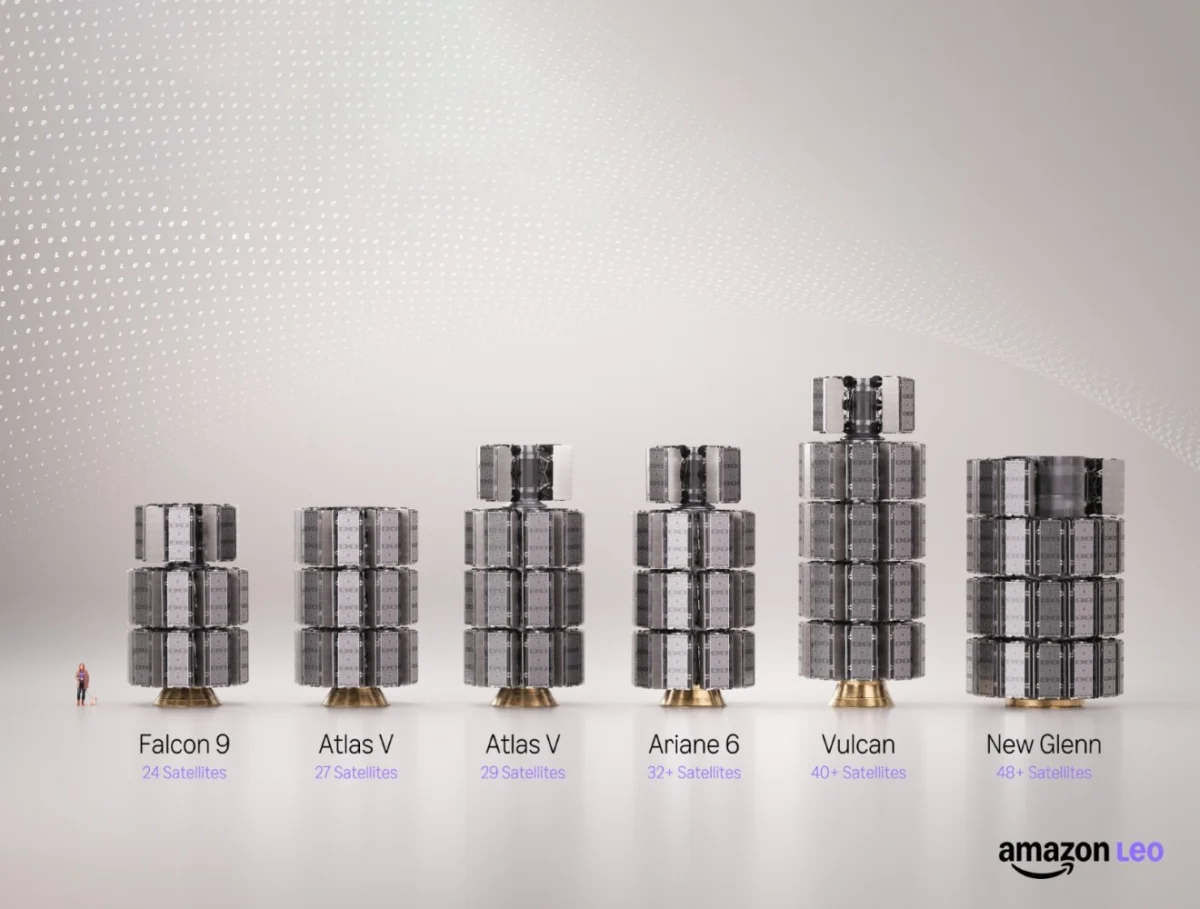
Introduction
The landscape of global telecommunications is undergoing a seismic shift, and the battleground is no longer limited to terrestrial fiber-optic cables or cellular towers. It has moved 340 miles above the Earth’s surface into the vacuum of low-Earth orbit (LEO). For years, SpaceX’s Starlink has held a near-monopoly on the satellite-based internet market, connecting remote corners of the globe that traditional infrastructure could never reach. Now, Amazon is finally signaling its intent to challenge that hegemony. With the recent deployment of its 396th satellite, Amazon has officially reached a critical threshold, confirming it has enough infrastructure in orbit to support "continuous service" across its initial target latitudes.
While the milestone marks a significant step forward for Project Kuiper—Amazon’s ambitious satellite internet initiative—the road ahead is paved with logistical hurdles, competitive pressures, and the daunting challenge of scaling a network from a proof-of-concept to a global utility.
The Core Milestone: A Foundation for Connectivity
According to Chris Weber, Vice President of Business and Product for Project Kuiper, the deployment of 396 satellites is the "minimum viable constellation" required to initiate commercial-grade service in specific geographic regions. This density allows Amazon to begin testing the handoff protocols between satellites—the complex "dance" required to maintain a seamless internet connection as a satellite moves across the sky at over 17,000 miles per hour.
For consumers, this means the mid-2026 target for commercial availability is no longer just a boardroom projection; it is a hard deadline backed by tangible hardware in space. However, Amazon has been careful to manage expectations. The company is not promising the high-speed, low-latency performance that users have come to expect from established fiber providers, or even the mature state of Starlink today. Instead, Amazon is adopting a strategy of "incremental deployment," acknowledging that the service will likely be in a nascent, beta-like state upon its initial launch.
Chronology: From Concept to Constellation
The journey to this point has been long and fraught with delays. Understanding how Amazon reached this juncture requires looking at the history of the project:
- 2019: Amazon officially announces Project Kuiper, a $10 billion initiative to launch a constellation of 3,232 satellites to provide high-speed, low-latency broadband.
- 2020–2021: Amazon focuses on regulatory approval from the FCC, securing the necessary licenses to operate a massive satellite network.
- 2022: The company announces massive launch contracts with Arianespace, Blue Origin, and United Launch Alliance (ULA) to get the satellites into orbit.
- 2023: Amazon successfully launches two "Protoflight" satellites, marking the first time the company’s hardware has touched the vacuum of space.
- 2024–2025: A rapid series of launches begins, utilizing various launch vehicles to accelerate the deployment of the production-grade Kuiper satellites.
- Early 2025: The 396-satellite threshold is crossed, confirming sufficient coverage for the first commercial pilot programs.
The "Better Than Nothing" Precedent
To understand what Amazon’s customers can expect in 2026, one only needs to look at the early days of SpaceX’s Starlink. In 2020, Elon Musk’s company launched its public beta with roughly 900 satellites. It was marketed, famously, as a "Better than nothing beta."
Early testers faced significant hurdles. Service was restricted to northern latitudes, and users reported frequent "dropouts" whenever a satellite passed out of view or if a tree branch obstructed the view of the sky. Speeds fluctuated wildly, and latency—the "ping" that defines the quality of video calls and gaming—was often inconsistent.
Amazon is expected to face a similar "growing pains" phase. A network with fewer than 400 satellites cannot offer the same level of redundancy as one with over 10,000. When a user in a remote area points their terminal toward the sky, they are entirely dependent on the specific satellites currently passing overhead. If those satellites are at capacity or obscured by atmospheric conditions, the user experience will suffer.
Supporting Data: A Comparison of Satellite Giants
| Feature | Starlink (SpaceX) | Project Kuiper (Amazon) |
|---|---|---|
| Satellites in Orbit | ~10,000+ | 396 |
| Target Constellation | 40,000+ (planned) | 3,232 |
| Current Performance | 200Mbps down / 30ms latency | TBD (Early testing phase) |
| Primary Launch Vehicle | Falcon 9 | New Glenn (in development) |
| Commercial Status | Operational (160+ countries) | Beta / Testing |
The data paints a clear picture: Amazon is playing catch-up. While Starlink has spent years optimizing its ground stations, inter-satellite laser links (which allow satellites to "talk" to each other without needing a ground station nearby), and user terminal technology, Amazon is still in the process of building its foundational infrastructure.

The Blue Origin Bottleneck
One of the most significant factors in Amazon’s slow start is its reliance on Blue Origin, the aerospace company founded by Jeff Bezos. Project Kuiper was designed to be launched, in large part, by Blue Origin’s New Glenn rocket—a massive, reusable heavy-lift vehicle.
However, the development of New Glenn has been plagued by delays. While Blue Origin has made significant strides in engine testing and infrastructure, the rocket has yet to reach a stage of regular, reliable flight operations. This has forced Amazon to pivot, purchasing launch slots from competitors like ULA and Arianespace to ensure its satellites reach orbit. If Amazon cannot secure consistent and affordable launch capacity, its plan to populate a 3,232-satellite constellation will remain an expensive fantasy.
Implications: What This Means for the Consumer
For the average person in an urban center, this news may seem trivial. But for the estimated 2.6 billion people worldwide who remain unconnected to the internet, these developments are life-changing.
1. Competitive Pricing and Market Choice
The entry of Amazon into the LEO space provides a much-needed check on Starlink’s pricing power. As the primary incumbent, SpaceX has faced criticism for increasing subscription costs and imposing data caps. If Amazon can offer a competitive alternative, market forces should theoretically drive prices down and quality of service up.
2. Enterprise and Government Integration
Amazon is not just targeting residential consumers. By leveraging its existing AWS (Amazon Web Services) infrastructure, Amazon is positioning Project Kuiper to be a "cloud-first" network. This is highly attractive for governments, military branches, and large enterprises that need to process data at the "edge" of their networks without routing everything back to a central data center.
3. The Digital Divide
The ultimate goal—and the most profound implication—is the closing of the digital divide. Satellite internet is the only viable solution for geography-defying connectivity. Whether it is a school in the Amazon rainforest or a medical clinic in the Himalayas, the ability to access high-speed internet can facilitate education, telehealth, and economic development.
Official Responses and Future Outlook
Amazon remains publicly optimistic. Chris Weber and other executives have emphasized that the current satellite density is only the beginning. Every launch from this point forward will incrementally increase the "bandwidth per square mile," effectively lowering latency and increasing the number of users that can be supported simultaneously.
"We are building a network for the long term," a company spokesperson stated. "Our focus right now is on stability, signal integrity, and the seamless integration of our ground-based terminal hardware. We are not just building a network; we are building a global digital utility."
As we look toward 2026, the question is no longer whether Amazon can build this network, but whether it can build it fast enough to remain relevant in a market that SpaceX has already largely colonized. With 396 satellites now active, the "space race" of the 21st century has officially entered its most intense phase yet. For consumers, the wait for a second, reliable option in the sky is finally coming to an end.
 rifanmuazin
  Layla Zulfa
  Evan Lee Salim