
 By Raul Delapena Setiawan

Somewhere within the depths of your email list, there is a customer who genuinely loves what you sell. They have purchased from you multiple times, they have taken the time to leave a glowing review, and they would be more than happy to recommend your brand to their inner circle. In fact, their friends likely share the same pain points and interests as your ideal buyer.
There is only one problem: you have likely never asked them to make that introduction.
For many founders, a referral program is treated much like a neglected gym membership. It exists on paper, there is a static, forgotten link buried in the website footer, and it hasn’t generated a lead since the fiscal year began. This is a missed opportunity of significant proportions. In an era where customer acquisition costs (CAC) are skyrocketing across paid social and search platforms, the referral remains the most potent, cost-effective, and high-conversion growth channel available.
When a trusted peer says, "You would love this product," the selling process is effectively concluded before the prospect even visits your site. No targeting algorithm or high-budget ad creative can replicate the inherent trust of a personal recommendation.
The Anatomy of a Referral Engine
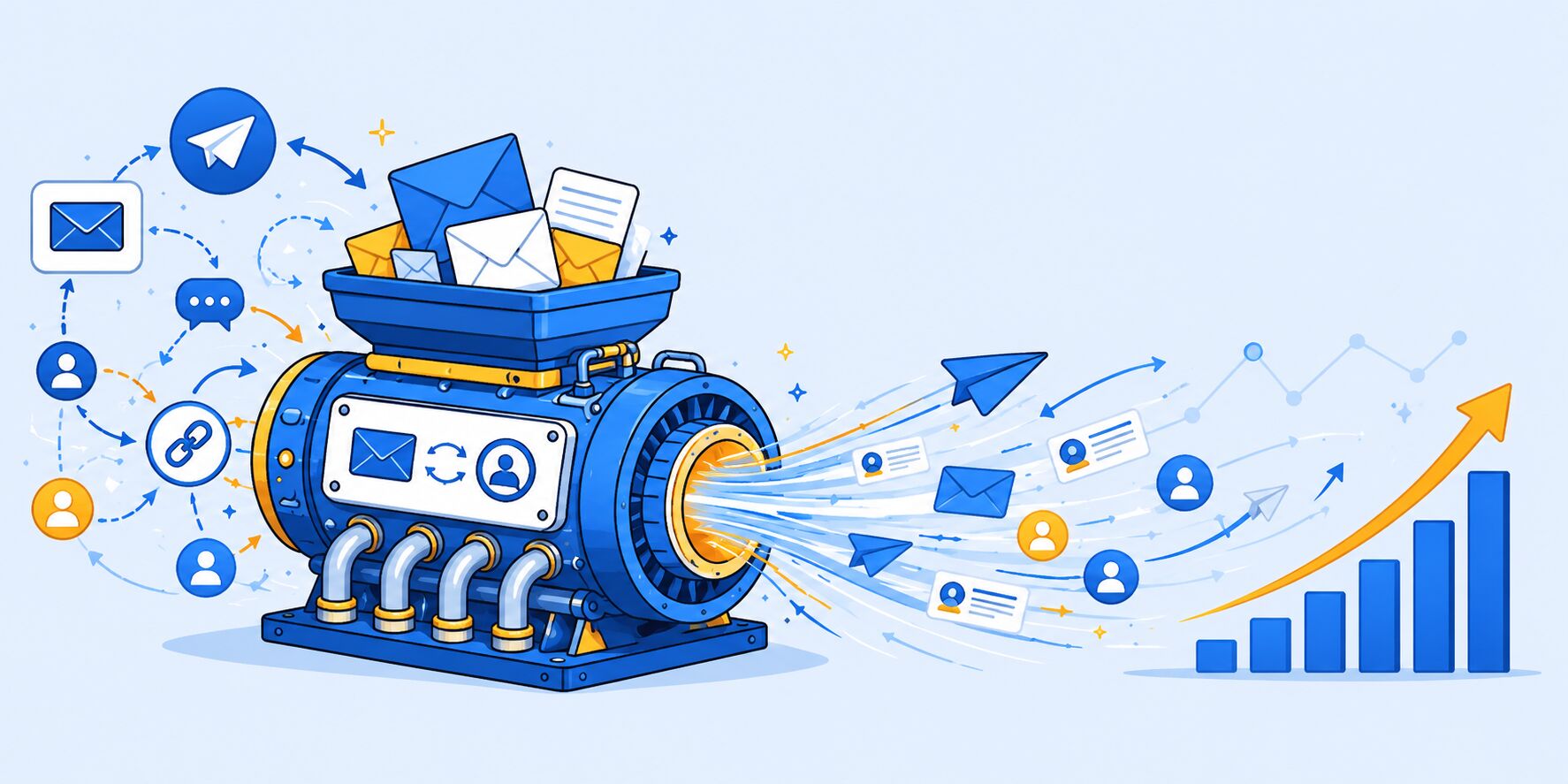
The primary reason most referral programs fail is that they are designed as a static web page rather than a dynamic, automated ecosystem. To unlock the true potential of word-of-mouth, brands must shift their perspective: stop treating referrals as a passive feature and start treating them as a strategic infrastructure.
Why Referrals Outperform Traditional Acquisition
To understand the power of a referral, consider your own consumer behavior. When a friend suggests a new restaurant, a specific software tool, or a pair of shoes, you rarely feel the need to cross-reference third-party reviews or analyze competitor pricing. You trust the curator.
This social validation is the cornerstone of the referral engine. Referred customers consistently demonstrate higher conversion rates, lower acquisition costs, and superior long-term retention compared to those brought in through cold traffic. Because your customers are essentially doing the vetting for you, they act as a sophisticated, human-led targeting engine that no machine-learning model can perfectly emulate.
The Chronology of an Effective Referral Ask
Timing is the most overlooked variable in referral marketing. Many businesses broadcast a generic "refer a friend" call-to-action (CTA) to their entire database during a random Tuesday newsletter. This is "wallpaper"—it is easily ignored and lacks the emotional resonance required to motivate an advocate.
Instead, the most successful growth teams utilize "Moments of Delight." These are the specific, data-driven windows where customer goodwill is at its peak:
- The Repeat Purchase: The moment a customer buys for the second or third time, they are signaling deep product-market fit.
- The Glowing Review: When a customer takes the time to leave a five-star rating, they have already committed to being an advocate.
- The Service Interaction: A support ticket that is resolved quickly and kindly is a prime opportunity to transition from a helpful brand to a recommended one.
- The "Reply" Loop: If a customer replies to one of your automated emails with positive sentiment, they are engaged and ready to participate.
By integrating your CRM with your email marketing platform, you can automate these asks. When a repeat purchase is recorded, a trigger fires an email invitation a few days post-delivery. When a high review score is logged, a thank-you note with a share link is automatically dispatched. You build the infrastructure once, and the "ask" lands at the perfect psychological moment for every customer, indefinitely.
The Economics of Incentives: Why Double-Sided Works
One of the most common pitfalls in referral design is the use of one-sided rewards. If you only reward the referrer, the program feels like a transactional monetization of friendship, which can feel "grubby" to the customer. If you only reward the friend, the referrer has no tangible incentive to go out of their way to make the introduction.
The "Double-Sided" model is the industry gold standard for a reason. By offering a "Give $10, Get $10" structure, you align the incentives for all parties. The referrer is framed as a helpful friend providing a discount, and the new customer is incentivized by the immediate value of that discount. This synergy creates a frictionless, mutually beneficial exchange.
The reward does not need to be extravagant to be effective. While cash incentives work, creative alternatives—such as free shipping, exclusive access to new releases, or loyalty points—often yield higher engagement. The goal is not to "pay" for the referral, but to reward the act of community building.
Friction: The Silent Killer of Growth
Every referral program suffers from "leakage" at two specific friction points: the mental effort of composing a recommendation and the technical effort of sharing it.
To maximize participation, you must eliminate these hurdles:
- Unique Tracking: Every customer should have a unique link that handles attribution automatically. No manual codes, no messy tracking.
- Pre-written Copy: Provide a short, human-centric message that the customer can send as-is or tweak slightly.
- Mobile-First Sharing: Ensure share buttons are optimized for the platforms where "thumbs already live"—WhatsApp, SMS, and direct messaging.
If it takes more than 15 seconds for a customer to share your brand, you are losing the "quietly satisfied majority." While your 2% of "superfans" might push through a complex process, the real volume of growth lies in making the process effortless for the average, happy customer.
Strategic Segmentation: Don’t Ask Everyone
A common mistake is treating your entire email list as a monolith. Sending a referral request to a customer who hasn’t engaged with your brand in eight months is not only ineffective—it is brand-dilutive. It teaches your audience to skim past your communications.
Instead, build segments based on high-intent behaviors:
- Repeat Buyers: High-frequency purchasers.
- Active Reviewers: Those who engage with your content or feedback loops.
- High-Engagement Subscribers: Users who regularly open and click your emails.
This targeted group should be your primary focus. Utilizing tools like Omnisend, you can isolate these segments and integrate them with loyalty programs (like Smile or Yotpo). This ensures the "plumbing" of your referral engine—the points, tiers, and attribution—runs in the background, allowing your marketing team to focus on the qualitative side: writing an ask that is truly worth saying "yes" to.
Implications for Future Growth
The reality of the modern digital landscape is that word-of-mouth is already occurring around your brand. People discuss the products they enjoy, whether you have a formal program in place or not. The implementation of a referral engine is simply the act of building infrastructure for the generosity that already exists.
By formalizing this process, you are not just acquiring new customers; you are building a community of brand advocates. Brands that get this right find themselves less dependent on the volatility of ad platforms and more reliant on the compounding effect of organic advocacy.
Summary Checklist for Implementation:
- Audit your current flow: Is your referral program a page, or a series of automated triggers?
- Adopt the Double-Sided model: Ensure both the advocate and the new lead receive value.
- Audit for friction: Can a customer share your link in under 15 seconds?
- Segment your list: Only target your most engaged customers for referral asks.
- Communicate consistently: Mention your program in post-purchase flows, newsletters, and receipts—not loudly, but steadily.
Ultimately, your customers are the best growth marketers you will ever have. The only question remains: have you made it easy for them to share the love? By leveraging the right technology and the right timing, you can transform your existing customer base into a sustainable, high-performance growth engine that works while you sleep.
 Basiran
 Azzam Bilal Chamdy
 Asep Darmawan
