
 By Nila Kartika Wati
In the hyper-competitive landscape of digital commerce, most brands suffer from a "first-sale myopia." They pour the vast majority of their marketing budgets, creative energy, and data analytics into the high-stakes pursuit of the first acquisition. Yet, the true engine of sustainable business growth lies not in the initial transaction, but in the quiet, critical period that follows.
When a customer completes a purchase, a subtle countdown begins. In the window between receiving a product and needing a replacement or an upgrade, the customer is forming a lasting opinion of your brand. Will they remember your value proposition? Will they return for a second purchase? Or will your brand slowly drift into the background noise of their digital life?
The difference between a one-time buyer and a loyal advocate often comes down to a single, powerful lever: the timely email.
The Paradigm Shift: Quality Over Quantity
For years, the conventional wisdom in e-commerce marketing was predicated on volume. If engagement dropped, the knee-jerk response was to increase the cadence—more promotional blasts, more "don’t miss out" reminders, and more aggressive discount codes.
However, current industry analysis suggests that this approach is fundamentally flawed. Customers rarely disengage because they receive too few emails; they disengage because the emails they receive arrive at the wrong time. A message that feels like a helpful suggestion on a Tuesday afternoon can feel like a desperate intrusion on a Wednesday morning.
The core of modern retention is context. By shifting from a "campaign-first" mentality to a "customer-journey" mentality, brands can stop competing for attention and start earning it.
Chronology of a Customer Connection
To understand how to keep customers coming back, we must look at the lifecycle of a buyer through the lens of specific, high-intent touchpoints. Retention isn’t a continuous state of contact; it is a series of strategic interventions.
1. The Post-Purchase Validation Window
Immediately after the first purchase, the customer is in a state of high emotional engagement but low confidence. They have committed their capital, and they are subconsciously seeking validation that they made the right choice.
A timely, automated email during this window—one that confirms their order, sets clear expectations for shipping, and reinforces the value of their selection—does more than provide information. It builds trust. This is the moment to combat "buyer’s remorse" before it ever takes root.
2. The "Quiet Period" Stewardship
Once the product arrives, there is often a lull. Many brands go silent here, missing a critical opportunity to build rapport. Instead of sending generic promotions, this phase should be used for value-add communication. Educate the customer on how to use their new purchase, share a pro-tip, or provide a behind-the-scenes look at the brand’s mission. By staying present without "selling," you deepen the psychological connection.
3. The Re-entry Trigger
Finally, there is the re-entry moment—the point at which the customer is naturally ready for a follow-up. This might be driven by the depletion of a consumable product, the seasonal change in utility, or a behavioral trigger such as browsing a specific category on your site. When an email arrives at this exact intersection of need and timing, it no longer feels like a persuasive pitch; it feels like an intuitive, helpful nudge.
Supporting Data: The Power of Automation
The shift toward behavior-triggered email is not merely a philosophical preference; it is backed by compelling data. According to 2025 e-commerce insights from Omnisend, the efficiency of automated workflows is staggering compared to traditional manual campaigns.
Data indicates that automated flows—specifically those triggered by user behavior—generated approximately 37% of total email-driven revenue while accounting for only 2% of total email volume.
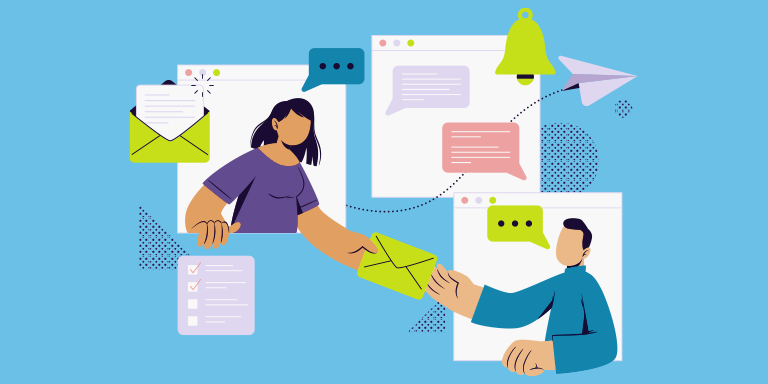
This disparity highlights a profound truth: generic "blast" campaigns are increasingly suffering from diminishing returns. In contrast, behavior-triggered emails possess a high degree of relevance. Because they are tied to a specific action (a purchase, an abandoned cart, or a browsing session), they inherently feel personal. Even though these messages are automated, the customer perceives them as a bespoke response to their individual journey.
The Psychology of Timing
Why does timing have such a disproportionate impact on conversion? The answer lies in the cognitive architecture of the modern consumer.
Reducing Decision Fatigue
Modern consumers are bombarded with choices. When an email arrives out of context, it forces the recipient to evaluate the offer, weigh the price, and decide if they actually need the product—a process known as "decision fatigue."
Conversely, when an email arrives exactly when the customer is already thinking about the brand or experiencing a need, the decision-making process is shortcut. The email isn’t creating a demand; it is simply satisfying one.
The Momentum of Recognition
Psychologically, recognition is a powerful driver of trust. When a brand demonstrates that it is "paying attention" to a user’s behavior—by referencing a past purchase or acknowledging a specific interest—it lowers the customer’s natural defensive barriers. We are wired to respond more favorably to those who demonstrate an understanding of our current context.
When your brand shows up at the right moment, it signals that you are a partner in their experience, not just a vendor in their inbox.
Implications for Modern Founders
For the lean entrepreneur or the scaling e-commerce brand, the implications are clear: you do not need to hire a massive team to send more emails. You need to build a smarter infrastructure for the emails you already send.
Moving Beyond the "Hard Sell"
An effective retention email rarely relies on aggressive calls to action. Instead, it relies on utility. If you are selling skincare, a timely email three weeks after a purchase might be an article on "How to maximize your moisturizer," rather than a 20% off coupon. By providing value first, you cement your position as a trusted advisor. When you do eventually present an offer, the customer is far more receptive because the relationship is built on a foundation of support, not just transactions.
The Role of Technology
The transition to behavior-based marketing is made possible by modern automation platforms like Omnisend. These tools allow founders to move away from arbitrary, calendar-based scheduling and toward "event-based" communication. By integrating dynamic personalization and social proof, these platforms enable small teams to deliver high-touch experiences at scale.
Conclusion: Crafting the Future of Your Brand
The path to long-term loyalty is not found in louder messaging or deeper discounts. It is found in the quiet, precise moments where your brand’s message aligns perfectly with the customer’s internal reality.
As the e-commerce landscape continues to mature, the brands that win will be those that respect the customer’s time and attention. By prioritizing timing over frequency, you transform your email marketing from a source of digital clutter into a source of genuine value.
In a world where attention is the most valuable currency, the ability to show up exactly when you are needed is the ultimate competitive advantage. For those ready to optimize their customer lifecycle, the tools are already here—the only missing ingredient is the strategic discipline to use them.
Start building your retention engine today. Leverage behavior-based automations and personalized flows to ensure your brand is always at the right place, at the right time. Subscribe here for more frameworks and tools to build your business, and use code FOUNDR50 to receive 50% off your first 3 months with Omnisend.
 Dwi Wanna
  rifanmuazin
  Asep Darmawan