
 By Laily UPN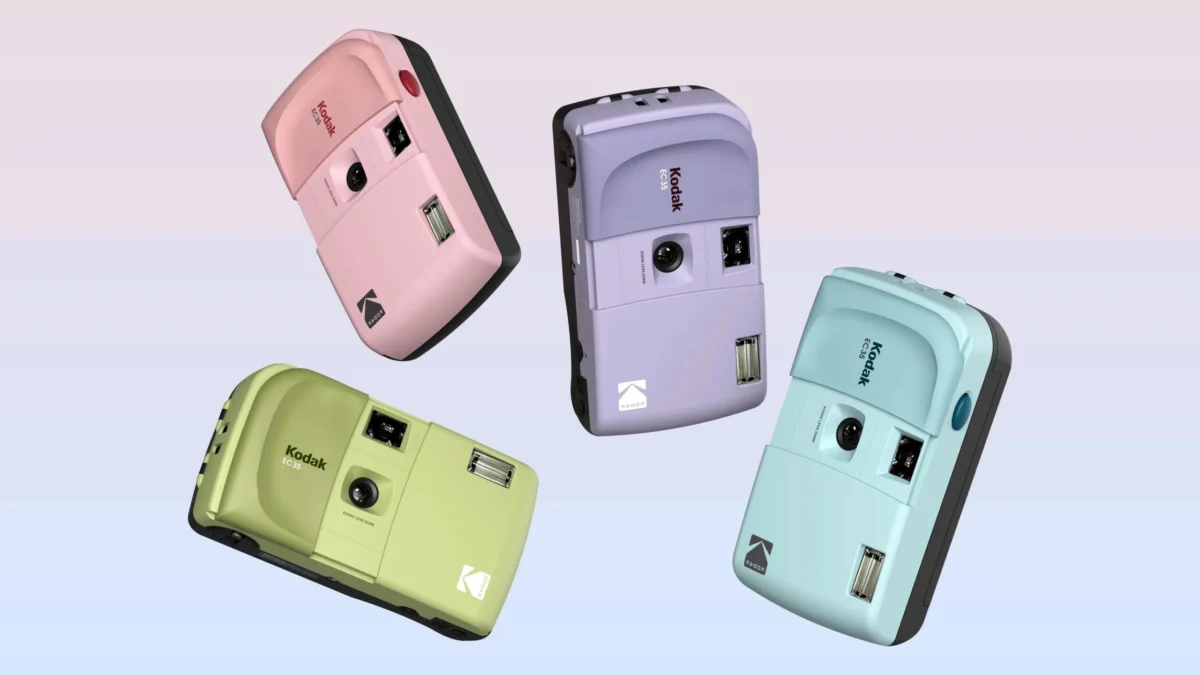
In an era defined by the computational photography of smartphones and the rapid iteration cycles of digital sensors, a curious counter-movement continues to gain momentum: the resurgence of 35mm film. Leading the charge in the entry-level segment is Reto Project, a company that has successfully carved out a niche by licensing the iconic Kodak brand to produce accessible, reusable film cameras. Following the well-received launch of the $99 Snapic A1, Reto Project has announced its most budget-friendly offering to date: the Kodak EC35, a point-and-shoot camera priced at just $34.99.
The Main Facts: A Return to Basics
The Kodak EC35 represents a stripped-back philosophy toward photography. It is designed not for the purist seeking high-end glass or precise depth-of-field control, but for the casual shooter looking to capture memories with the distinct texture of film.
Technically, the EC35 is rudimentary. It features a 25mm acrylic lens paired with a fixed aperture of f/10 and a static shutter speed of 1/100th of a second. These specifications place the device firmly in the territory of a classic "drugstore" disposable camera. However, unlike a disposable unit, the EC35 is designed to be reloaded, featuring a manual wind and rewind mechanism that demands a tactile engagement with the photographic process. The inclusion of a built-in automatic flash further solidifies its positioning as a "party camera"—a device intended for low-light environments where the goal is spontaneity rather than technical perfection.
Chronology: Building on the Success of the Snapic A1
The trajectory of Reto Project’s partnership with Kodak has been a deliberate progression toward accessibility. The journey began in earnest with the Snapic A1, a camera that acted as a bridge between the disposable market and the entry-level enthusiast market.
- Initial Partnership Phase: Reto Project established its relationship with Kodak to revitalize the film camera market, targeting a generation that grew up with digital interfaces but expressed a longing for analog artifacts.
- The Snapic A1 Launch: Priced at $99, the A1 introduced features such as double exposure capabilities and zone focusing, signaling to the market that Reto was capable of producing equipment with creative depth.
- Market Analysis: Following the positive reception of the A1, internal data and consumer feedback suggested a significant demand for an even lower barrier to entry. Many potential customers expressed hesitation at the $99 price point, viewing it as a commitment to a hobby they were only just exploring.
- The EC35 Development: By removing the "prosumer" features of the A1—specifically the zone focusing and double-exposure modes—Reto Project was able to streamline the manufacturing process, resulting in the $34.99 price point of the EC35.
Supporting Data: Understanding the "Disposable" Market
The global film photography market has seen a CAGR (Compound Annual Growth Rate) that defies traditional logic in the digital age. According to industry analysis, the interest in 35mm film is no longer a niche hobby restricted to professional darkroom enthusiasts. Instead, it is being driven by "Gen Z" and "Gen Alpha" consumers who utilize platforms like TikTok and Instagram to showcase the "imperfect" aesthetic of film.
The Kodak EC35 is positioned to capture this demographic by offering a device that is:
- Sustainable: By providing a reusable alternative to single-use cameras, the EC35 addresses the growing environmental concerns associated with the waste generated by traditional disposables.
- Economical: At $34.99, the cost-per-shot over the lifetime of the camera is significantly lower than that of disposables, which typically range from $20 to $25 per roll of 27 exposures.
- Aesthetic: The design language, which features a sliding lens cover reminiscent of the cult-classic Olympus Mju series, serves as a fashion accessory. The availability of colors like "butter yellow," "powder blue," and "avocado green" suggests that the camera is being marketed as a lifestyle product rather than a piece of precision optical equipment.
Official Positioning: The Design Philosophy
Reto Project has been vocal about the intended use case for the EC35. The company’s design team emphasized that the camera is "designed to require almost no thought." By removing complex focus adjustments and exposure variables, the user is encouraged to focus on composition and timing—the fundamental pillars of photography.

The sliding lens cover is perhaps the most significant functional design choice. Beyond protecting the lens, it serves as a tactile power switch. This design choice, inspired by the high-end point-and-shoots of the 1990s, provides a satisfying physical "snap" that modern digital interfaces cannot replicate. Furthermore, the contrasting color palettes—where the lens cover is a slightly darker shade than the body—are intended to provide a premium aesthetic feel that belies the camera’s budget-friendly construction.
Implications: What This Means for the Industry
The release of the EC35 signals a broader shift in the camera market. For years, the industry was obsessed with "the next best sensor," prioritizing megapixel count and dynamic range. The success of the EC35, however, proves that for a massive segment of the population, "good enough" is not the goal—"fun" is.
1. The Death of the Disposable?
As companies like Reto Project continue to iterate on low-cost, reusable designs, the traditional disposable camera faces an existential threat. If a consumer can purchase a reliable, aesthetically pleasing camera for the price of two or three disposable units, the economic incentive to stick with single-use cameras diminishes rapidly. This shift could lead to a massive reduction in plastic waste within the photography industry.
2. Lowering the Barrier to Entry
By bringing the cost of entry down to $34.99, Reto is effectively democratizing the film experience. This is crucial for the health of the film ecosystem; for film processing labs and film stock manufacturers (like Kodak Alaris, which remains distinct from the licensing arm used by Reto), a steady influx of new shooters is vital for long-term viability.
3. The "Analog Renaissance" as a Cultural Constant
The EC35 is not a technological breakthrough, but it is a cultural one. It recognizes that in a world where we are bombarded with digital content that can be edited, filtered, and deleted in milliseconds, there is a profound psychological value in the "wait" associated with film. You take the shot, you wind the film, you finish the roll, you send it to the lab, and you wait. That process—the delayed gratification—is the product that Reto Project is ultimately selling.
Conclusion: A New Chapter for Casual Photography
While the Kodak EC35 might be dismissed by technical purists as little more than a "toy," such a label misses the point entirely. The camera is a bridge. It is an invitation for the casual observer to become a photographer, to understand the limitations of light, and to appreciate the physical nature of a negative.
Whether it is the butter-yellow chassis or the simple, unpretentious click of the shutter, the EC35 succeeds because it is approachable. In an increasingly complex digital world, the ability to simply point, shoot, and let the film do the work is a luxury that, for the first time in a long time, feels entirely accessible. As Reto Project continues to push the boundaries of what an entry-level film camera can be, the EC35 stands as a testament to the fact that photography’s future might just be found in its past.
 Raul Delapena Setiawan
  Siti Muinah
  Asro
Asro 