
 By Sagoh

In the high-velocity world of digital marketing, there is an enduring, uncomfortable truth: yesterday’s winning strategy is today’s relic. Consumer attention spans are not just shifting; they are fracturing. Inboxes have become hyper-competitive battlegrounds where a subject line—once thought to be the "perfect" hook—can vanish into the digital abyss if it fails to resonate with the specific needs of a reader in that exact moment.
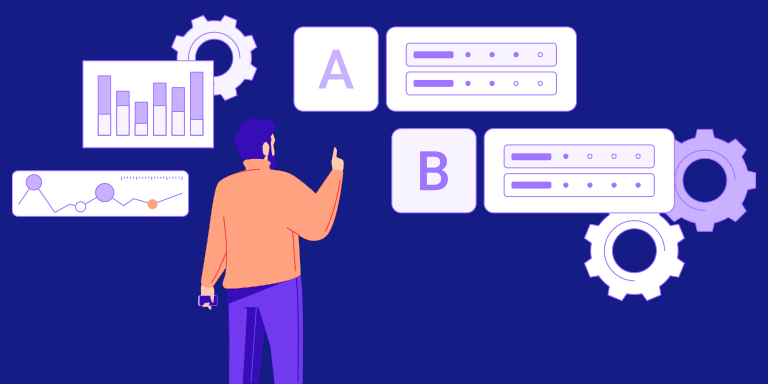
For the modern entrepreneur, intuition is no longer a viable business strategy. Relying on "hunches" is a shortcut to stagnation. To survive and thrive in an increasingly crowded ecommerce and SaaS landscape, A/B testing has evolved from a "nice-to-have" technical feature into a non-negotiable pillar of operational excellence. It is the practice of replacing guesswork with data-driven certainty.
The Core Mandate: Why A/B Testing is No Longer Optional
Most founders obsess over the "top of the funnel"—pouring time and capital into acquisition channels like paid social or influencer marketing. While growth is essential, the most immediate and cost-effective opportunity for revenue expansion is often sitting right in front of them: conversion optimization.
If you have built an email list, you are sitting on a goldmine of latent potential. A/B testing is the key that unlocks this value, allowing you to generate significantly more revenue from your existing audience without spending an additional dollar on lead acquisition.
The Statistical Reality
The data supports this shift in priority. Recent analysis of billions of emails by platforms like Omnisend reveals a clear trend toward optimization. Average open rates climbed from 22.9% in 2022 to 25.1% in 2023, while click-through rates saw a parallel rise from 1.2% to 1.5%. These gains are not accidental; they are the direct result of rigorous testing and granular audience segmentation.
The performance gap between standard manual campaigns and automated flows is even more stark. Automated, triggered emails—such as welcome series or abandoned cart sequences—boast 52% higher open rates, 332% higher click-through rates, and a staggering 2,361% better conversion rate than generic, bulk-sent campaigns. These flows are the workhorses of the modern revenue engine, but they only achieve their full potential when they are continuously refined through A/B testing.
Chronology of Optimization: From Guesswork to Precision
To understand the importance of A/B testing, one must look at the evolution of digital communication. In the early 2000s, email marketing was a "blast and pray" endeavor. Marketers sent one message to a million people and hoped for the best.
As the industry matured, the "segmentation era" began, where marketers started categorizing users based on demographics. However, even these segments were static. Today, we are in the "optimization era." In this phase, every communication is viewed as a hypothesis.
- Phase 1: The Baseline (0–3 months). Founders establish benchmarks. They identify the "control" versions of their welcome sequences and cart recovery emails.
- Phase 2: The Iterative Loop (3–9 months). Testing becomes a weekly habit. Small variables—such as button color, sender name, or subject line length—are tweaked. The goal here is not a "home run," but rather a series of "base hits."
- Phase 3: The Compounding Phase (9+ months). With enough data, patterns emerge. The business moves from testing "what works" to "why it works," allowing for the development of a proprietary content strategy that is uniquely tuned to their audience’s psychological triggers.
Supporting Data: The Power of Compound Gains
The mathematical argument for A/B testing is compelling. Many founders dismiss a 5% increase in open rates as negligible. However, in the context of a full sales funnel, these small percentages compound aggressively.
Consider an ecommerce brand with a monthly email revenue of $100,000. If that brand implements a series of tests that lead to a 5% lift in open rates and a 10% boost in click-through rates, they aren’t just seeing a minor fluctuation. They are effectively unlocking tens of thousands of dollars in "hidden" revenue. Case studies from Omnisend show that merchants who actively test their abandoned cart flows see monthly sales gains of roughly $5,000, simply by optimizing the timing and copy of the recovery nudge.
Furthermore, the "subject line" remains the primary gatekeeper of engagement. Data indicates that 43% of users decide to open an email based solely on the subject line, while 69% report emails as spam based on that same initial impression. When personalization is added—a variable easily tested—open rates can soar by up to 26%.
The Strategic Toolkit: What to Test
A/B testing is not merely about aesthetic changes. It is about deeply understanding the psychological barriers preventing your customer from completing a purchase. Here are the five high-leverage areas every brand should prioritize:
1. The Subject Line
The primary goal here is to increase open rates. Test curiosity-based lines against benefit-driven ones. Experiment with emojis versus plain text, or short, punchy subject lines (under 30 characters) versus long-form, descriptive ones.
2. The Call-to-Action (CTA)
Once the email is open, the CTA is your most critical asset. Test the phrasing ("Get My Discount" vs. "Learn More"), the button color, and the placement within the email body. A minor change in verb choice can often lead to double-digit percentage differences in click-throughs.
3. Send Time and Frequency
Even the most compelling content will fail if it arrives at the wrong time. Use testing to identify when your specific audience is most likely to be at their desk or checking their phones. Does your audience prefer Monday morning updates or relaxed Sunday afternoon digests?
4. Sender Name and Preheader
The "From" field and the preview text (preheader) often do more heavy lifting than the subject line itself. Testing a personal name ("Sarah from Brand X") versus a corporate name ("The Brand X Team") can significantly alter trust levels and engagement.
5. Audience Segmentation
Blanket emails are a relic of the past. Use A/B testing to compare how different segments—such as "VIP customers" versus "first-time purchasers"—react to the same offer. This ensures that you aren’t just sending more email, but sending smarter email.
Official Industry Perspectives
Marketing automation experts emphasize that testing is not a "fire and forget" task. The consensus among top-tier platforms like Omnisend is that testing should be a continuous, cyclical process.
"The best brands aren’t just testing when they’re failing; they’re testing when they’re winning," says one industry lead. "A/B testing provides the competitive intelligence that allows a brand to move faster than their rivals. You learn that your audience prefers short, direct copy, and you apply that knowledge to your ads, your landing pages, and your social posts. You are building a library of what works."
Implications: The Mindset Shift
The ultimate implication of a robust A/B testing strategy is the shift from "Founders as Guessers" to "Founders as Scientists." When you adopt this mindset, you remove the emotional attachment to your own marketing copy. If your "beautifully crafted" email performs worse than a simple, text-heavy version, you accept the data and move on.
The "One Test" Rule
To stay consistent, implement the "Always-On" rule: you should always have at least one active test running. This prevents the "testing paralysis" that sets in when teams wait for the "perfect moment" to run an experiment.
- Start with a clear hypothesis. Define exactly what you are trying to learn. Instead of "Let’s try a red button," use "We believe a benefit-driven CTA will increase clicks by 10%."
- Isolate the variable. If you change the subject line, the CTA, and the image at the same time, you will never know which element caused the improvement.
- Ensure statistical significance. If your list is small, use a 20/20/60 split: send your two variants to 20% of your list each, and once a winner emerges, send the winning version to the remaining 60%.
- Document everything. Treat your test results as an intellectual property asset. A repository of past tests is one of the most valuable resources a scaling company can possess.
Conclusion: Building a Scalable Future
In the modern digital landscape, growth is not just about bringing in new customers; it is about respecting the time and attention of the ones you already have. A/B testing is the most honest way to conduct that relationship. It proves that you are listening, that you are adapting, and that you are committed to delivering the best possible experience.
For entrepreneurs looking to streamline this, tools like Omnisend provide the architecture to automate these tests, segment audiences, and iterate without the burden of manual oversight. By integrating these systems today, you are not just optimizing an email; you are building a culture of high-performance marketing that will serve your business for years to come. Start small, test often, and let the data lead the way.
 Basiran
 Azzam Bilal Chamdy
 Asep Darmawan
