
 By Nana Wu
You have done the heavy lifting. You have agonized over a subject line designed to earn the click, crafted body copy that vibrates with genuine human empathy, and perfected the automation sequences that guide a customer through your sales funnel. With the quiet confidence of a founder who knows their craft, you hit "Send."
But then, silence.
The metrics tell a harrowing story: your open rates are cratering, and your conversion rates are following suit. Your emails didn’t fail because your offer was weak or your creative was lackluster. They failed because they never stood a chance. They were intercepted by the silent sentinels of the internet—the spam filters—and buried in a digital graveyard where your customers will never see them.
In the modern digital economy, email deliverability is the invisible foundation upon which all e-commerce success is built. If your emails aren’t reaching the inbox, your strategy, your psychology, and your perfectly timed automations are essentially non-existent.
The Anatomy of a Deliverable Email
To understand why emails fail, one must first distinguish between "delivery" and "deliverability."
"Delivery" is a technical metric: it simply means your email reached the recipient’s mail server without bouncing. "Deliverability," however, is a measure of prestige and trust. It asks a more critical question: Did the email land in the primary inbox, or was it relegated to the promotions tab or the spam folder?
Email providers—Gmail, Outlook, Yahoo—are no longer passive pipes. They are aggressive gatekeepers. Every time you send a blast to your list, these providers perform a split-second assessment of your "Sender Reputation." This score is a composite of your technical authentication, your list quality, and, most importantly, the historical engagement of your recipients.
For e-commerce founders, this is not a marginal concern. If 20% of your emails are being filtered into spam, you have effectively lost 20% of your revenue potential. Because this damage is invisible, many founders don’t realize they have a problem until their bottom line begins to shrink.
The Hierarchy of Sender Reputation
Think of your sender reputation as a credit score for your brand’s digital identity. Just as a bank tracks your financial history, ISPs (Internet Service Providers) track your sending history.
The Chronology of a Reputation Decline
The descent into the "spam abyss" rarely happens overnight. It usually follows a predictable pattern:
- The Accumulation Phase: A business grows quickly, collecting emails from various sources—pop-ups, giveaways, and social media—without verifying the quality of the leads.
- The Neglect Phase: Over months, old, inactive, or abandoned email addresses accumulate in the database.
- The Trigger Event: The brand sends a large campaign. A significant portion of those emails bounce (hard bounces) or remain unopened.
- The ISP Reaction: Email providers notice the high bounce rate and low engagement. They flag the domain as "suspicious."
- The Blacklist: Subsequent emails are automatically diverted to spam, creating a feedback loop where even fewer people engage, further tanking the reputation.
The Two Killers: Bounces and Complaints
Two metrics act as red flags to ISPs: high bounce rates and high spam complaint rates. A "hard bounce" indicates an invalid email address, suggesting a poorly maintained list. A "spam complaint" is the ultimate vote of no confidence; it tells the ISP that the recipient not only doesn’t want your email but finds it intrusive. If your complaint rate exceeds even a tiny fraction of a percentage, your ability to reach your audience will be severely throttled.
The Technical Imperative: Authentication as Your Digital ID
If sender reputation is your credit score, authentication is your passport. In an age of rampant phishing and spoofing, ISPs require proof that you are who you say you are.
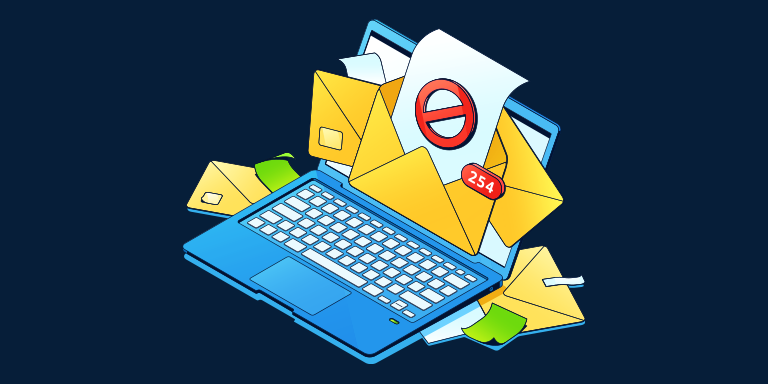
The "Big Three" of email authentication—SPF, DKIM, and DMARC—are not optional. They are the standard protocols of modern digital communication:
- SPF (Sender Policy Framework): A DNS record that lists the IP addresses authorized to send emails on behalf of your domain. It prevents bad actors from spoofing your "From" address.
- DKIM (DomainKeys Identified Mail): Adds a digital signature to your emails. It guarantees that the content of the email has not been tampered with or altered in transit.
- DMARC (Domain-based Message Authentication, Reporting, and Conformance): The policy layer that tells ISPs what to do if an email fails SPF or DKIM checks. It provides you with reports on how your domain is being used, giving you visibility into potential security breaches.
Neglecting these is a rookie error. A missing DKIM record is often the primary reason a legitimate business—which has done everything else right—finds its emails rejected by major providers.
List Hygiene: The Unsexy Work of Retention
In the marketing world, we are taught that "bigger is better." When it comes to email lists, this is a dangerous fallacy. A bloated, unmaintained list is a liability.
List hygiene is the practice of pruning dead weight. If you have subscribers who haven’t opened an email in 180 days, they are not potential customers; they are "toxicity" for your sender reputation.
The Strategy for a Clean List:
- The Re-engagement Audit: Identify your inactive segments. Send them a "We miss you" or "Do you still want to hear from us?" campaign.
- The Purge: If they don’t respond to a re-engagement series, remove them. It feels counterintuitive to delete subscribers you paid to acquire, but a smaller, high-engagement list will almost always generate more revenue than a large, unresponsive one.
- Double Opt-in: Implement a double opt-in process. While it adds a friction step for the user, it ensures that every person on your list is a verified, interested human being.
Engagement: The Ultimate Vote of Confidence
Email providers track "Engagement Signals" as the final arbiter of your inbox placement. When a user opens, clicks, replies, or drags your email out of the promotions tab into the primary inbox, they are essentially telling the ISP, "I trust this sender."
This is why your content strategy is inseparable from your technical deliverability. If you write boring, repetitive, or "salesy" content, you are actively training your audience to ignore you. Over time, that ignored email becomes a signal to Google or Yahoo that you are a low-value sender.
Your Welcome Series is the most critical juncture in this relationship. This is when engagement is at its peak. If you fail to deliver value in those first three emails, you have lost the opportunity to build the "trust equity" required to survive the long term.
Content Habits That Trigger the Filters
Modern AI-driven spam filters are sophisticated. They don’t just look for forbidden keywords like "FREE" or "WINNER." They analyze structure, frequency, and sentiment.
- The HTML Trap: Excessive images with very little text can trigger filters, as spam bots often hide malicious links behind images. Always maintain a healthy text-to-image ratio.
- The Link Overload: Including 20 links in a single email is a classic red flag. Keep your Call to Action (CTA) clear, singular, and focused.
- Frequency Fatigue: Sending too many emails in too short a window can look like "spamming." Maintain a consistent, predictable cadence that respects the subscriber’s time.
The Path Forward: Professional Tools and Sustained Discipline
Deliverability is not a "set it and forget it" task. It is a fundamental operational pillar that requires ongoing maintenance. As the email landscape changes—with new regulations from Google and Yahoo regarding authentication—the founders who survive are the ones who treat their email list like an asset to be protected, not a commodity to be burned.
Platforms like Omnisend are designed specifically to solve this visibility crisis. They provide the infrastructure that most founders lack: real-time monitoring of sender reputation, automated authentication setups, and list-cleansing tools that remove the "dead weight" automatically.
For the modern e-commerce entrepreneur, the message is clear: stop treating email as a secondary channel. If you prioritize the health of your list, the rigor of your authentication, and the quality of your engagement, the inbox will remain open to you. If you don’t, you are effectively shouting into a void.
Foundr readers looking to overhaul their email infrastructure can access professional-grade tools at a significant discount. Use code FOUNDR50 to receive 50% off your first three months with Omnisend, and start building an email program that doesn’t just reach the inbox—it dominates it.
 Dwi Wanna
  rifanmuazin
  Asep Darmawan