
 By Azzam Bilal Chamdy
In the modern digital workplace, burnout is often misdiagnosed as a personal failure of resilience. When a designer misses a deadline or a product team seems perpetually exhausted, the knee-jerk reaction from leadership is often to suggest more "work-life balance" workshops or to double down on productivity tracking. However, according to industry experts and recent operational analysis, this approach is fundamentally flawed. The burnout crisis plaguing design teams today is not a byproduct of individual workload; it is the symptomatic result of systemic friction.
When phrases like "I’ll just build it myself" become the mantra of your senior designers, the problem is no longer about the people—it is about the architecture of your operations.
The Anatomy of Operational Friction: Main Facts
At its core, design burnout is an "operational debt." Much like technical debt, operational debt accumulates when processes are ignored, communication channels are fractured, and the "source of truth" for design assets is non-existent.
The primary contributors to this exhaustion include:
- Broken Design Systems: When a design system is outdated or clunky, designers spend more time fighting their tools than creating value.
- The "Moving Target" Brief: Frequent shifts in project direction without clear context or communication force teams to perform redundant work.
- Information Silos: In hybrid and remote environments, knowledge often lives in the heads of a few senior staff rather than in a documented, accessible system.
- Ambiguous Feedback Loops: When designers are unsure who holds the final authority on a project, they wait in limbo, leading to "hurry-up-and-wait" cycles that drain creative energy.
These factors don’t cause sudden explosions in a team; they cause "bleeding out." Teams lose their best talent one papercut at a time, slowly eroding the culture until the team is either replaced or completely disengaged.
A Chronology of the Decline
The decline of a healthy design culture usually follows a predictable, albeit quiet, timeline. It starts with small inefficiencies—a missing file here, a misaligned goal there.
- The Phase of "The Workaround": Initially, team members compensate for system failures by working longer hours. They treat the lack of a source of truth as a personal challenge, believing they are being "proactive."
- The Phase of Resentment: As the workarounds become the norm, the team begins to recognize that the friction is structural. The "I’ll just build it myself" sentiment takes hold, as the official process is perceived as a hindrance rather than a support.
- The Phase of Disengagement: Once the team realizes that leadership is either unaware of the friction or unwilling to invest in "boring" operations, they disengage. They stop offering improvements, stop collaborating across silos, and simply do exactly what is asked—and nothing more.
- The Phase of Attrition: The most talented, highly skilled designers—who are most sensitive to these inefficiencies—begin to leave. The remaining team is left with even less support, accelerating the cycle.
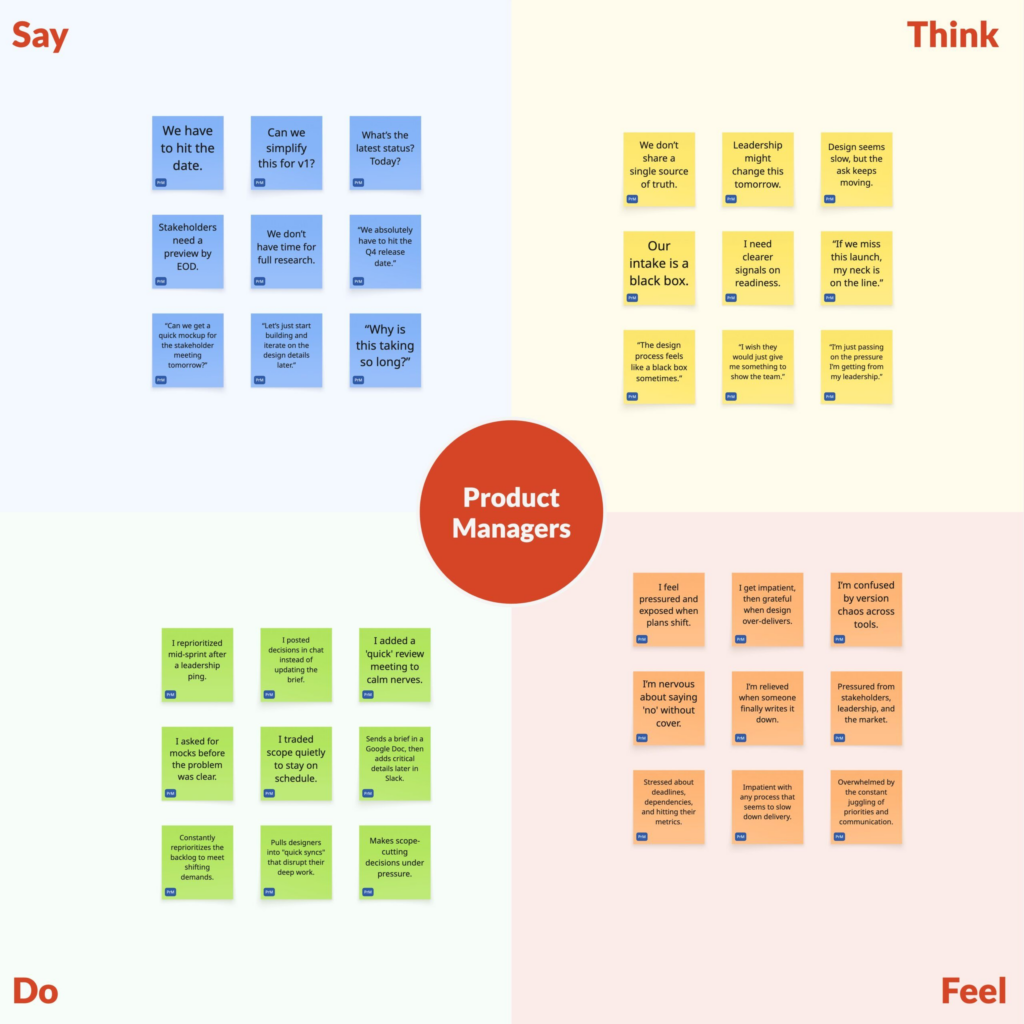
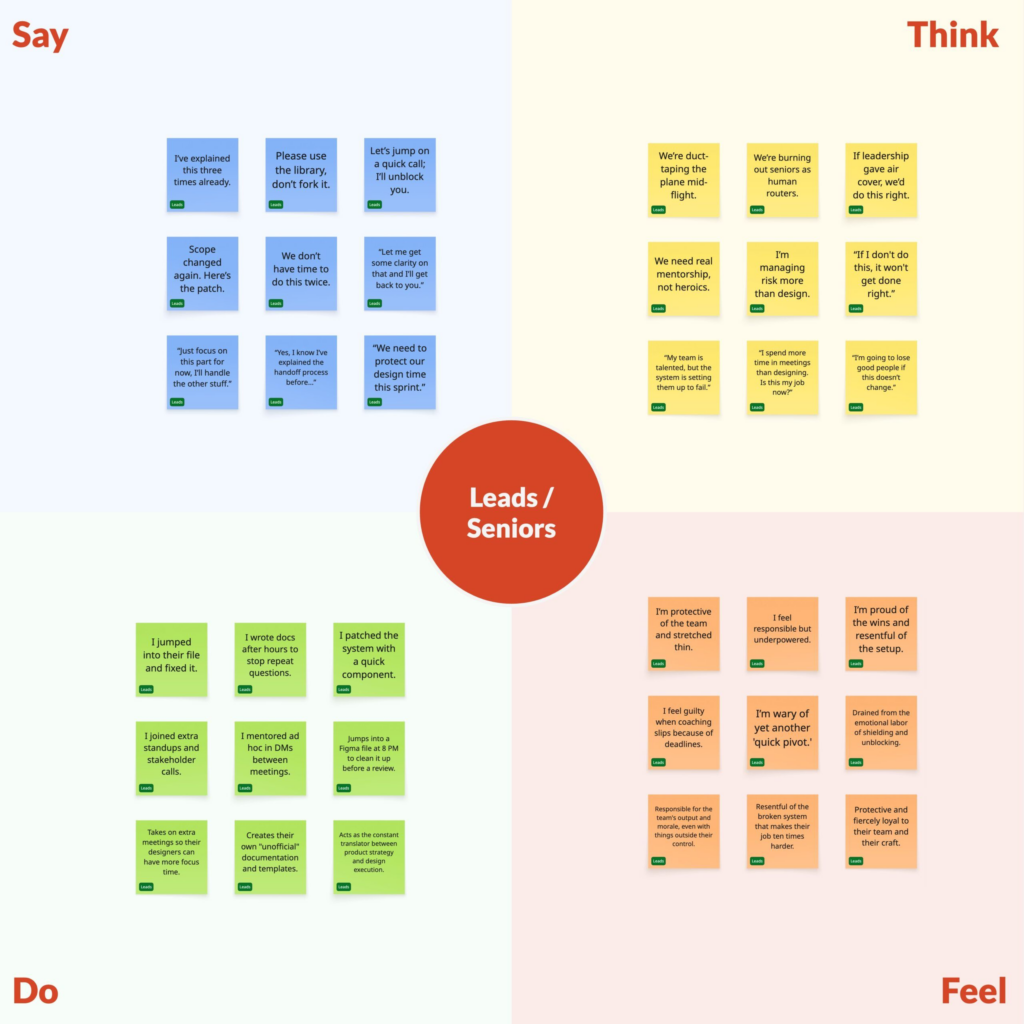
Supporting Data: The Empathy Map of Friction
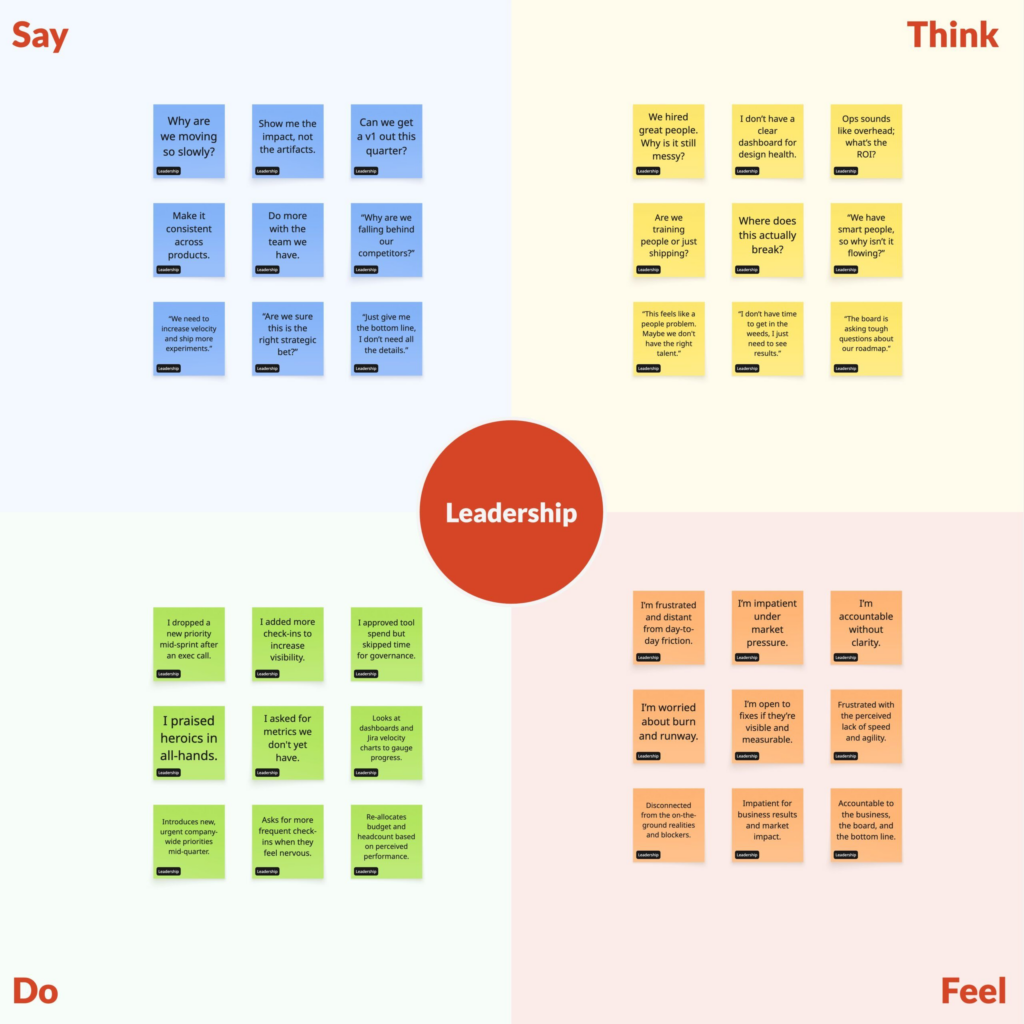
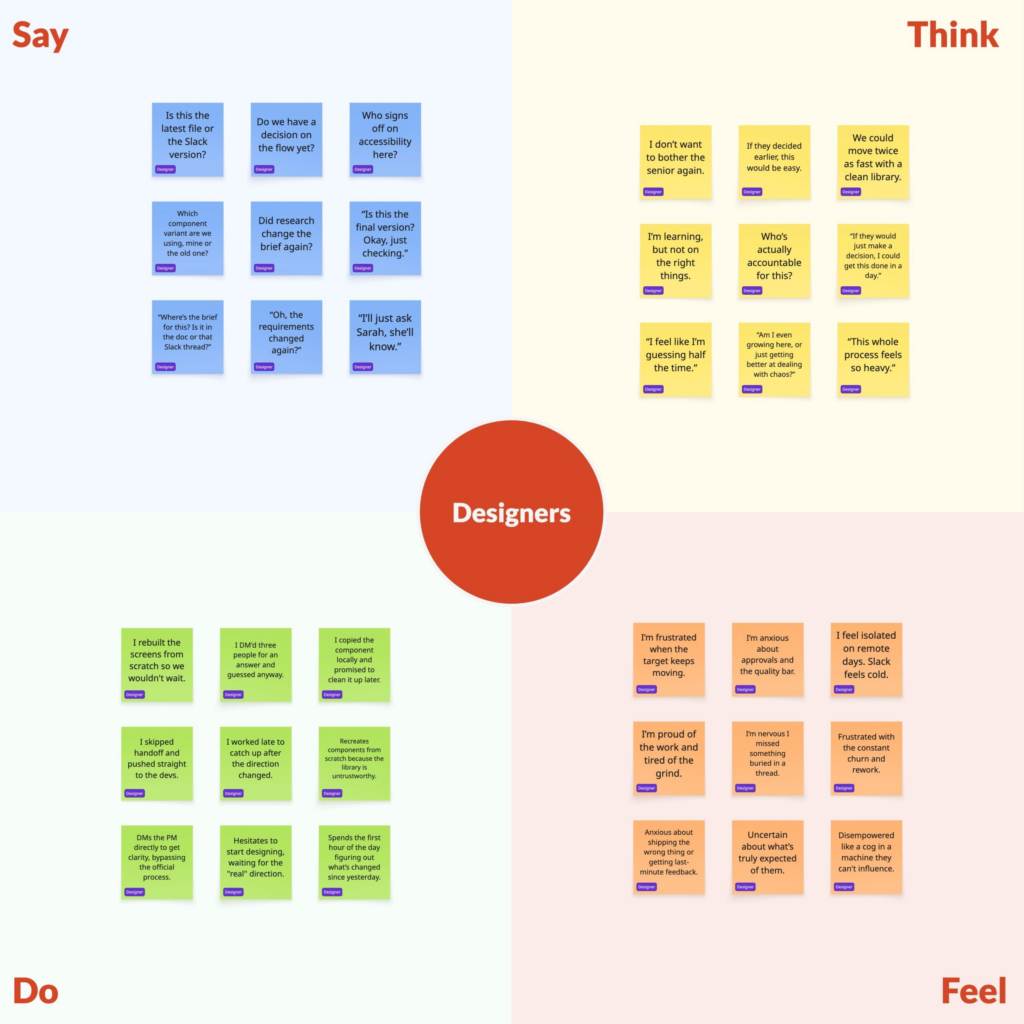
Understanding the depth of this issue requires looking beyond the output metrics. A diagnostic empathy map reveals that while leadership often asks, "Why are we moving so slowly?" the ground-level team is asking, "How can I possibly get this done when the goalpost moves every week?"
| Persona | The "Say" | The "Think" | The "Feel" |
|---|---|---|---|
| Designers | "Did the requirements change again?" | "If they’d just decide, I could finish this." | Frustrated, Disempowered |
| Leads | "Let me get some clarity on that." | "The system is setting them up to fail." | Drained, Protective |
| Product Mgrs | "We must hit the Q4 release date." | "If we miss this, my neck is on the line." | Pressured, Stressed |
| Leadership | "Why are we moving so slowly?" | "We have smart people, why no flow?" | Impatient, Disconnected |
The data is clear: when the "say" and the "feel" do not match, you have an operational gap, not a talent gap.
The Role of DesignOps: Clarity Over Control
DesignOps is frequently misunderstood as a form of bureaucracy. In reality, effective DesignOps is the exact opposite—it is the removal of the administrative hurdles that stand between a designer and their creative output.
Sustainability is the objective. A healthy operation ensures that:
- Knowledge is institutionalized: Mentorship and process documentation should be automated and accessible, not whispered in private Slack channels.
- Feedback is objective: By establishing clear, pre-defined feedback loops, the team reduces the anxiety associated with design reviews.
- Scaffolding, not Red Tape: The process should provide the structure necessary for the team to scale, acting as a scaffold that holds the project up rather than a barrier that pins the designer down.
Implications for Future-Proofing Teams
The cost of ignoring operational maturity is not just a "soft" culture issue; it is a hard balance-sheet issue. Every hour spent searching for a file, every hour spent redoing work due to a lack of communication, and every hour spent managing burnout is an hour of "leaked fuel" mid-flight.
If organizations do not pivot from measuring output to measuring capability, they will continue to see high turnover and mediocre product design. The shift requires:

- Friction Logs: Organizations should encourage teams to maintain anonymous "Friction Logs." By tracking every small, daily frustration for one week, leaders can map the exact areas where the system is failing.
- Capability Engines: Leaders must implement systems that track capability gaps before they manifest as performance failures. This is not micromanagement; it is an MRI for your organization.
- Systemic Accountability: As W. Edwards Deming famously noted, "Every system is perfectly designed to get the results it gets." If you aren’t happy with the results, stop blaming the people and start redesigning the system.
Conclusion: The Call to Awareness
If your design team is exhausted, it is not because they lack passion or work ethic. They are tired because they are being asked to solve complex problems within a broken framework. They are fighting the system rather than using it.
True leadership in the design space is about the courage to pause, observe, and admit that the current way of working is no longer sustainable. It is time to move away from the "grind" culture and toward a culture of clarity. When you provide your team with the right tools, clear communication, and a robust operational structure, you aren’t just preventing burnout—you are unlocking the full potential of your talent.

Start by listening to the quiet chatter in the background of your meetings. That isn’t just noise; it’s the data you need to fix your organization. Start today by asking your team: "What is the one thing that slows you down every single day?" The answer to that question is your starting point for building a sustainable, high-performing design culture.
 Laily UPN
  Lina Hope
  Asep Darmawan