
 By Suro Senen

Somewhere within your existing email database lies your most valuable asset: a loyal customer who has purchased multiple times, left glowing reviews, and is primed to advocate for your brand. They are your "superfans," yet most founders leave this potential entirely untapped.
While many businesses claim to have a referral program, the reality often mirrors an unused gym membership—a stagnant link hidden in a website footer, gathering digital dust. In a landscape dominated by soaring Customer Acquisition Costs (CAC) and increasingly fickle algorithmic reach, the referral remains the most potent, cost-effective tool for sustainable growth.
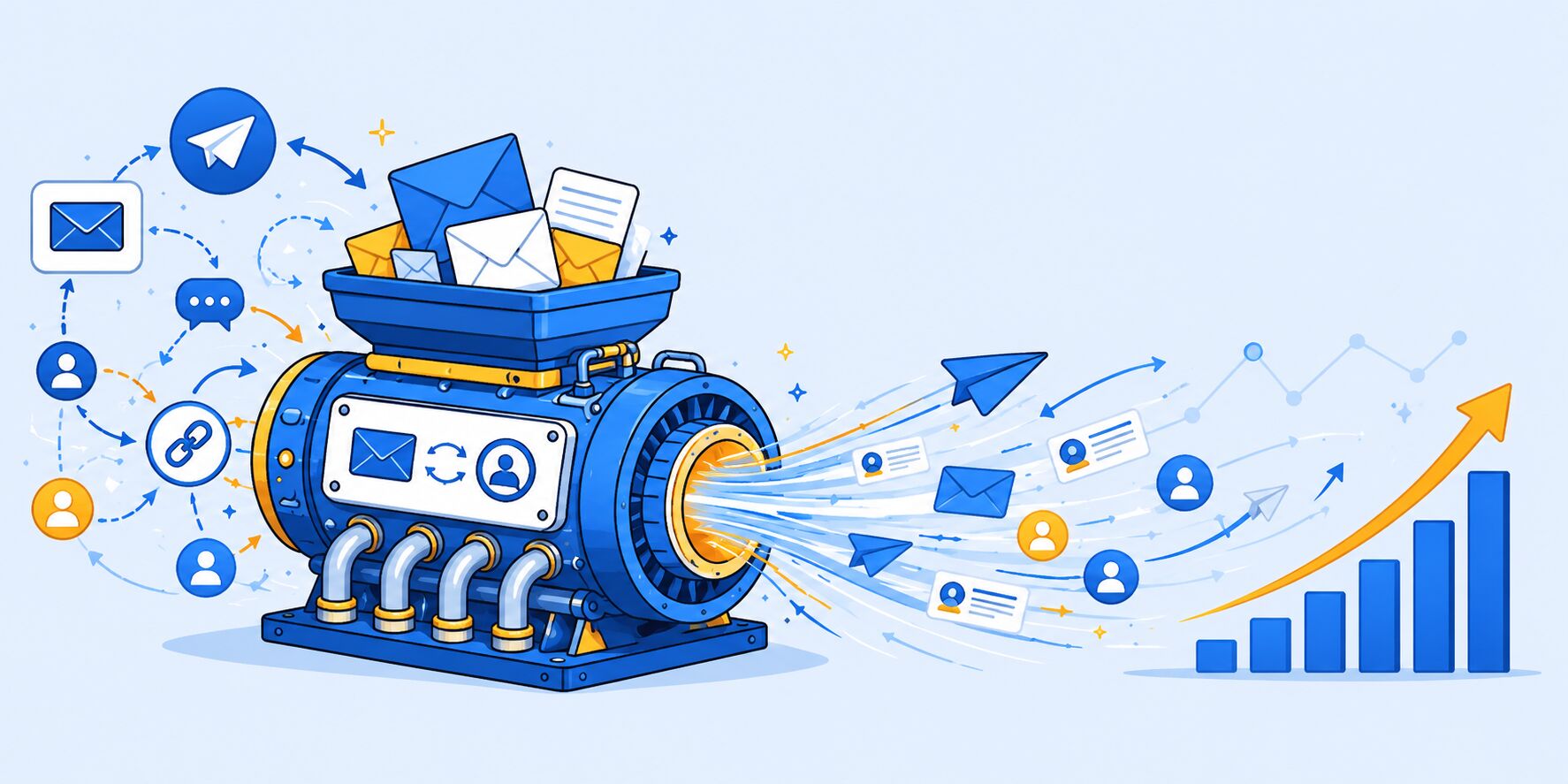
This article explores how to transition from a passive referral link to a high-octane "Referral Engine," turning your customer base into your most effective marketing department.
The Economics of Advocacy: Why Referrals Outperform Paid Media
In the digital marketing hierarchy, the referral sits at the pinnacle. When a trusted friend or colleague recommends a product, the traditional "funnel" of awareness, consideration, and conversion is bypassed entirely. The vetting process—which usually takes weeks of research and price comparisons—is condensed into a single text message or conversation.
The Power of Social Proof
Human behavior is inherently tribal. We rely on the recommendations of our inner circle to mitigate risk. A referral is essentially a transfer of hard-earned trust. Unlike an ad campaign targeting cold audiences, a referred lead arrives with a pre-validated opinion of your brand.
Financial Implications
The math is compelling. Referred customers typically boast higher lifetime values (LTV), lower churn rates, and drastically reduced acquisition costs. Because your existing customers act as a sophisticated filtering mechanism, they rarely refer people who aren’t a "good fit." They do your targeting for you, often with greater accuracy than any machine-learning algorithm could hope to achieve.
Chronology of a Referral Strategy: From Stagnation to Scale
Building a true referral engine requires a shift in perspective. You must stop viewing referrals as a static "feature" and start treating them as an orchestrated email strategy.
1. The Setup Phase: Infrastructure Over Ideation
Before you launch a campaign, you must ensure the plumbing is in place. This involves integrating your email service provider (ESP) with loyalty software (such as Smile or Yotpo) to track attributions automatically. Every customer needs a unique, trackable link. If the process of sharing takes more than 15 seconds, you have already lost the majority of your potential advocates.
2. The Trigger Phase: Mastering the "Moment of Delight"
Timing is the difference between a successful referral and a "spammy" request. A generic referral ask sent in a standard Tuesday newsletter is easily ignored. However, an invitation sent immediately after a high-intent event—such as a second purchase, a five-star review, or a positive interaction with customer support—capitalizes on peak goodwill.
3. The Automation Phase: Scaling the Human Touch
You cannot manually monitor thousands of customers for these "moments of delight." Automation is the only way to scale. By setting up triggers—e.g., a "Refer a Friend" invitation sent three days after a successful delivery—you ensure that the request lands exactly when the customer is most likely to say "yes."
Supporting Data: The Anatomy of an Effective Program
While the strategy sounds intuitive, the execution requires adherence to two non-negotiable principles: double-sided rewards and frictionless sharing.
The "Double-Sided" Mandate
If you offer a reward only to the referrer, the action feels transactional and "grubby," as if the customer is monetizing their friendships. Conversely, if only the new customer receives a discount, the existing customer has no incentive to initiate the conversation.
A "Give $10, Get $10" model creates a win-win scenario. It turns the referral into a generous favor. The sender looks like a hero for providing a discount, and the recipient feels welcomed by a financial incentive. This parity is essential for long-term program health.
Eliminating Friction
The "Friction Rule" is simple: If a user has to copy-paste, navigate to a new site, or log in to a portal to share your brand, they won’t do it. Use pre-written, human-sounding templates that can be shared via WhatsApp, SMS, or email with a single tap. The goal is to meet the customer where their thumbs already live.
Official Perspectives: Industry Best Practices
Marketing professionals and growth experts consistently emphasize that "referral fatigue" is a result of poor segmentation.
Segmentation: The "Bus Stop" Rule
Would you walk up to a stranger at a bus stop and demand they refer their friends to your business? Likely not. Yet, many companies do exactly this by blasting their entire email list with generic referral requests.
This approach is counterproductive. It teaches your audience to ignore your emails. Instead, segment your list. Focus your efforts on:
- Repeat Buyers: Those who have demonstrated consistent brand loyalty.
- Reviewers: Customers who have already taken the time to provide positive feedback.
- Engaged Users: Individuals who frequently open your newsletters or reply to your communications.
By focusing on this subset, you treat them with the respect they deserve, ensuring that when you do ask for a referral, they are more inclined to respond.
Implications for Future Growth
The transition to a referral-first mindset has significant implications for how brands scale. As third-party data becomes harder to track and advertising costs continue to inflate, "owned" channels like email become the bedrock of sustainable growth.
The Compounding Effect
A referral engine is not a "set it and forget it" tool. The most successful brands mention their referral programs consistently—not loudly, but steadily—in post-purchase flows, newsletters, and on physical receipts. The goal is to stay top-of-mind so that when a friend inevitably asks, "Where did you get that?", your customer immediately remembers they have a link to share.
Integration as an Enabler
Modern tools like Omnisend have revolutionized this process by providing the necessary "plumbing." By handling the complex backend of segmentation, automated triggering, and reward tracking, these platforms allow founders to focus on the one thing that truly matters: crafting a message worth saying "yes" to.
For many entrepreneurs, switching to a dedicated platform like Omnisend is a strategic move that not only simplifies the referral process but often reduces overhead costs by up to 35%. With migration teams now capable of moving complex flows in as little as five days, the barrier to entry has never been lower.
Final Thoughts: Infrastructure for Generosity
At its core, a referral engine is simply the formalization of the word-of-mouth that is likely already happening around your brand. Whether you have a system in place or not, people are talking about the things they love.
The question for every founder is simple: Are you going to facilitate that conversation, or let it happen in the dark? By building a system that makes it easy for your customers to share their enthusiasm—and rewarding them for doing so—you are not just acquiring new leads. You are building a community of advocates who will fuel your growth for years to come.
Let your customers do what they were already going to do. Just give them the tools to do it a little louder.
 Basiran
 Azzam Bilal Chamdy
 Asep Darmawan
