
 By Nana Wu
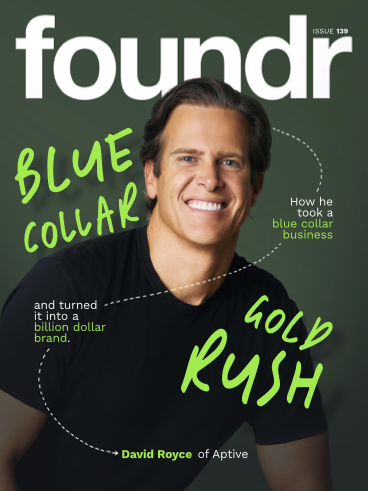
In the high-stakes theater of American business, the narrative of the tech unicorn—built in a sleek Silicon Valley office, funded by venture capital, and obsessed with disruption—often dominates the conversation. But David Royce, the founder and chairman of Aptive Environmental, has spent two decades proving that the most lucrative opportunities often hide in plain sight, tucked away in the "unsexy" corners of the blue-collar service economy.
Royce’s journey from a self-described "struggling student" to one of the most stealthy wealth-builders in North America is a masterclass in grit, unconventional strategy, and the power of doing what others deem beneath them. Today, Aptive stands as the third-largest residential pest control service in North America, a testament to the idea that if you are willing to perform the tasks no one else wants to do, for long enough to become the absolute best at it, the market will reward you in ways that defy traditional expectations.
The Genesis: From Academic Doubt to Sales Supremacy
David Royce’s story did not begin with a prestigious MBA or a high-finance internship. As a child, he struggled in school, often feeling that he wasn’t "smart" because he couldn’t focus on subjects that didn’t ignite his passion. It wasn’t until adulthood that he discovered he had undiagnosed ADHD.
"In boring environments, it’s brutal," Royce explains. "In environments I care about, it’s a superpower."

That superpower was first realized in the sixth grade, thanks to a teacher named Mrs. Luft. Her belief in him acted as the catalyst that transformed his academic insecurity into an relentless work ethic. However, the true test of his character occurred years later when, seeking to fund his education, he took a job in door-to-door pest control sales.
His start was disastrous. He spent his first week in Sacramento failing to land a single sale. While his peers were closing deals, Royce was essentially performing "free cardio." Rather than quitting, he spent his weekend studying sales literature and refining his pitch. By the end of that summer, he was the top rookie in a company of 200 reps. He had learned his first core business lesson: Persistence is genius in disguise.
Chronology of a Billion-Dollar Growth Machine
The College Years: The Foundation of Capital
Royce’s college summers weren’t spent interning at investment banks. Instead, they were spent knocking on thousands of doors. He saved $300,000—money initially earmarked for graduate school—and used it as his foundational startup capital. His mentor, who had recently sold a pest control business for $10 million, provided the initial "template" for success.
The "Suffer-Fast" Growth Phase
Royce’s first foray into ownership was an immediate trial by fire. He set out to secure 5,000 customers in Los Angeles, but ended up signing 7,500. This created a massive cash-flow crisis: his business model required him to pay sales commissions upfront, long before the recurring revenue from those customers hit his bank account.
He survived by negotiating with his sales leaders, offering interest on delayed payments to bridge the gap. This near-collapse taught him the mantra that would define his future companies: "Revenues are vanity, profits are sanity, but cash flow is reality."
The Serial Entrepreneurship Model
Following his initial success, Royce developed a unique exit strategy. Instead of selling his entire company—which would require losing his team—he structured asset deals. He would sell the recurring revenue streams and the client base to a strategic buyer while retaining his core leadership, operations, and sales talent. He then took that capital and his "dream team" to the next venture, repeating the cycle four times.
Supporting Data: Why "Boring" Wins
Royce’s thesis is supported by cold, hard numbers. Among the top 0.1% of income earners in the U.S., roughly 43% operate in what the public might deem "boring" blue-collar industries.
- The Recession-Proof Nature of Service: While the tech sector fluctuates with interest rates and market sentiment, pest control is an essential service. As Royce notes, "Bugs don’t read The Wall Street Journal."
- The Succession Vacuum: With millions of Baby Boomer business owners reaching retirement age, a massive vacuum is opening. Many of these firms have recurring revenue models and strong margins but lack modern leadership—a perfect opportunity for entrepreneurs who understand scaling.
- The AI Ceiling: While AI is rapidly automating white-collar office work, it cannot perform the physical labor required in home services. This creates a "moat" that protects these industries from the most disruptive aspects of technological advancement.
Official Insights: The Philosophy of Culture and Leadership
During his interview with Foundr CEO Nathan Chan, Royce broke down the three pillars that allowed Aptive to grow seven to ten times faster than its competitors:

1. The Sales Machine
Royce built a training program that turned 3,000-plus reps into high-performance machines. He moved away from standard "yes-or-no" scripts in favor of "option closes" (e.g., "We’ll be in your area at 3:00 or 5:00, which works better?"). He also prioritized body language, teaching his reps that if their faces signaled fear, the customer would never trust the pitch.
2. Radical Retention
Royce famously gave away 25% of the company to his employees. When he sold Aptive, this resulted in many team members receiving six- or seven-figure payouts. "Ownership is a far better retention tool than ping-pong tables," he says. While he utilized perks like golf simulators and company trips, he maintains that these are "sugar," while the real "protein" is high-quality training and the promise of financial equity.
3. The Shift from Hero to Architect
The transition from CEO to Chairman was perhaps Royce’s greatest challenge. He had to learn to stop "saving the day" and start building systems that functioned without his daily intervention. He notes that the hardest part of scaling is resisting the urge to jump in and fix every small mistake, acknowledging that a leader’s job is to let others succeed in their own way.
Implications: Lessons for the Modern Entrepreneur
Royce’s career serves as a roadmap for anyone feeling disillusioned by the "glamorous" startup culture. His experience with a disastrous CFO hire—where he handed over too much autonomy to an executive who didn’t understand the ground-level reality of his business—serves as a cautionary tale: Resumes do not run companies; people do.
His advice for the aspiring founder is stark: "If you don’t enjoy the climb, the summit is going to disappoint you."
Key Takeaways for Future Founders:
- Swallow Your Ego: Success is rarely about the industry; it’s about the opportunity. If you can provide a high-value service that others avoid, you can build a massive, profitable moat.
- Design Your Culture: Culture is not a set of "vibes" or perks; it is an intentional design choice. It is the framework through which you align your employees’ success with your own.
- Verify, Don’t Just Trust: When scaling, ensure your leadership team understands the granular details of your cash flow and expenses. A million-dollar resume is useless if the hire doesn’t understand the fundamentals of the business.
- Define Your Legacy: For Royce, the ultimate metric of success wasn’t the final valuation, but the number of leaders he developed along the way. By empowering his team, he ensured that his organization could survive and thrive long after he stepped out of the CEO’s chair.
In an age where everyone is looking for the next "disruptive" app, David Royce’s empire is a reminder that there is still immense, untapped wealth in the fundamental services that keep our society running. His success is not the result of a lucky break, but the inevitable outcome of a man who decided that doing the hard, "unsexy" work was a price worth paying for the freedom to build something that lasts.
 Dwi Wanna
  rifanmuazin
  Asep Darmawan