
 By Ammar Sabilarrohman
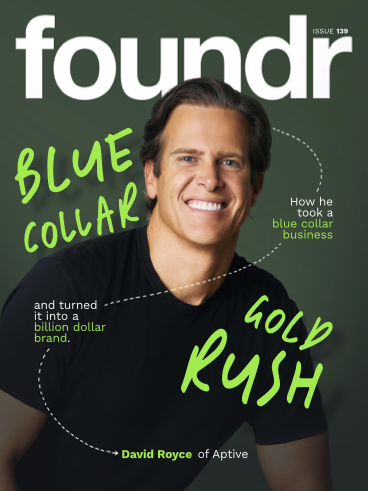
In the high-stakes theater of modern entrepreneurship, the blueprint for success is often mythologized: it requires a disruptive tech stack, a Silicon Valley pedigree, and a venture-backed path to hyper-growth. David Royce, the founder and chairman of Aptive Pest Control, offers a starkly different narrative—one built on door-to-door persistence, the mastery of "unsexy" industries, and the radical belief that true wealth is found where others refuse to look.
Today, Aptive stands as the third-largest residential pest control service in North America. Yet, Royce’s journey to this valuation did not begin in a boardroom. It began on the doorsteps of suburban homes, navigating rejection, and learning the hard-earned lessons of cash flow, human capital, and the difference between a "hero" founder and an architect of systems.
The Formative Years: Persistence as a Superpower
David Royce’s relationship with achievement was not always intuitive. Growing up, he struggled academically, a challenge he would later identify as undiagnosed ADHD. "I struggled in school because I couldn’t focus unless I cared deeply," Royce recalls. He spent much of his youth internalizing the belief that he simply wasn’t "smart"—until a sixth-grade teacher, Mrs. Luft, fundamentally shifted his self-perception.
This early intervention taught Royce that his cognitive wiring was not a liability, but a "double-edged sword." In mundane environments, his ADHD was a hurdle; in high-stakes, hyper-focused environments like sales, it became a competitive advantage.

His entry into the pest control industry was serendipitous. While his finance-degree peers were eyeing prestigious, high-stress roles in investment banking, Royce took a summer job selling pest control services door-to-door. His start was disastrous. He spent his first week in Sacramento failing to close a single deal. While his peers were closing four sales a day, Royce was essentially performing "free cardio." Rather than quitting, he retreated to a bookstore, purchased half a dozen sales manuals, and committed to 90 minutes of daily study. By summer’s end, he was the company’s top-performing rookie out of 200 representatives.
A Chronology of Success: From Doorstep to Boardroom
Royce’s career trajectory is a masterclass in compounding small wins into massive enterprise value.
- The Apprenticeship: After his college summers, Royce had $300,000 in savings—money originally earmarked for an MBA. Instead, he took the advice of a mentor who had successfully sold a startup to Terminix. He chose to apply his finance degree to the "boring" but highly lucrative world of residential pest control.
- The Early Stumble: In his first year, Royce nearly bankrupted his company in Los Angeles. The issue was a classic entrepreneurial trap: growth. He had projected 5,000 new customers but landed 7,500. Because his model required paying sales commissions in advance of recurring revenue, he faced a severe cash-flow crunch. He survived only by negotiating deferred payments with his top sales leaders—a lesson that would define his future financial philosophy: "Revenues are vanity, profits are sanity, but cash flow is reality."
- The Serial Entrepreneurial Model: Royce developed a unique asset-deal structure. Rather than selling his entire business, he carved out his leadership teams and sales forces, selling only the recurring customer revenue to strategic buyers. He then used that capital to launch a new, better-capitalized venture with the same "family" of employees.
- The Aptive Era: Building Aptive into a powerhouse, Royce implemented a tech-forward approach to a blue-collar industry, utilizing proprietary sales apps, gamification, and an intense focus on professional training.
Supporting Data: Why "Boring" Wins
The data supports Royce’s contrarian bet. According to industry analysis and insights from the Wall Street Journal, among the top 0.1% of U.S. earners, approximately 43% operate within blue-collar, service-based industries.
While the tech sector chases the next ephemeral trend, essential services—like plumbing, HVAC, and pest control—possess deep, "sticky" moats. These are businesses with recurring revenue models that are largely recession-proof. As Royce succinctly puts it, "Bugs don’t read The Wall Street Journal."

Moreover, the impending retirement of millions of baby-boomer business owners creates a massive consolidation opportunity. Many of these businesses are highly profitable but lack a succession plan, making them prime targets for leaders who understand how to systematize operations and scale via acquisition.
Leadership and Culture: The Architect’s Mindset
Perhaps the most defining aspect of Royce’s leadership is his transition from being the "hero" to being the "architect." For years, Royce was the primary engine of his companies. However, he realized that if his presence was required for the company to function, he hadn’t built a business; he had built a dependency.
The Power of Ownership
Royce’s approach to culture is rooted in a philosophy that transcends ping-pong tables and free snacks. He famously gave away 25% of his company to his employees. By aligning the financial interests of his staff with the success of the business, he created a level of retention that money alone could not buy. During his major exits, many of his team members walked away with six- or seven-figure payouts, allowing them to pay off mortgages and invest in their families’ futures.
The Cost of "Big Corporate" Talent
Royce’s journey also highlights the dangers of hiring for "prestige" over "fit." In one instance, he brought on a CFO from a billion-dollar tech company to help manage a sale. The hire, while impressive on paper, lacked an understanding of the granular expense structures of a field-service company. The resulting forecast misses stalled the sale process and served as a harsh lesson: "Trust, but verify."

Implications for Future Entrepreneurs
For those looking to replicate Royce’s success, the takeaways are clear but demanding. First, one must embrace the "unsexy." There is immense value hidden in industries that do not have a high cultural profile. AI and automation may revolutionize the digital workspace, but they cannot replace the essential, physical services that keep the infrastructure of modern life functioning.
Second, the definition of success must be internalized. Royce notes that "the right answer" to the question of how much is enough is always "just a little more." He argues that the true reward of entrepreneurship is not the exit—it is the character, discipline, and expertise developed during the climb.
Finally, leadership is defined by the ability to create new leaders. In the tradition of Gandhi’s philosophy on leadership, Royce views his legacy not through the lens of a billion-dollar valuation, but through the hundreds of individuals he empowered to step into their own authority.
Conclusion: The Stealthy Wealth Builder
David Royce’s story is a testament to the idea that the most profound opportunities often look like dead ends. By choosing to swallow his ego and focus on the mechanics of building a high-performing system, he moved from a kid who felt "not smart" to a titan of industry.
His career reminds us that while the landscape of business is constantly shifting, the fundamentals remain immutable: work harder at the things others refuse to touch, treat cash flow as the ultimate indicator of health, and above all, treat your people as the primary asset. In the end, the summit of success is only worth reaching if you have built a team capable of standing there with you.
 Dwi Wanna
  rifanmuazin
  Asep Darmawan