
 By Asep Darmawan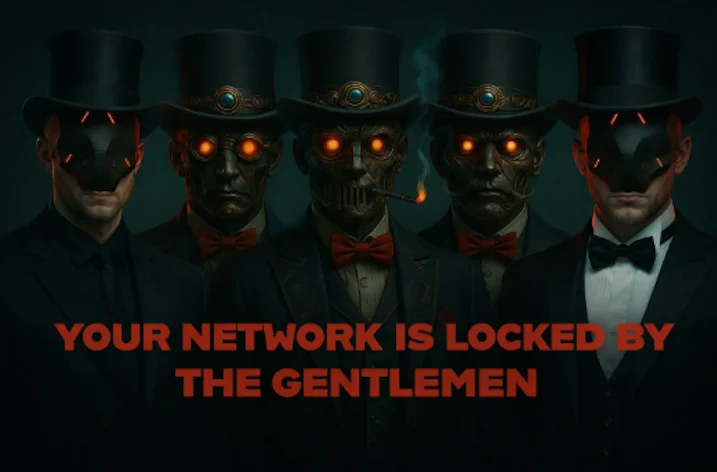
In the shadow-filled landscape of global cybercrime, few entities have ascended as meteorically as "The Gentlemen." Emerging in mid-2025, this Ransomware-as-a-Service (RaaS) collective has quickly cemented its status as the second most active threat actor in the industry. By abandoning the traditional 80/20 revenue split in favor of a staggering 90 percent payout for affiliates, the group has successfully poached elite operators from competing cartels, creating a powerhouse of digital extortion.
However, a trail of digital breadcrumbs—spanning nearly a decade—has led security researchers to a startling conclusion: the mastermind behind this sophisticated criminal operation is not a reclusive, faceless entity, but a 36-year-old marketing executive residing in Izhevsk, Russia.
The Mechanics of a Digital Syndicate
The Gentlemen operate on a high-efficiency business model that prioritizes speed and aggressive penetration. According to analysis by Check Point Software, the group has claimed responsibility for at least 332 victims since its inception, with over 240 of those incidents occurring in 2026 alone.
The group’s operational strategy is focused on the exploitation of internet-facing infrastructure. By targeting vulnerabilities in VPNs and firewalls, The Gentlemen gain initial access to corporate networks. Once inside, they move with lethal speed, often encrypting entire enterprise environments within hours. This efficiency is bolstered by the group’s "administrator"—a figure identified by security firms as the individual behind the monikers "Zeta88" and "Hastalamuerte." This administrator manages the ransomware locker, maintains the RaaS portal, and facilitates payments, effectively acting as the CEO of a multi-million-dollar criminal enterprise.
A Chronology of a Criminal Evolution
The transformation of the individual now known as "Zeta88" from a novice forum user to a major ransomware architect is a study in the gradual radicalization of digital talent.
2019–2020: The Formative Years
The digital footprint of the persona "Hastalamuerte" began to materialize in 2019. During these early years, the user was far from a sophisticated operator. Intelligence gathered by firms like Intel 471 shows that Hastalamuerte was an active participant on various Russian and English-language cybercrime forums, including Exploit, Nulled, and the now-defunct Raidforums.
During this period, the user struggled to master even basic penetration testing tools. In June 2020, records from a Telegram-based hacker training program (@pntst) show the user candidly asking for help with fundamental exploits. This period of "learning the ropes" serves as a critical reminder: most professional cybercriminals do not start as arch-villains, but evolve over time as their technical proficiency—and their willingness to bypass legal boundaries—expands.
2022–2025: The Rise of Zeta88
As the user’s skills sharpened, so did their ambition. By August 2022, the identity "Zeta88" emerged on the English-language forum Breached. Registration data indicates that both Zeta88 and Hastalamuerte originated from IP addresses in Izhevsk, the capital of Russia’s Udmurt Republic.
By January 2025, the rebranding was complete. The individual began operating The Gentlemen ransomware, leveraging the notoriety of the "Hastalamuerte" handle to recruit affiliates. The backend infrastructure of the group, later exposed during a security breach, confirmed that the administrator was the sole individual responsible for the group’s RaaS panel and payment orchestration.
Supporting Data: Connecting the Dots
The de-anonymization of the administrator was not the result of a single "smoking gun," but rather a convergence of metadata, OSINT (Open Source Intelligence), and leaked database records.
The Digital Fingerprint
The thread of evidence began with the email address [email protected]. The inclusion of "1488"—a common white supremacist numerical code—was a recurring theme in the suspect’s digital life. Using the OSINT service Epieos, researchers traced this email to an Apple account and a phone number ending in "04."
From Telegram to Real-World Identity
The connection between the digital and physical worlds was bridged through the suspect’s Telegram activity. Flashpoint intelligence identified that Hastalamuerte’s Telegram ID (30907522) was linked to the Russian phone number +79127650004.
Pivoting this phone number through Constella Intelligence revealed multiple entries in leaked Russian government databases. The number was registered to Alexander Andreevich Yapaev, a 36-year-old resident of Izhevsk. Further corroboration came from the social media platform Pikabu, where the username "4apai18" used the same phone number. The number "4" in Russian is often used as shorthand for the "ch" sound, linking back to the alias "Chapaev" (or "4apaev"), a name the suspect used on the hacking forum Codeby as early as 2020.
The Corporate Mask
Perhaps most damning is the professional identity of the suspect. The email address [email protected], linked to the same phone number, serves as the contact for a LinkedIn profile belonging to Alexander Yapaev. On the platform, Yapaev is listed as the Head of B2B Marketing for Uralenergo Udmurtia, a major supplier of electrotechnical products in Russia.
Official Responses and Industry Findings
The findings regarding Yapaev have been corroborated by multiple cybersecurity firms. Most recently, the threat research group PRODAFT released a detailed report on "The Phantom Mantis" operation—their name for The Gentlemen.
PRODAFT’s research confirms that the administrator is not only managing the RaaS business but is actively integrating artificial intelligence into the group’s workflow. According to their findings, the administrator utilizes AI to develop and maintain the ransomware codebase, automate post-exploitation tasks, and assist in the brute-forcing of Fortinet SSL-VPN credentials. The use of AI in this context signals a new, dangerous chapter in ransomware development, where the barrier to entry for highly sophisticated attacks is being lowered by automated tooling.
When approached for comment regarding these findings, Alexander Yapaev did not respond to multiple inquiries.
Implications: The Geography of Impunity
The case of The Gentlemen highlights a persistent and systemic challenge in international cybersecurity: the "safe harbor" afforded to cybercriminals within the Russian Federation.
Co-option and Neglect
The Russian government’s stance toward cybercrime is often characterized by a policy of "controlled impunity." So long as hackers refrain from targeting domestic Russian assets and instead focus their efforts on foreign enterprises, they are frequently ignored—or, in some cases, co-opted—by state intelligence services. This environment allows operators like Yapaev to maintain high-profile professional careers while simultaneously orchestrating global criminal campaigns.
The Security Professional’s Dilemma
The fact that a mid-level marketing executive could build the world’s second-most active ransomware group underscores the massive democratization of cybercrime. With the right training, the right Telegram channels, and a complete disregard for operational security (OPSEC) in one’s early years, individuals can transition from hobbyists to major national security threats.
The primary lesson for global corporations is that the "threat actor" is often a hybrid figure. They are not always subterranean ghosts; they are frequently individuals who exist in the "gray space" between legitimate professional life and digital criminality. As the barrier to entry continues to fall, and as AI-driven automation becomes the standard, the task for law enforcement and security firms will shift from merely tracking malware to mapping the complex, dual lives of those who build it.
As of June 2026, the investigation into The Gentlemen remains ongoing, with security agencies worldwide monitoring the group’s activities and the potential for further, more aggressive, exploitation of global enterprise infrastructure.
 Sagoh
Sagoh  Evan Lee Salim
  Ammar Sabilarrohman