
 By Basiran
Dropshipping has emerged as the quintessential digital entrepreneur’s gateway. By decoupling the act of selling from the complexities of manufacturing, warehousing, and logistics, it offers an accessible path to market entry. However, a pervasive myth in the e-commerce sector suggests that dropshipping is a "get rich quick" scheme requiring zero financial commitment. While it is true that one can launch an operation with virtually no upfront capital, the reality of sustaining and scaling such a business requires a strategic transition from "bootstrapping" to "reinvesting."
This guide explores how to navigate the complexities of launching a dropshipping venture with a $0 budget, the operational pitfalls to avoid, and the essential milestones that signify a transition toward professional scaling.
The Core Reality: Why "$0" is a Starting Point, Not a Destination
For the aspiring entrepreneur, the allure of the dropshipping model lies in its agility. Unlike traditional retail, where significant capital is tied up in inventory, dropshipping allows you to list products on a storefront and only purchase them once a customer has paid.
However, it is a professional imperative to recognize that this model is not free forever. While you can defer initial costs, you will eventually encounter overheads: payment processing fees, platform subscriptions, premium domain registrations, and the inevitable necessity of marketing spend. The goal of a "zero-budget" launch is to generate enough initial cash flow to cover these future obligations, effectively allowing the business to fund its own evolution.
Chronology of a Zero-Budget Launch
Launching a business without capital requires a rigid, step-by-step approach to minimize risk and maximize resource allocation.
Phase 1: Niche Validation and Market Research
Before selecting a single product, you must identify a market gap. The broader your scope, the more capital you will need to compete with established giants. Narrowing your focus to a specific, high-intent niche—such as "ergonomic home office accessories for small apartments" rather than just "furniture"—allows for more targeted, cost-effective messaging.
Validation is your best friend. Utilize free tools like Google Trends to gauge search volume and interest. Look at Grand View Research or similar industry reports to identify sector growth. For example, the outdoor furniture market currently shows a steady growth rate of approximately 6.4%, signaling a healthy environment for new entrants. Scour Reddit, niche forums, and Amazon Q&A sections to understand the "pain points" of potential customers.
Phase 2: Strategic Product Curation
Your initial catalog should be modest. Focus on five to ten high-potential items. Avoid relying solely on "Best Seller" lists from dropshipping platforms, as these often reflect high-competition, trending items that may lack long-term profitability.
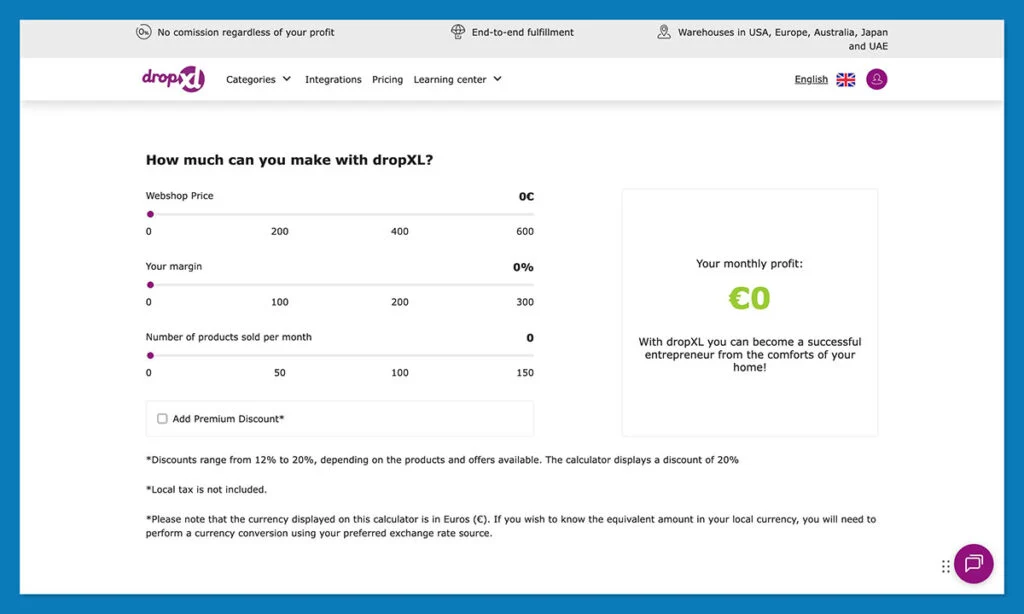
Instead, perform a cost-benefit analysis. Calculate the potential margin by subtracting the base cost, estimated payment processing fees (typically 2.9% + $0.30), and marketplace commission fees from the retail price. Tools like dropXL provide granular data, including stock levels and pricing, which are essential for making informed, data-backed decisions.
Phase 3: Establishing the Digital Storefront
If your budget is truly zero, you must look toward platforms that offer "freemium" or low-barrier entry.
- Marketplaces: Platforms like Etsy or eBay allow you to list products without upfront subscription costs, though they take a commission per sale.
- Web Builders: Big Cartel offers a "Gold" plan that is free for up to five listings. WooCommerce is another robust, free alternative for those with basic technical knowledge, allowing for seamless integration with plugins that automate order fulfillment and inventory updates.
- The "Micro-Budget" Pivot: While Shopify requires a subscription, its promotional offers (such as $1/month for the first three months) are often worth the minor expense, as they provide the most robust infrastructure for scaling.
Phase 4: Supplier Selection and Integration
Your supplier is the backbone of your operations. A low wholesale price is irrelevant if the supplier is unreliable. Prioritize proximity to your target market and logistical transparency. A reputable supplier should provide clear shipping timelines, tracking capabilities, and a professional returns policy.
Phase 5: Organic Growth and Content Strategy
With no budget for paid ads, your marketing must be fueled by organic reach. Content is the currency of the digital age. Optimize your product pages with original descriptions that anticipate customer questions. If you cannot afford to order samples, utilize high-quality supplier assets while adding unique value, such as blog posts or guides on "how to style" or "how to maintain" the products you sell.
Supporting Data: The Economics of Scaling
The transition from a $0 operation to a scalable brand is marked by the accumulation of data. According to industry benchmarks, successful dropshippers typically spend the first 30 to 60 days in a "data-gathering phase." During this time, the primary metric for success is not total revenue, but Customer Acquisition Cost (CAC) relative to Lifetime Value (LTV).
When you begin to see consistent sales, you must pivot. Reinvest the profit into:
- Professional branding: Replacing stock images with custom photography.
- Paid Acquisition: Moving from organic-only traffic to targeted social media advertising (Meta/TikTok).
- Automation: Upgrading to higher-tier software that handles customer inquiries and automated inventory syncs more efficiently.
Expert Perspectives: The Role of Logistics and Infrastructure
Industry experts emphasize that the "free" model is only as strong as the supply chain supporting it. "The biggest mistake beginners make is ignoring the infrastructure behind the scenes," notes a logistics analyst from the e-commerce sector. "They focus on the storefront aesthetics but fail to account for the reliability of the supplier’s API."
When using platforms like dropXL, users gain access to a network of over 90,000 products across 32 countries. This infrastructure is a significant asset, as it removes the logistical burden of cross-border shipping. However, the trade-off is a modest monthly fee, which represents the first milestone of your business’s professionalization. Once your revenue reaches a point of stability, this fee is no longer an expense, but a utility cost.
Implications of the "Zero-Budget" Strategy
Operating on a $0 budget imposes a unique set of constraints that actually benefit the entrepreneur in the long run. By being forced to rely on organic traffic and high-margin product selection, you avoid the "leaky bucket" syndrome—where entrepreneurs throw money at ineffective ad campaigns to hide a failing product or a poor user experience.
Potential Risks and How to Mitigate Them:
- The "Catalogue Trap": Beginners often upload hundreds of items, hoping for a "shotgun approach." This is counter-productive. A smaller, highly curated collection is easier to manage, troubleshoot, and optimize.
- The Service Void: If you ignore customer service, your store will fail regardless of how good the products are. Respond to every inquiry, manage return expectations, and build trust. In the early stages, your reputation is your only asset.
- The Scaling Plateau: Eventually, organic growth will hit a ceiling. When that happens, you must be ready to transition to paid marketing. If you haven’t saved revenue from your early sales to fund these campaigns, your business will stagnate.
Conclusion: The Path Forward
Starting a dropshipping business with $0 is not a myth, but it requires a disciplined, analytical mindset. You are not just building a store; you are building a system that must be capable of handling complexity as it grows.
The trajectory is clear: Start narrow, validate through data, optimize for organic traffic, and—most importantly—reinvest every dollar of profit back into the infrastructure of your business. The "free" phase of your journey is a testing ground. Once you prove that your chosen niche is profitable and your supply chain is resilient, the transition to a formal, funded business model becomes the natural next step in your entrepreneurial evolution.
By avoiding the common pitfalls of impulsive spending and over-expansion, you can build a sustainable brand that stands the test of time, proving that in the digital age, a sharp strategy is worth far more than a large initial bankroll.
 Laily UPN
 Neng Nana
 Sagoh
