In the evolving landscape of digital product design, user experience (UX) research has long relied on traditional "general population" focus groups and usability testing metrics. However, a groundbreaking exploratory user research study from the summer of 2024 challenges these standard practices. Conducted by accessibility leaders in collaboration with academic institutions, the study reveals a compelling truth: incorporating participants with cognitive disabilities into UX testing does not merely satisfy compliance checklists—it supercharges the entire research process, uncovering 1.8 times more usability issues and actionable suggestions than standard testing methods.
Authored by experts in the accessibility space, including contributions from Fable’s VP of Innovation, this research illuminates the immense value of designing for cognitive accessibility. As digital products grow increasingly complex, understanding how neurodivergent users and individuals with cognitive challenges interact with web interfaces has become an essential strategy for building better products for everyone.
Main Facts: The Power of Cognitive Inclusion
At its core, cognitive disability is an umbrella term encompassing various conditions that affect how individuals process information, typically impacting memory, focus, and learning. According to the Centers for Disease Control and Prevention (CDC), cognitive disabilities represent the most prevalent disability category in the United States, affecting roughly 13.9% of the population. Furthermore, data indicates that this number is rapidly growing.
The research study sought to answer a fundamental hypothesis: Would testers with cognitive accessibility needs uncover deeper, more abundant usability insights than traditional general population (gen pop) participants?
To test this, researchers collaborated with partners at the University of California, Irvine, generating three distinct AI-prototyped websites with unique user goals, content structures, and design aesthetics:
Strong Snacks: A minimalist, brutalist, and bright recipe website featuring high-protein dishes and blogs.
Turning Pages: A moody, content-heavy online bookstore equipped with complex filters, a book-matching swiping feature, and a full shopping cart and checkout flow.
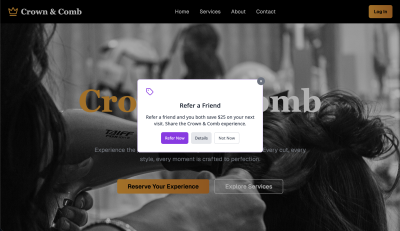
Crown & Comb: A bold, black-and-white hair salon website designed intentionally with complex navigation and a difficult-to-locate bridal package.
Across 30 comprehensive user interviews (10 per website, evenly split between cognitive and general population testers), participants completed assigned tasks and evaluated the platforms using the Accessible Usability Scale (AUS) survey. The results definitively proved the study’s primary hypothesis. Across all three digital properties, cognitive participants identified 197 total usability issues compared to just 113 by gen pop participants, while offering 93 improvement suggestions versus 54 from the general group.
Chronology: From Pilot Study to Groundbreaking Insights
The path to these findings followed a meticulous, iterative research trajectory designed to establish best practices for inclusive testing:
Early 2024: Recognizing a gap in how accessibility testing approached cognitive disabilities, a specialized working group was formed under the leadership of accessibility advocates at Fable.
Spring 2024: Researchers developed a specialized screener to recruit individuals who self-identified with challenges in memory, focus, and learning. They synthesized existing published literature to draft foundational interview best practices.
Summer 2024: A pilot study involving an initial cohort of 25 cognitive testers was launched. Researchers fine-tuned their methodologies, ultimately creating an interview guide, a quantitative survey tool, and comprehensive documentation of lessons learned.
Late Summer/Fall 2024: The joint formal study with the University of California, Irvine commenced. Using the three AI-generated prototype websites (Strong Snacks, Turning Pages, and Crown & Comb), researchers conducted 30 moderated remote sessions.
Post-Study Analysis: Qualitative and quantitative reviews of session recordings and transcripts were standardized, mapping every reported friction point, question, and suggestion across both participant demographics.
Supporting Data: Breaking Down the Numbers
The quantitative findings across the three evaluated websites provide profound insights into how design complexity impacts different user groups.
1. Strong Snacks (Simple Design)
Featuring a minimalist layout and straightforward tasks, Strong Snacks yielded the fewest overall issues and highest median AUS scores. However, the disparity between groups was stark:
Gen Pop: Averaged 6.4 issues and 2.6 suggestions; overall experience score averaged 90.5.
Cognitive Participants: Averaged 9.8 issues (finding 3.4 more on average) and 4.8 suggestions; their overall experience score was 13.7 points lower than gen pop participants, signaling that even minor friction points register strongly.
2. Turning Pages (Moderate-to-High Complexity)
As the site with the most varied functionality and tasks, Turning Pages generated the highest volume of issues overall.
Gen Pop: Averaged 11 issues and 5.2 suggestions, with an average AUS score of 78.0.
Cognitive Participants: Averaged 17 issues and 8.4 suggestions. Their average AUS score dropped to 60.8—a significant 17.2-point deficit compared to general testers.
3. Crown & Comb (Intentional Complexity)
Designed to frustrate users—particularly through a hidden bridal package task—this site tested the limits of platform navigation.
Gen Pop: Averaged 5 issues and 3 suggestions, recording a dismal average AUS score of 49.5.
Cognitive Participants: Averaged 12 issues and 5.4 suggestions. Interestingly, their average AUS score (63.8) was actually 14.3 points higher than the gen pop group, indicating that general participants were far harsher judges when an intentionally complex site failed to meet expectations.
When categorizing the types of issues discovered, cognitive participants overwhelmingly surfaced problems related to content clarity, button/link affordance and function, icons/visual elements, and media animations, while tying closely with gen pop users on navigation hurdles.
Official Responses and Qualitative Observations
The qualitative data gathered during the study revealed a stark contrast in how usability barriers affect user well-being. When evaluating the frustrating checkout and service discovery flows on Crown & Comb, the lowest-scoring general population participant expressed annoyance at the lack of interactivity:
"As soon as you see a service repeated on a page multiple times and you’re still not able to select it, it’s really, really frustrating. This feels not particularly engaging."
In contrast, a cognitive participant rating the same experience highlighted a much deeper, systemic toll on cognitive load and mental energy:
"For example, the mental energy aspect of it… sometimes there’s cookies, ads, pop-ups, or maybe the website has too many options to look through. It makes me feel drained and less able to focus."
Researchers noted that while general population users frequently "muddle through" poor UX designs using guesswork and resilience, cognitive participants experience structural roadblocks that exhaust their mental bandwidth. When cognitive load crosses a certain threshold, a standard usability flaw officially transforms into an impassable accessibility barrier.
Implications: Why Cognitive Inclusion is a Business Necessity
The implications of this research extend far beyond compliance or altruism; they hit directly at the bottom line of digital product development.
Preventing Lost Revenue: Unclear purchase flows, ambiguous buttons, and unpredictable interactions cause user drop-offs. Multiplied across thousands of daily visitors, these friction points result in measurable revenue loss.
Addressing the Aging Demographic: According to U.S. Census projections, Americans aged 65 and older will increase from 17% to 25% by 2060, meaning one in four citizens will experience age-related cognitive decline. Designing for cognitive accessibility is future-proofing digital products for an aging population.
A Natural On-Ramp to Inclusive Research: For many UX teams, starting accessibility testing with screen readers or alternative navigation tools feels intimidating. Cognitive inclusion serves as a natural entry point because testers immediately flag issues with cognitive load, clarity, and layout—best practices that benefit senior designers and general audiences alike.
As UX managers have noted regarding inclusive testing cohorts: “Two sessions with cognitive users feel like 200 because of the volume of insights we get.”
Ultimately, cognitive inclusion in UX research is no longer optional. By prioritizing clarity, predictable interactions, and reduced cognitive fatigue, product teams can optimize their research efficiency, craft simpler content flows, and ship digital products that truly work for everyone.

 By Lina Irawan



 Iffa Jayyana
 Azzam Bilal Chamdy
 Nila Kartika Wati
