Main Facts: The Hidden Multiplier of Digital Usability
In the fast-paced realm of digital product development, user experience (UX) researchers are constantly searching for ways to extract deeper, more actionable insights from their testing budgets. A landmark exploratory user research study conducted in the summer of 2024 offers a compelling answer: include participants with cognitive disabilities.
Spearheaded by accessibility advocates and researchers—including leadership from the accessibility platform Fable and academic partners at the University of California, Irvine—the study sought to determine whether testers with cognitive accessibility needs could surface more valuable usability data than the general population (gen pop).
The findings were definitive. Across three entirely different AI-generated websites, participants with cognitive disabilities—an umbrella term encompassing conditions that impact memory, focus, learning, and neurodivergence such as ADHD, autism, and dyslexia—identified 1.8 times more usability issues and offered 1.8 times more constructive suggestions than general population participants.
Rather than merely checking a compliance box, incorporating cognitive accessibility into UX methodologies serves as a powerful "on-ramp" for digital teams. It flags severe cognitive load barriers that ultimately impact all users, future-proofing digital platforms for an aging population while directly improving conversion rates, customer retention, and brand trust.
Chronology: From Concept to Case Study
The journey toward understanding the immense value of cognitive inclusion in UX research followed a methodical, iterative path:
Summer 2024: Fable established a working group of expert researchers dedicated to optimizing accessibility testing methodologies specifically for individuals with cognitive disabilities.
Screener and Literature Review: The team developed a specialized screener targeting self-identified challenges with memory, focus, and learning. They cross-referenced published academic studies to establish gold-standard interviewing practices.
Pilot Testing: These methodologies were put to the test with an initial cohort of 25 testers. Iterative fine-tuning led to the creation of a comprehensive user interview guide and a quantitative survey to evaluate digital product experiences.
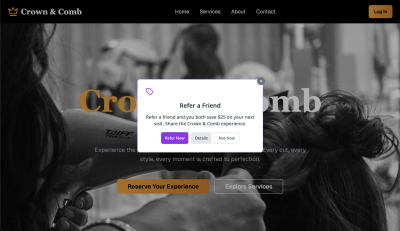
The Comparative Study: Researchers partnered with Syed Fatiul Huq at the University of California, Irvine, alongside Fable researchers Pranav Pidathala, Ali Brown, and Michael Fagan. They deployed three distinct, AI-generated prototype websites (Strong Snacks, Turning Pages, and Crown & Comb) designed to test a wide array of user tasks.
Execution and Evaluation: Thirty online user interviews were conducted (10 per website, split evenly between cognitive and general population participants). Every session concluded with participants completing the Accessible Usability Scale (AUS) survey. The study’s lead systematically reviewed all recordings and transcripts, logging every user friction point, missed task requirement, and improvement suggestion.
Supporting Data: Breaking Down the Numbers
To measure the disparity in insights between the two demographics, the study evaluated three distinct digital interfaces spanning varying levels of design complexity and functionality.
The Three Test Environments
Strong Snacks: A minimalist, bright, brutalist-style recipe website featuring high-protein, three-ingredient meals, basic filtering, and a newsletter sign-up.
Turning Pages: A classic, moody online bookstore featuring complex filtering, a personalized book-matching feature, shopping carts, and multi-step checkout processes.
Crown & Comb: A bold, high-contrast hair salon website featuring service bookings, VIP memberships, special packages, and an intentionally difficult path to locate a bridal package.
Quantitative Findings Across the Board
Across all 30 sessions, the raw volume of feedback heavily skewed toward the cognitive participant cohort:
Total Issues Identified: Cognitive participants flagged 197 unique usability issues, compared to just 113 by the general population.
Suggestions for Improvement: Cognitive testers provided 93 actionable recommendations, while general population testers offered 54.
The 1.8x Multiplier: Across every category of digital architecture, cognitive participants consistently unearthed nearly double the amount of design flaws and optimization ideas.
Website
Group
Total Issues
Average Issues
Total Suggestions
Average Suggestions
Average AUS Score (0–100)
Strong Snacks
Gen Pop
32
6.4
13
2.6
90.5
Cognitive
49
9.8
24
4.8
76.8
Turning Pages
Gen Pop
55
11.0
26
5.2
78.0
Cognitive
86
17.0
42
8.4
60.8
Crown & Comb
Gen Pop
26
5.0
15
3.0
49.5
Cognitive
62
12.0
27
5.4
63.8
When categorizing the nature of these friction points, cognitive participants surfaced disproportionately more issues related to content clarity, button and link affordances, confusing icons/visual elements, and media/animations. Interestingly, both groups encountered near-identical navigation hurdles (45 for gen pop vs. 46 for cognitive), proving that navigation is a universal pain point made significantly worse by underlying cognitive loads.
Official Perspectives and Qualitative Insights
The qualitative data provided a window into the profound psychological impact poorly designed digital spaces inflict on users. When comparing participants from both groups who gave the lowest Accessible Usability Scale (AUS) scores on the complex Crown & Comb website, the divergence in qualitative feedback was striking.
A general population participant expressed frustration with interface mechanics:
"As soon as you have a name of a treatment and a little explanation… you should be able to interact with that service straight away. And I feel like if you’re seeing a service repeated… and you’re still not able to select it, it’s really, really frustrating. This feels not particularly engaging."
Conversely, a cognitive participant described a physical and mental toll:
"For example, the mental energy aspect of it… like cookies, and then ads, pop-ups, or maybe the website has too many options to look through… It makes me, like, feel drained and less able to focus."
UX experts echo the high value of these responses. As noted by a UX Manager at Bell Media:
"2 sessions with cognitive users feel like 200 because of the volume of insights we get."
Rather than simply noting an interface is "annoying," cognitive testers articulate why an interface breaks down under stress, highlighting how standard usability flaws quickly morph into hard accessibility barriers when cognitive load crosses a critical threshold.
Implications for the Future of UX and Business
The implications of these research findings stretch far beyond the realm of specialized accessibility compliance. They redefine how digital product teams should prioritize their user research frameworks.
1. Preparing for an Aging Population
Demographic shifts make cognitive inclusion an absolute business necessity. According to U.S. Census projections, Americans aged 65 and older will surge from 17% to 25% of the population, meaning 1 in 4 Americans will be an older adult by 2060. Because mild cognitive decline naturally accompanies aging, digital experiences that fail to accommodate cognitive accessibility will inevitably alienate a massive, economically powerful consumer base.
2. Preventing Abandonment and Lost Revenue
General population users often "muddle through" confusing checkout flows, broken buttons, or cluttered content out of sheer patience. However, this friction severely damages brand loyalty. When a competitor offers a simpler, cleaner alternative, frustrated users will abandon carts. Incorporating cognitive participants helps companies catch these leaks in conversion funnels before they hemorrhage revenue.
3. Creating a Natural On-Ramp to Inclusive Design
Many UX teams struggle to incorporate assistive technology users—such as those relying on screen readers or magnification software—because they lack internal expertise. Cognitive accessibility serves as an ideal entry point. By focusing initially on cognitive load, plain-language content, predictable interactions, and visual clarity, organizations build robust foundational habits that make advanced accessibility testing far more approachable.
As the study decisively proves, cognitive inclusion in UX research is no longer an optional nice-to-have. It is a vital multiplier that yields clearer content, simpler flows, highly efficient research cycles, and ultimately, superior digital products built for everyone.

 By Nila Kartika Wati


 Evan Lee Salim
  Layla Zulfa
  Ali Ikhwan