
 By Evan Lee Salim
In the rapidly evolving landscape of digital product design, a groundbreaking exploratory study has revealed that the key to more efficient user experience (UX) research may lie in an often-overlooked demographic: people with cognitive disabilities.
Recent research led by Fable, a leading accessibility testing platform, in collaboration with the University of California, Irvine, suggests that including neurodivergent participants and those with cognitive challenges acts as a "force multiplier" for identifying usability flaws. The study found that participants with cognitive disabilities identified 1.8 times more usability issues and offered 1.8 times more suggestions for improvement than general population (gen pop) participants.
As cognitive disabilities—an umbrella term covering challenges with memory, focus, and learning—affect nearly 14% of the U.S. population, these findings present a compelling business and ethical case for shifting inclusive design from a "nice-to-have" feature to a core research methodology.
Main Facts: The 1.8x Insight Factor
The core of the research, spearheaded by Fable’s VP of Innovation, centered on a fundamental hypothesis: because people with cognitive disabilities interact with digital interfaces with a higher sensitivity to "cognitive load," they are more likely to encounter and articulate friction points that general users might subconsciously "muddle through" or ignore.
The data supported this hunch with striking clarity. Across three distinct website prototypes, the cognitive disability group identified a total of 197 usability issues, compared to just 113 identified by the general population group. Furthermore, the cognitive group provided 93 actionable suggestions for improvement, nearly doubling the 54 suggestions provided by the control group.
The research categorized these issues into several key areas:
- Content Clarity: Cognitive participants were twice as likely to struggle with jargon, dense text, or ambiguous instructions.
- Interaction Affordances: Issues with buttons and links—specifically whether they looked clickable or behaved predictably—were significantly more apparent to the cognitive group.
- Visual Elements: Icons and media (animations/videos) that served as distractions or lacked clear meaning were identified as major barriers.
Chronology of the Research: From Working Group to Validation
The journey toward these findings began in the Summer of 2024, when Fable established a working group of expert researchers. Their primary mission was to standardize the methodology for performing accessibility testing with individuals who have cognitive disabilities—a group that has historically been underrepresented in UX research compared to those with vision or mobility impairments.
Following the formation of the working group, the team spent months developing a specialized screener and pilot program. They recruited 25 initial testers to fine-tune a guide for running user interviews. This phase was critical in ensuring that the research environment was supportive and that the questions were structured to accommodate varying processing speeds and communication styles.
In late 2024 and early 2025, the team moved into the primary validation phase. This involved a joint study with the University of California, Irvine. To ensure the results weren’t skewed by the quality of a single website, the researchers used AI prototyping tools to generate three distinct digital environments:
- Strong Snacks: A simple, high-protein recipe site with a "brutalist" design.
- Turning Pages: A complex bookstore site with deep filtering, a "book matching" feature, and a checkout flow.
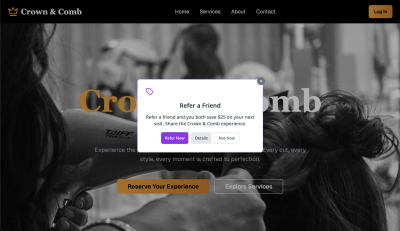
- Crown & Comb: A high-end hair salon site designed intentionally with complex navigation and a difficult-to-find "bridal package."
The study concluded with 30 intensive user interviews (10 per website), split evenly between cognitive and general population participants. Each session concluded with the Accessible Usability Scale (AUS), a 10-question survey designed to quantify the perceived usability of the experience.

Supporting Data: Breaking Down the Metrics
The study’s quantitative results provide a roadmap for where digital products typically fail. The disparity between the two groups was most evident in the more complex sites.
Turning Pages (The Complex Bookstore)
This site featured the most functionality, including shopping carts and recommendation algorithms.
- Gen Pop: Found an average of 11 issues per participant.
- Cognitive Group: Found an average of 17 issues per participant.
- AUS Score: The cognitive group rated the experience 17.2 points lower than the general population, indicating that as complexity increases, the "usability gap" for neurodivergent users widens exponentially.
Crown & Comb (The "Stress Test" Site)
This site was designed to be intentionally difficult. Interestingly, while the cognitive group found 12 issues on average (compared to the gen pop’s 5), they actually gave the site a higher AUS score (63.8) than the gen pop (49.5).
Researchers hypothesize this "score flip" occurred because the general population participants became more frustrated by the intentional difficulty, whereas the cognitive participants, accustomed to navigating a world not designed for them, were more focused on the specific visual and content barriers they encountered.
Qualitative Disparities: "Frustrated" vs. "Drained"
The study also captured the emotional toll of poor design. When navigating the difficult salon website, a general population participant described the experience as "really, really frustrating" and "not particularly engaging."

In contrast, a participant from the cognitive group described a deeper physiological and mental impact: "It makes me feel drained and less able to focus… I have to go through a lot of stuff." This highlights that for users with cognitive disabilities, poor UX is not just an inconvenience—it is an accessibility barrier that can prematurely end a user’s ability to interact with a brand.
Official Responses and Expert Commentary
The findings have sent a clear message to the UX community. Industry experts involved in the study emphasize that cognitive inclusion is a shortcut to "Universal Design."
"Two sessions with cognitive users feel like 200 because of the volume of insights we get," noted a UX Manager at Bell Media in response to the research methodology. This sentiment reflects a growing realization in the tech industry: if you can make a product work for someone with memory or focus challenges, you have inherently made it better for everyone.
The research team at Fable argues that "cognitive inclusion in UX research is not optional." They suggest that the insights gained from these participants—such as the need for predictable interactions and clear, jargon-free content—align perfectly with general design best practices that are often ignored in the rush to launch.
Implications: The Future of Inclusive Design
The implications of this study extend far beyond the 14% of the population currently identified as having a cognitive disability. The researchers point to several "situational" and "temporary" cognitive challenges that make this data universally applicable:
- The Aging Population: By 2060, one in four Americans will be 65 or older. This demographic naturally experiences cognitive decline in memory and processing speed. Designing for cognitive disabilities today is a prerequisite for serving the massive market of tomorrow.
- The "Stressed User" Effect: High-stress situations (like booking an emergency flight or managing a medical portal) induce temporary cognitive impairments in all users. Products tested against cognitive barriers perform better under pressure for everyone.
- Non-Native Speakers: Users interacting with a site in their second or third language face higher cognitive loads. Simplified content and clear affordances—demanded by cognitive testers—directly benefit these users.
- Business Efficiency: For companies, the 1.8x insight ratio suggests a higher ROI for research spend. Fewer sessions with a more diverse, sensitive tester pool can yield more actionable data than larger, more homogenous groups.
Study Limitations
The researchers noted that while the findings are compelling, the study was exploratory with a small sample size (30 participants). Furthermore, the testing platforms differed (Fable Engage for the cognitive group and UserFeel for the gen pop), which could introduce minor variables in participant comfort and response quality. However, the consistency of the 1.8x ratio across three different types of websites suggests a robust underlying trend.
Conclusion
The Fable and UC Irvine study marks a pivotal moment in UX research. It challenges the notion that accessibility is a niche requirement, instead positioning it as a diagnostic tool for excellence. By prioritizing users who are most sensitive to cognitive load, designers can identify the "cracks" in their interfaces before they become "chasms" for the general public. As the global population ages and digital interfaces become more integrated into every facet of life, the ability to create clear, predictable, and low-strain experiences will be the ultimate competitive advantage.
 Nana Wu
  Nana
Nana 