
 By Reynand Wu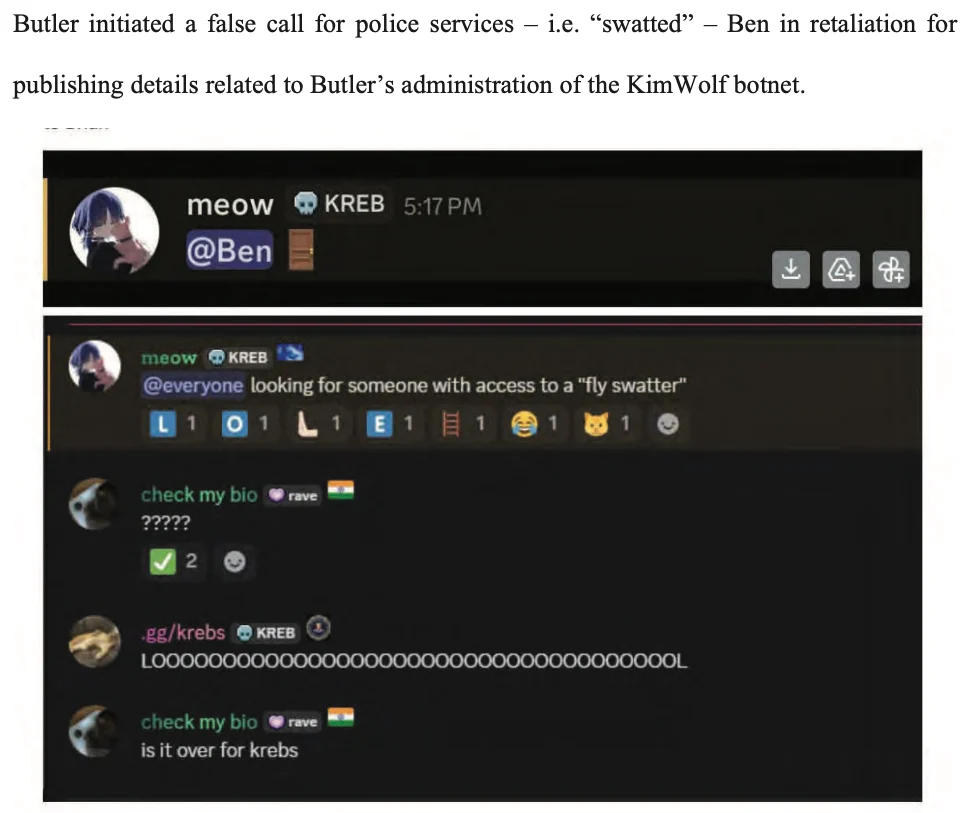
In a landmark victory for international cybersecurity cooperation, Canadian authorities have apprehended a 23-year-old Ottawa man accused of orchestrating "Kimwolf," a formidable Internet-of-Things (IoT) botnet responsible for a wave of record-shattering distributed denial-of-service (DDoS) attacks. The arrest marks the culmination of a high-stakes, months-long investigation involving the Ontario Provincial Police (OPP), the U.S. Department of Justice (DOJ), and the Federal Bureau of Investigation (FBI).
The suspect, identified as Jacob Butler—known in clandestine digital forums by the handle "Dort"—now faces a grueling legal battle on two fronts. He is currently in Canadian custody awaiting a hearing, while U.S. federal prosecutors in Alaska seek his extradition to face criminal hacking charges. The case highlights not only the growing sophistication of IoT-based weaponry but also the increasingly aggressive tactics employed by botnet operators to silence the security researchers who track them.
The Anatomy of an IoT Menace
The Kimwolf botnet represented a significant escalation in the industrialization of cybercrime. Unlike traditional malware that targets workstations or servers, Kimwolf specialized in "enslaving" devices typically deemed low-risk or firewalled, such as digital photo frames, smart cameras, and home automation hubs. By exploiting critical vulnerabilities in these devices, Butler created a massive, decentralized army of millions of infected systems.
According to federal documents, Kimwolf was not merely a passive network; it was a commercialized engine of destruction. Butler allegedly rented access to this botnet to other cybercriminals and directed massive volleys of traffic against targets ranging from private enterprises to critical infrastructure, including Internet address ranges associated with the U.S. Department of Defense (DoD).
The scale of the disruption was unprecedented. The Justice Department confirmed that Kimwolf was tied to DDoS attacks measuring nearly 30 Terabits per second—a figure that shatters previous records for volumetric attack traffic. These operations were not just digital vandalism; they caused over $1 million in losses for various victims, with over 25,000 distinct attack commands issued from the botnet’s control center.
A Chronology of Chaos and Capture
The downfall of Kimwolf was not an overnight success but the result of a persistent, multi-layered investigation.
The Rise of the Botnet (Late 2025 – Early 2026)
During the latter half of 2025, Kimwolf emerged as a dominant force in the underground market, competing fiercely for vulnerable IoT hardware against other botnets, namely Aisuru, JackSkid, and Mossad. As Butler refined his control over the botnet, he began to exhibit signs of extreme volatility, turning his weapons against those who scrutinized his activities.
The Unmasking (February 2026)
In February 2026, KrebsOnSecurity publicly identified Butler as the mastermind behind the "Dort" persona. By cross-referencing email addresses, forum registrations, and activity on public Telegram and Discord servers, investigators were able to pierce the veil of anonymity. The exposure triggered a violent reaction from Butler, who launched a series of DDoS, doxing, and swatting campaigns against the author and security researchers.
The Global Crackdown (March 2026)
On March 19, a coordinated international operation resulted in the seizure of the technical infrastructure supporting Kimwolf and its three primary competitors. The OPP executed a search warrant at Butler’s Ottawa residence, seizing a cache of digital evidence. Simultaneously, the U.S. Department of Justice moved to unseal the criminal complaint that had been building against him in Alaska.
The Aftermath (May 2026)
Following his arrest, Butler was charged in Canada with unauthorized use of a computer, possession of devices for unauthorized use, and mischief in relation to computer data. The legal machinery now shifts toward extradition, with Butler scheduled to appear in court on May 26.
The Human Cost: Swatting and Harassment
One of the most disturbing aspects of the Kimwolf case is the personal toll exacted on security professionals. Butler’s criminal enterprise was not confined to digital packets; he weaponized the real world through "swatting"—the act of making false reports to emergency services to trigger an armed police response at a victim’s home.
Ben Brundage, founder of the security startup Synthient, became a primary target after his firm discovered and helped patch a critical vulnerability that allowed Kimwolf to propagate. Despite being credited by the DOJ for his role in securing the internet, Brundage was forced to endure at least two swatting attempts orchestrated by Butler.
"Hopefully, this will end the harassment," Brundage stated following the news of the arrest. His relief is shared by a broader community of researchers who have been operating under the shadow of retaliation for years. The criminal complaint against Butler explicitly details these threats, providing a rare look at how botnet operators attempt to intimidate the security community into silence.
Supporting Data and Technical Evidence
The case against Butler is robust, largely because of his failure to maintain operational security (OPSEC). The criminal complaint details a trail of digital breadcrumbs that linked "Dort" to Jacob Butler with high precision.
- Financial Records: Investigators obtained transaction records that tied Butler’s real-world identity to the rental of botnet infrastructure.
- Digital Forensics: The seizure of hardware at his Ottawa home provided direct access to the administrative panels used to command the Kimwolf botnet.
- Communication Logs: Messaging records from Telegram and Discord servers confirmed that the individual controlling the botnet was the same person interacting with other high-level cybercriminals.
The DOJ and the FBI’s Anchorage field office have been instrumental in synthesizing this data. They were further assisted by the Defense Criminal Investigative Service (DCIS), which prioritized the case due to the direct impact on Department of Defense network assets.
Official Responses and Implications
The arrest of Jacob Butler sends a clear message to the "DDoS-for-hire" ecosystem: international borders are no longer a sanctuary for those who facilitate large-scale cyber warfare.
"The KimWolf botnet is a stark example of how fragile the modern IoT landscape is," said a spokesperson for the Department of Justice. "We are committed to working with our partners in Canada and across the globe to dismantle the infrastructure that enables these record-breaking attacks."
The broader implications of the Kimwolf collapse are significant:
- Market Disruption: The seizure of Kimwolf and the nearly four-dozen DDoS-for-hire services in April has caused a temporary but significant vacuum in the underground market. Cybercriminals who relied on "Dort" for their operations are now scrambling for alternatives.
- Increased Scrutiny on IoT Manufacturers: The case has reinvigorated the debate regarding the security standards of IoT devices. The "firewalled" nature of these devices was supposed to be a safety net; however, as the Kimwolf case proved, that safety net is failing.
- Legal Precedent: The extradition process will be a litmus test for U.S.-Canada cooperation in prosecuting non-state, individual cyber-terrorists. If Butler is successfully extradited, it will lower the threshold for future cross-border prosecutions of similar actors.
Looking Forward: The Path to Sentencing
While Butler faces up to 10 years in prison under U.S. law for aiding and abetting computer intrusion, the final sentence remains subject to the U.S. Sentencing Guidelines. Courts will weigh the severity of his crimes—specifically the harm caused to the Department of Defense and the victims of his swatting campaigns—against mitigating factors such as his youth and potential cooperation.
As the legal proceedings unfold, the cybersecurity community remains vigilant. The collapse of Kimwolf is a major win, but the underlying vulnerabilities in the global IoT network remain. For now, the arrest of "Dort" offers a rare moment of accountability for a digital predator who thought he could hide behind a wall of bots. The case serves as a reminder that in the digital age, the "anonymous" actor is rarely as invisible as they believe.
 Sagoh
Sagoh  Evan Lee Salim
  Ammar Sabilarrohman