
 By Asep Darmawan
If you are currently mapping out the launch of an ecommerce brand, your initial mental shortlist for infrastructure likely includes platforms like Shopify, WooCommerce, or BigCommerce. HubSpot, while widely respected, is rarely the first name that springs to mind for a "storefront." However, a shifting trend in the digital commerce landscape suggests that while most companies discover HubSpot after they have already scaled, the savviest operators are integrating it into their foundation from day one.
HubSpot has evolved far beyond its roots as a marketing automation tool. Today, it functions as a comprehensive operating system for the customer journey—a critical distinction for brands looking to move beyond simple transactional volume and toward long-term customer lifetime value (CLV).
The Core Philosophy: Why HubSpot Matters in Ecommerce
For many online stores, the primary point of failure is "fragmentation." You have one app for your storefront, another for email marketing, a third for customer support, and perhaps a separate spreadsheet or legacy CRM to manage B2B leads. This "disconnected stack" creates blind spots.
HubSpot operates on a different premise: the CRM is the source of truth. By housing customer behavior, browsing history, abandoned carts, support interactions, and revenue data under one roof, HubSpot transforms the CRM into an "operating system" for every interaction that isn’t the checkout process itself.
The Power of Unified Data
In a standard ecommerce setup, a customer’s journey is often invisible until they hit "purchase." With HubSpot, the timeline is complete. If a user views a specific product category, abandons their cart, clicks a re-engagement email, and then chats with a support agent, that entire arc is captured. This visibility is not just analytical; it is actionable. When an abandoned cart becomes a trigger for an automated workflow that notifies a sales rep or sends a hyper-personalized discount, the conversion probability skyrockets.
A Chronology of Adoption: When to Integrate HubSpot
For most ecommerce businesses, the integration of HubSpot follows a predictable, three-phase chronology:
Phase 1: The "Manual" Era (The Foundation)
In the early days, most founders use the free HubSpot CRM to organize contacts and manage basic outreach. Even at this stage, setting up the foundation—standardizing product naming conventions and mapping contact properties—is vital. This is the period where you build the "brain" of your operation.
Phase 2: The "Workflow" Era (The Growth)
As traffic increases, the manual effort becomes unsustainable. This is when businesses shift to HubSpot’s automation tools. Instead of manually following up on leads or sending generic newsletters, teams build complex, real-world flows: Cart Abandonment → Personalized Email → Sales Pipeline Stage → Rep Follow-up.
Phase 3: The "Optimization" Era (The Scale)
At this stage, brands leverage HubSpot’s AI-driven insights and advanced analytics to optimize the entire funnel. They aren’t just selling; they are managing relationships. This is where companies like CODE41 achieved monumental success—boosting sales by 257% and revenue by 223%—by treating the CRM as the heart of the business, not just a ledger.
Supporting Data and Real-World Performance
The efficacy of a HubSpot-integrated ecommerce strategy is best evidenced by the measurable shift in key performance indicators (KPIs). Data from successful implementations consistently highlight three areas of improvement:
- Lead Velocity: By connecting chat conversations to actual revenue, teams can identify high-intent visitors in real-time.
- Conversion Efficiency: Automation workflows that replace "batch and blast" emails with behavioral triggers see significantly higher open and click-through rates.
- Retention Rates: Because HubSpot tracks the entire customer lifecycle, it is uniquely positioned to handle renewals and subscription management, turning churn-prone customers into long-term subscribers.
The case study of CODE41 serves as the benchmark here. By integrating HubSpot’s commerce and marketing tools, they weren’t just moving products; they were building an inbound marketing machine that attracted, engaged, and converted customers based on their specific behavior, rather than broad demographic assumptions.
Official Perspectives: The Strategic Shift
Industry analysts note that the rise of "Composable Commerce" is driving this shift toward platforms like HubSpot. No longer are brands looking for an "all-in-one" solution that does everything poorly. Instead, they are looking for a "best-of-breed" stack where the storefront (Shopify/BigCommerce) handles the catalog and transaction, while the CRM (HubSpot) handles the intelligence.
"HubSpot doesn’t try to be a better checkout page than Shopify," says one industry lead. "It tries to be a better partner to the customer. When you treat the customer as a person with a history rather than an order number, you create brand loyalty that a simple checkout page can never achieve."
Implications for Modern Ecommerce Teams
What does this mean for the future of your online store? It implies that the "storefront" is becoming a commodity, while the "customer experience" is the only remaining competitive advantage.
1. Automation That Feels Human
The biggest trap in automation is making the customer feel like a number. HubSpot’s strength lies in its ability to build "messy," human-centric flows. Because the data is so granular, you can tailor your automation to the exact stage of the customer’s journey, whether they are a first-time browser or a repeat purchaser.
2. Payments as Part of the Conversation
HubSpot Payments and the quoting feature represent a major departure from the traditional "send a PDF and pray" method of B2B or high-touch ecommerce. By embedding payment links into the conversation—whether via email, chat, or a formal quote—friction is removed. The payment event then automatically updates the CRM, triggers onboarding tasks, and moves the customer into a new lifecycle stage.
3. AI as a Force Multiplier
While AI is often hyped, its application in HubSpot is practical. It solves the "blank page" problem for content teams. By using AI to draft meta-descriptions, blog outlines, and email sequences, teams can focus their creative energy on high-level strategy rather than administrative grunt work.
How to Get Started: A Practical Guide
If you are ready to pivot your ecommerce strategy toward a more customer-centric model, the transition is lower-risk than most realize.
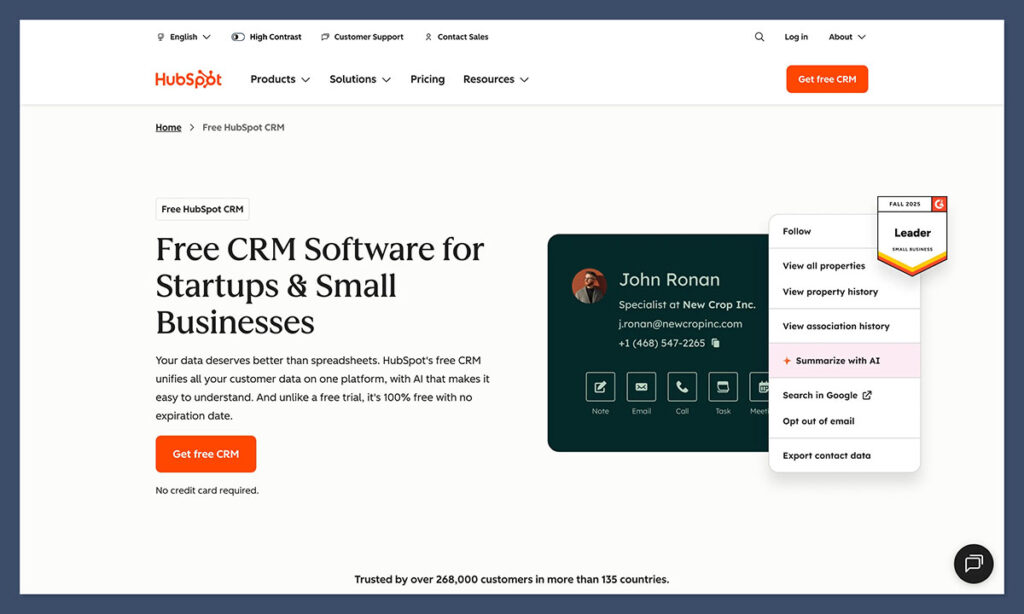
Step 1: Centralize the CRM.
Do not build your store until you have a plan for where your customer data will live. Start with the free HubSpot CRM to ensure your contact records are clean and structured from day one.
Step 2: Choose Your Architecture.
Determine if your business requires a headless setup or a native integration. If you have a massive, SKU-heavy catalog, keep your storefront on Shopify and use the HubSpot-Shopify integration to sync data. If you sell high-touch, curated, or B2B products, consider building the storefront directly within HubSpot’s CMS.
Step 3: Map the Journey.
Before turning on automation, map out your customer’s path. What does a "successful" purchase look like? What happens if they abandon their cart? What does a post-purchase follow-up sequence look like? Build these into the HubSpot workflows.
Step 4: Audit and Optimize.
HubSpot’s strength is in its analytics. Once you are live, watch the numbers. Don’t just look at total sales; look at the conversion rate per lifecycle stage. Use this data to refine your content, tweak your email timing, and personalize your outreach.
Conclusion: The Difference Between a Store and a Business
There is a fundamental difference between a shop that executes transactions and a business that builds relationships. Many ecommerce platforms are built for the former. HubSpot is built for the latter.
By keeping your customer understanding, sales systems, marketing activity, and support experience in the same container, you are doing more than just running a website; you are building an engine for growth. While it may not be the first name mentioned in a casual conversation about launching a store, HubSpot is, increasingly, the name that comes up when a business starts to succeed.
If you want to move beyond the "one-and-done" transaction, the path is clear: build your storefront for the web, but build your business on the CRM. Start with the basics, integrate your tools, and let the data—not guesswork—guide your growth.
 Dwi Wanna
  Lina Irawan
  Basiran