
 By Reynand Wu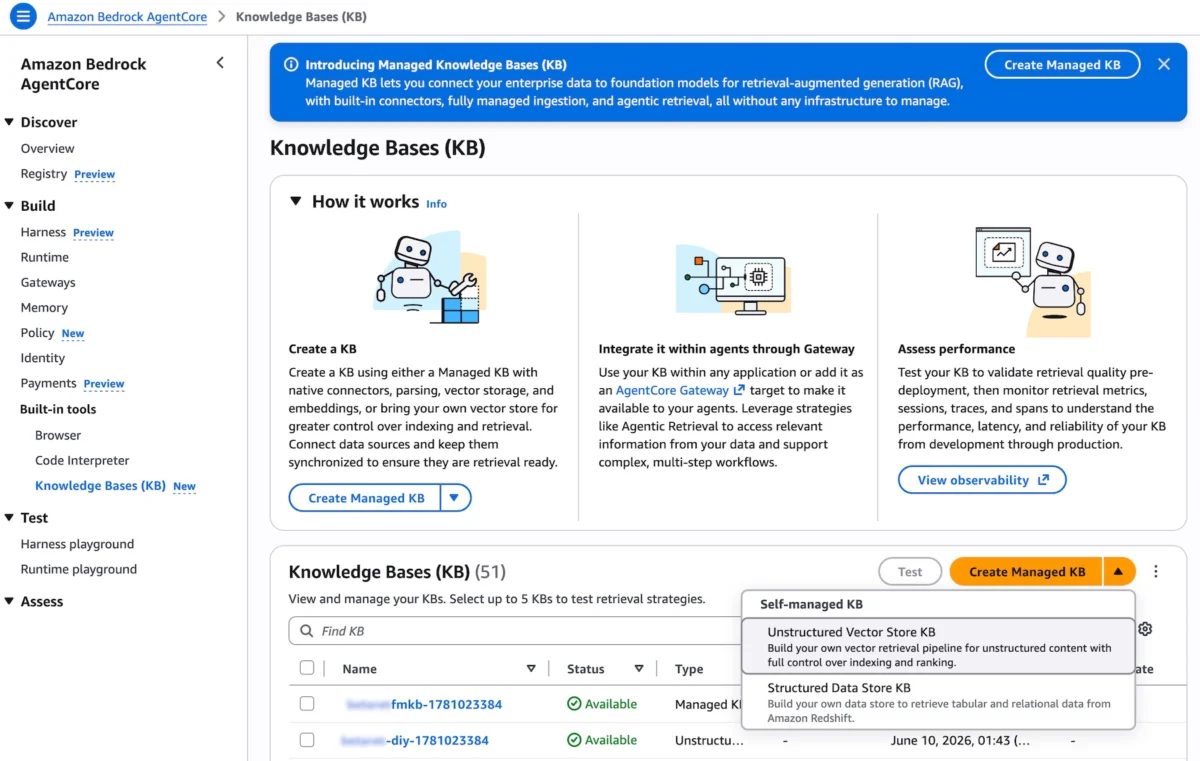
In a move set to redefine how enterprises deploy generative AI, Amazon Web Services (AWS) has announced the launch of Amazon Bedrock Managed Knowledge Base. This new suite of capabilities is designed to dismantle the technical barriers that have historically plagued Retrieval-Augmented Generation (RAG) pipelines, enabling developers to transform raw, proprietary enterprise data into sophisticated, agentic AI applications in a matter of minutes.
By abstracting the complex infrastructure required for data ingestion, storage, retrieval, and re-ranking, AWS is shifting the developer focus from "plumbing" to "business outcomes."
The Core Challenge: Why RAG Has Been Hard
For many organizations, the promise of generative AI—having an intelligent assistant that knows the company’s internal policy, budget, and history—has been hampered by the reality of infrastructure management. Traditionally, building a RAG pipeline required a developer to independently manage and glue together several distinct components:
- Data Ingestion and Parsing: Converting messy, multi-format enterprise data into a machine-readable state.
- Storage and Indexing: Managing vector databases that can handle high-dimensional embeddings.
- Orchestration Logic: Building the retrieval, re-ranking, and context-injection layers that feed a Foundation Model (FM).
These components are not just difficult to set up; they are notoriously difficult to scale. Without a unified system, developers often find themselves trapped in "undifferentiated heavy lifting"—spending more time managing database clusters and API latency than building the actual AI features that drive value.
Chronology: The Evolution of Bedrock
The launch of the Managed Knowledge Base represents the latest milestone in the Amazon Bedrock journey. Since the inception of Bedrock, AWS has focused on providing a "choice-first" ecosystem for generative AI.
- Initial Launch: AWS introduced Bedrock to provide access to high-performing foundation models via an API.
- The RAG Integration: Recognizing that models alone weren’t enough, AWS integrated native Knowledge Bases to allow RAG workflows.
- Agentic Maturity: With the rise of agentic AI—systems that can perform multi-step reasoning—the need for a more robust, managed retrieval system became critical.
- The Current Milestone: The release of Managed Knowledge Base addresses the final frontier: total abstraction of the RAG pipeline. By integrating deeply with the Bedrock AgentCore Gateway and adhering to the Model Context Protocol (MCP), AWS has effectively turned "RAG as a Service" into an enterprise reality.
Technical Breakthroughs: How It Works
Amazon Bedrock Managed Knowledge Base introduces several "core innovations" that simplify the developer experience while increasing output accuracy.

1. Smart Parsing for Accurate Ingestion
Data in the enterprise is rarely clean. It lives in PDFs, Confluence pages, SharePoint documents, and disparate cloud drives. Managed Knowledge Base uses Smart Parsing, a capability that automatically identifies the structure of the data and selects the optimal parsing strategy. Whether it is a complex table in a financial report or a bulleted list in a policy document, Smart Parsing handles the conversion, eliminating weeks of manual preprocessing work.
2. The Agentic Retriever
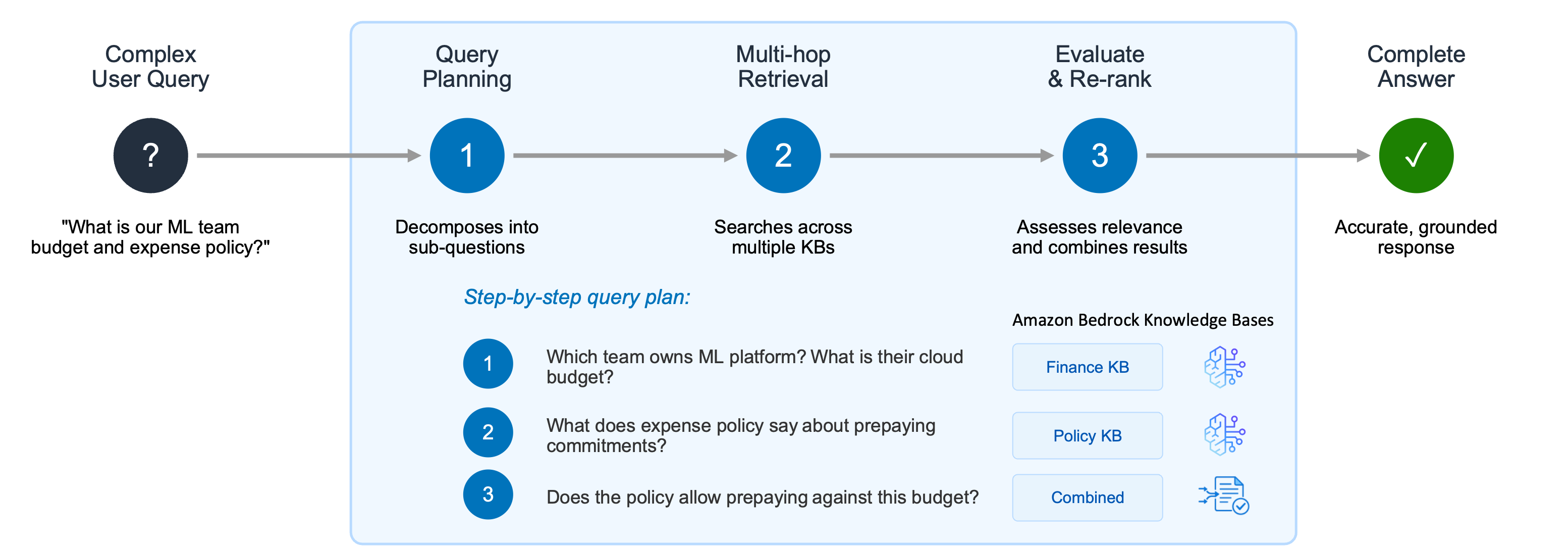
Perhaps the most significant advancement is the Agentic Retriever. Standard retrieval methods often fail at multi-hop reasoning—the ability to answer a question that requires information from two different, unrelated sources.
The Agentic Retriever functions as a reasoning engine. When faced with a complex query, it decomposes the request into a series of logical steps. It performs multi-hop retrieval, evaluates the relevance of the retrieved snippets, and refines its search until it has the complete context required to provide a grounded, accurate answer. This eliminates the "hallucination" risk often found in RAG systems that only retrieve based on keyword matching.
3. Native Model Context Protocol (MCP) Integration
AWS has fully embraced the open-source movement by ensuring that Bedrock Managed Knowledge Base is MCP-compliant. By serving as a native target in the Bedrock AgentCore Gateway, it allows developers to connect their knowledge bases to any MCP-compatible framework—including LangChain, CrewAI, LlamaIndex, and LangGraph—without writing custom integration code. This is a massive boon for developers who want to avoid vendor lock-in.
Implications: The Shift Toward Agentic Search
The implications for the enterprise are profound. By moving to a managed, serverless-style RAG architecture, companies can now:
- Reduce Time-to-Market: What used to take months of infrastructure planning can now be completed in a few clicks via the Bedrock console.
- Democratize AI Access: Small teams can now build agents with the same performance metrics as large-scale enterprise deployments.
- Maintain Flexibility: Unlike proprietary "black box" AI solutions, Bedrock preserves the ability for developers to swap out the underlying embedding models or foundational models as technology evolves. The infrastructure is managed, but the model choice remains firmly in the hands of the developer.
Supporting Data: Operational Excellence
The system is designed with security and compliance at the forefront. By leveraging AWS Identity and Access Management (IAM), the service ensures that only authorized users can query specific segments of the data.
- Scalability: Because it is a managed service, it scales automatically with the volume of data and the frequency of queries.
- Observability: The AgentCore Observability dashboard provides built-in metrics, allowing teams to monitor retrieval performance, identify bottleneck areas in their data, and measure the effectiveness of their agents in real-time.
- Cost Efficiency: The pricing model is pay-as-you-go, based on the size of the indexed data and the number of retrievals performed. This eliminates the overhead of maintaining idle vector database clusters.
Official Perspectives: A Strategic Shift
According to internal documentation, the philosophy behind this launch is to empower developers to move at the "speed of thought."
"Developers shouldn’t be spending their time configuring vector database shards or tuning re-ranking hyperparameters," says Daniel Abib, who led the technical rollout. "By abstracting these elements into a single managed primitive, we are enabling teams to focus on the ‘last mile’—the specific business logic that makes an AI agent truly useful to an organization."
The decision to make the service available in multiple global regions—including the US, Asia Pacific, and Europe—signals that AWS views this as a foundational requirement for global enterprise operations, not just a niche feature for early adopters.
Getting Started: A Step-by-Step Approach
For developers looking to integrate this into their stack, the process is streamlined:
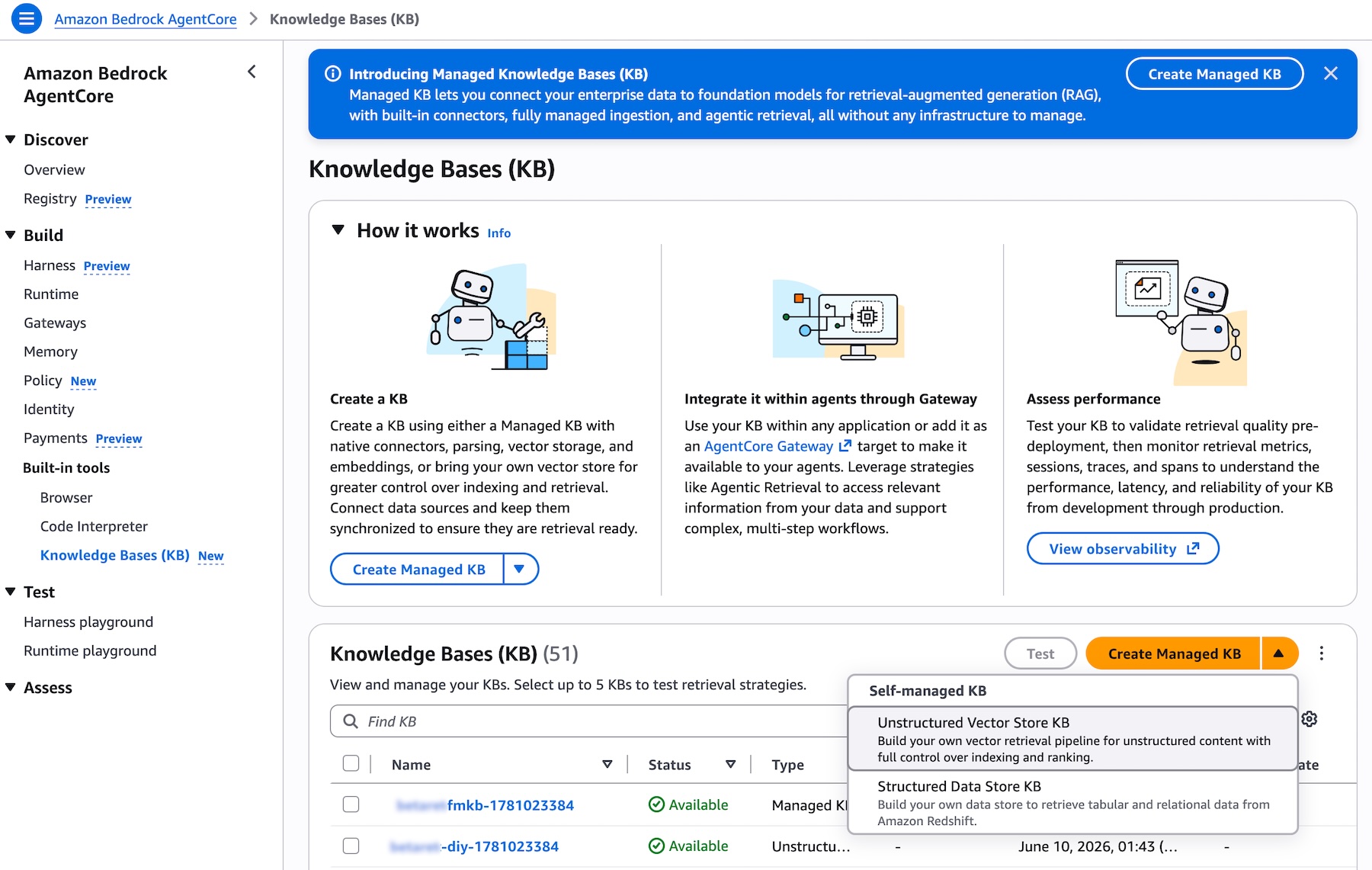
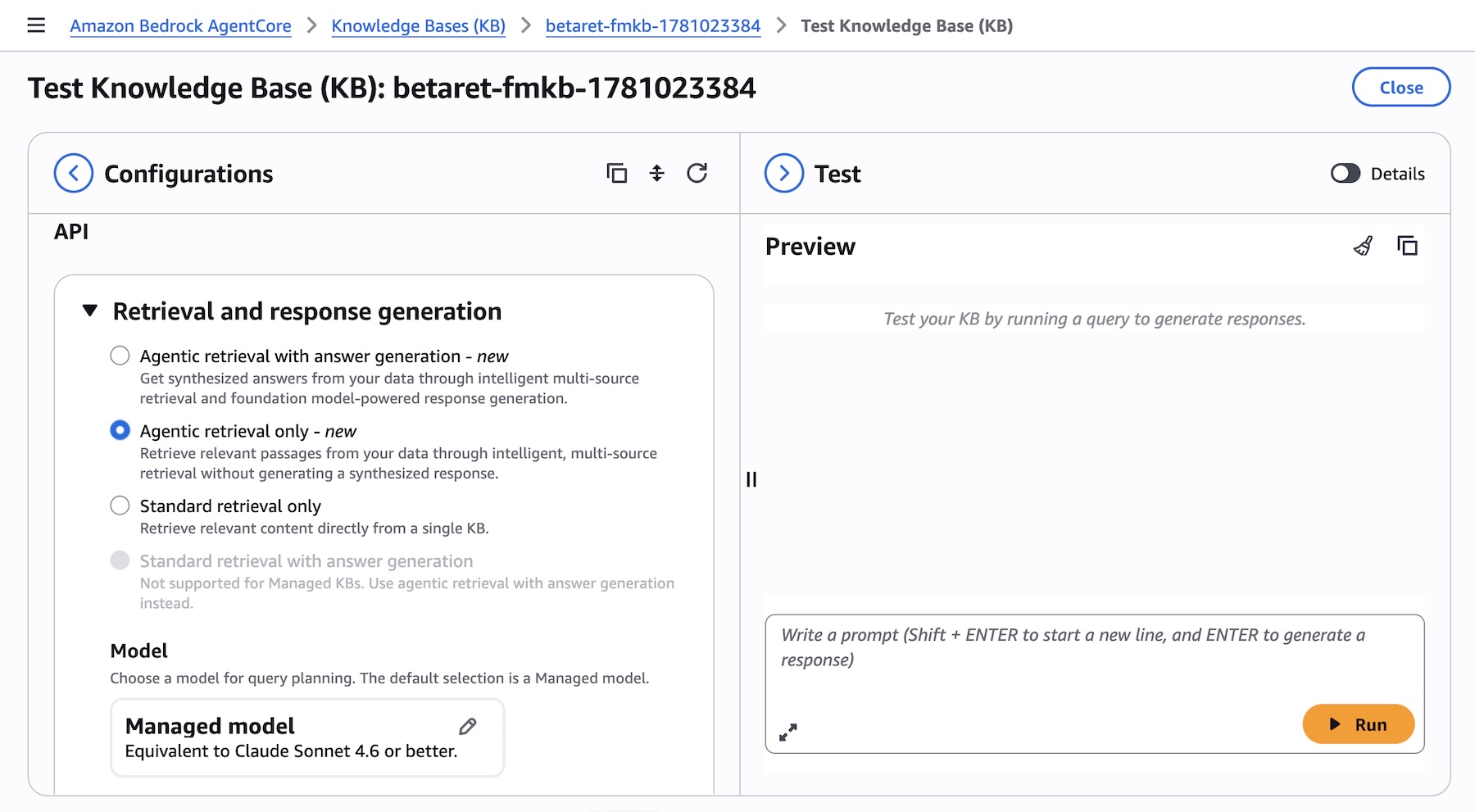
- Access: Navigate to the Amazon Bedrock console and select "Knowledge Bases."
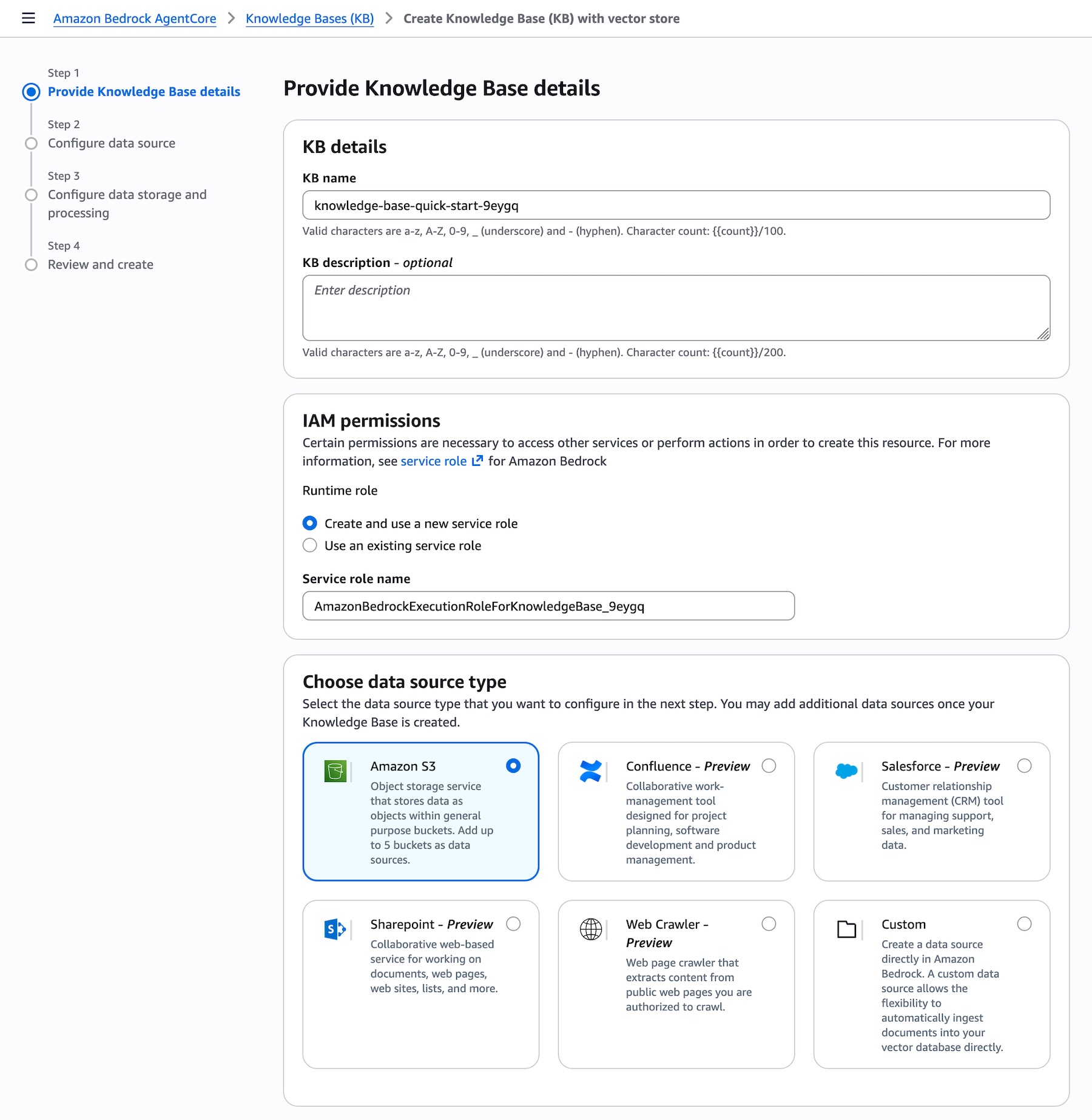
- Creation: Click "Create Managed KB" and select "Unstructured Vector Store KB."
- Connection: Use the intuitive dropdown menu to link data sources like Amazon S3, SharePoint, Google Drive, or OneDrive.
- Parsing: Allow the Smart Parsing engine to index the data.
- Deployment: Integrate the knowledge base with an AgentCore Gateway to expose the data to your preferred AI framework via MCP.
Conclusion
The launch of Amazon Bedrock Managed Knowledge Base is more than just a new feature release; it is a signal of the industry’s maturity. The "RAG hype" phase is giving way to a "RAG utility" phase, where the focus has shifted toward reliability, security, and integration.
By providing a robust, managed backbone for enterprise data, AWS is lowering the barriers to entry and enabling a new wave of intelligent agents. Whether you are using CrewAI for multi-agent orchestration or LlamaIndex for advanced data retrieval, the new Managed Knowledge Base provides the necessary infrastructure to ensure your AI applications are grounded in the facts of your business.
As we look toward the future of generative AI, one thing is clear: the winners will not necessarily be those with the biggest models, but those who can most effectively and securely connect those models to the deep, proprietary knowledge of their organization. With this launch, AWS has provided the tools to do exactly that.
 Dwi Wanna
  Lina Irawan
  Ammar Sabilarrohman