
 By Azzam Bilal Chamdy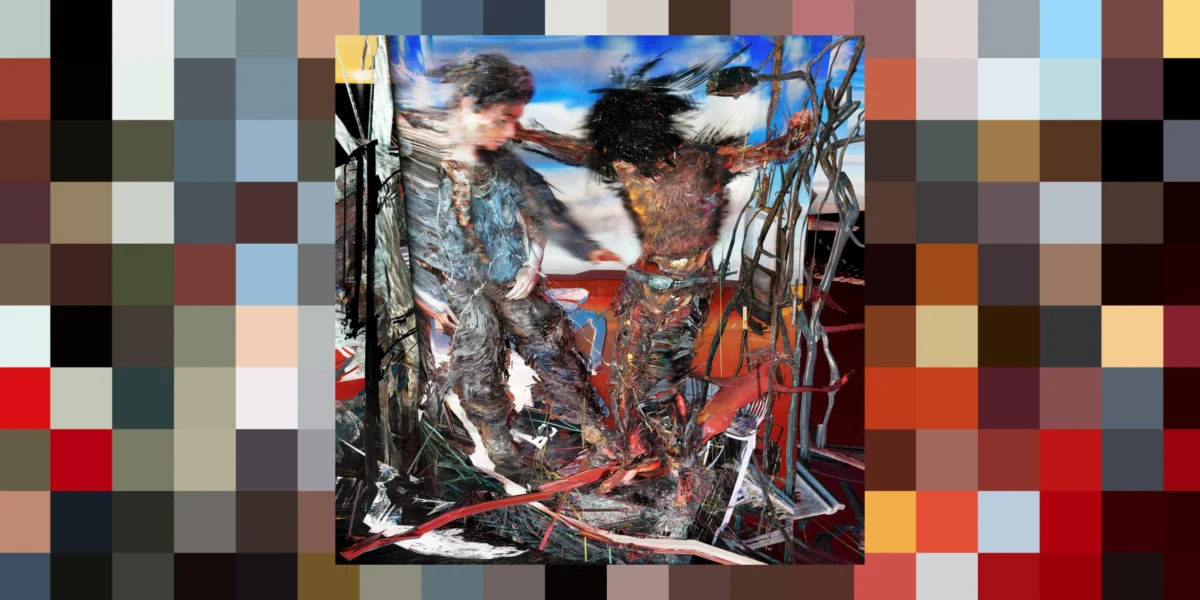
In the rapidly shifting landscape of modern experimental pop, few acts manage to capture the spirit of "maximalist chaos" with as much conviction as Cold Court. The Philadelphia-based brother-sister duo, comprised of Mini and Jojo, has arrived on the scene with their debut EP, (^_^) / (colloquially titled Hands Up). It is a record that defies easy categorization, acting as a sonic laboratory where the raw, visceral energy of analog instrumentation meets the sterile, unpredictable precision of digital manipulation. While comparisons to the hyperpop pioneers of the last half-decade—most notably 100 Gecs—are inevitable, Cold Court distinguishes itself through a self-serious, almost academic approach to noise. Where their contemporaries often lean into the ironic, meme-centric "goofiness" of the genre, Cold Court treats the synthesis of disparate influences as a serious pursuit of new soundscapes.
The Genesis of a Sound: A Chronological Deconstruction
To understand Cold Court, one must understand the lifecycle of their songwriting. The duo operates on a philosophy of "digital surgery." According to the band, the compositions on Hands Up originated in the traditional, time-honored fashion: drums and guitars played in a room. However, the true alchemy occurs during the post-production phase.
The EP’s opening track, "Nina," serves as the perfect case study for their creative timeline. The song begins with a grit and posture reminiscent of the mid-2000s dance-punk explosion—think the rhythmic propulsion of Franz Ferdinand or the jagged, frantic energy of Test Icicles. Yet, this is merely a feint. Roughly sixty seconds into the track, the listener is jolted out of the familiar as the skuzzy, organic guitar riffs are systematically dismantled, fed through a beat repeater, and reassembled into a stuttering, modern rhythm. The trajectory of "Nina" does not stop there; it eventually pivots into a mellow, progressive bridge that evokes the complex structural shifts of The Mars Volta, only to dissolve into a final, chaotic barrage of digital glitch.
This chronological layering—starting from an organic core and evolving into a digital monolith—is the defining feature of the record. The duo’s process suggests that for Cold Court, the "song" is never finished; it is simply a set of variables to be expanded, distorted, and eventually pushed to the brink of collapse.
Anatomy of a Single: The Maximalist Thesis of "Burn"
If Hands Up is an exercise in auditory density, the single "Burn" acts as its centerpiece. It is here that the duo’s various influences coalesce into a singular, seething statement. The track is a veritable "who’s who" of production techniques: big, stadium-ready rock riffs are layered beneath Daft Punk-esque robotic synths, while dubstep-inspired bass chops compete with heavily autotuned vocal melodies.
What is perhaps most impressive about "Burn" is its internal cohesion. Despite the sheer volume of competing elements, the track never feels like it is falling apart. Instead, it feels pressurized. The refrain, "I just want to see it burn, give a fuck about your word," delivered with a snarling, defiant urgency, serves as the anchor for the otherwise volatile production. While critics might point to the simplicity of the lyrics, the band clearly understands that in a landscape of sonic overload, the vocal serves as the emotional tether, keeping the listener grounded while the instrumentation threatens to spiral into the stratosphere.
The Supporting Data: Genre Fluidity and Technical Scope
The technical versatility on display throughout the 21-minute runtime of Hands Up is noteworthy, particularly given the duo’s relative youth. Cold Court does not rely on a single trick; they modulate their intensity across the EP’s tracklist to maintain engagement.
- "Cola" and the Art of Restraint: While the duo is clearly enamored with maximalism, they demonstrate an understanding of tension and release. "Cola" strips back the layers found in "Burn," allowing the listener to breathe while maintaining an aggressive, high-volume intensity.
- Math Rock Sensibilities in "Glass": The band leans into technical complexity here, with guitars that are chopped, spat out, and re-sequenced in a way that aligns them with the math-rock tradition, albeit through a purely electronic lens.
- The Prog-Electronic Finale: The closing track, "Light," functions as a summary of the EP’s mission statement: it is a blown-out, sparkly piece of progressive electronic music that brings the project to a close with a sense of deliberate finality.
The short duration of the EP—a mere 21 minutes—is a strategic masterstroke. In an era where streaming services reward longer, filler-heavy albums, Cold Court has opted for a "less is more" approach. By keeping the runtime lean, they avoid the "exhaustion factor" that often plagues experimental records, ensuring that the listener is left wanting more rather than feeling overwhelmed by the relentless auditory barrage.
Official Stance and Artistic Philosophy
While the duo has remained relatively quiet regarding long-form interviews, their work speaks to an evolving philosophy regarding the role of the computer in rock music. By treating the computer not as a tool for "cleaning up" recordings but as an instrument of destruction and reconstruction, Cold Court joins a lineage of artists who view the DAW (Digital Audio Workstation) as a canvas for high-art experimentation.
There is a sense of earnestness in their work that separates them from the "internet-first" generation of hyperpop. They are not chasing a trend; they are wrestling with the limitations of traditional rock, attempting to force it into a digital future. The result is a sound that feels heavy, intentional, and remarkably cohesive.
Implications for the Philly Scene and Beyond
The emergence of Cold Court from the Philadelphia music scene is significant. Philly has long been a hotbed for DIY, guitar-driven music, but the city has also seen an influx of experimental producers looking to bridge the gap between traditional band dynamics and electronic production. Cold Court represents the next logical step in this evolution.
Their rise carries several implications for the future of the genre:
- The Death of the Genre Purity: Cold Court’s success signals that audiences are becoming increasingly comfortable with "genre-fluid" listening. The expectation that a band must "stay in their lane" is rapidly eroding.
- The Digital-First Band: By starting with guitar and drums only to subject them to extreme digital manipulation, the band is setting a template for a new generation of musicians who are as comfortable with a pedalboard as they are with complex VST plugins.
- The Sustainability of Maximalism: The duo faces a significant challenge: how to scale this sound to a full-length album without becoming monotonous. At 21 minutes, Hands Up is a success; at 50 minutes, the same approach would require a much more sophisticated structural evolution.
Conclusion: A Promising Trajectory
Cold Court’s debut EP is a bold, defiant, and meticulously crafted piece of work. It captures the angst and the energy of a duo that is clearly still in the process of defining their boundaries. While they are currently operating in the shadow of giants like 100 Gecs, the "self-serious" edge they bring to their production suggests they are interested in building a legacy that lasts far longer than a viral trend.
As the duo grows, the primary question will be how they refine their "messy soup" of influences. Will they lean further into the glitch-heavy chaos, or will they find a way to make their rock-and-roll heart beat even louder beneath the digital surface? Whatever path they take, Hands Up stands as a compelling introduction to a band that is not afraid to break their own songs to see what makes them tick.
For those looking to dive into the world of Cold Court, the EP is currently available across all major streaming platforms, including Spotify, YouTube Music, Apple Music, Qobuz, and Deezer. It is a record that demands attention—not necessarily for its deep philosophical meaning, but for the sheer, unadulterated joy of hearing two musicians push their equipment to the absolute limit. In a crowded digital space, Cold Court is a band that refuses to be ignored.
 Raul Delapena Setiawan
  Siti Muinah
  Asro
Asro 