
 By Dwi Wanna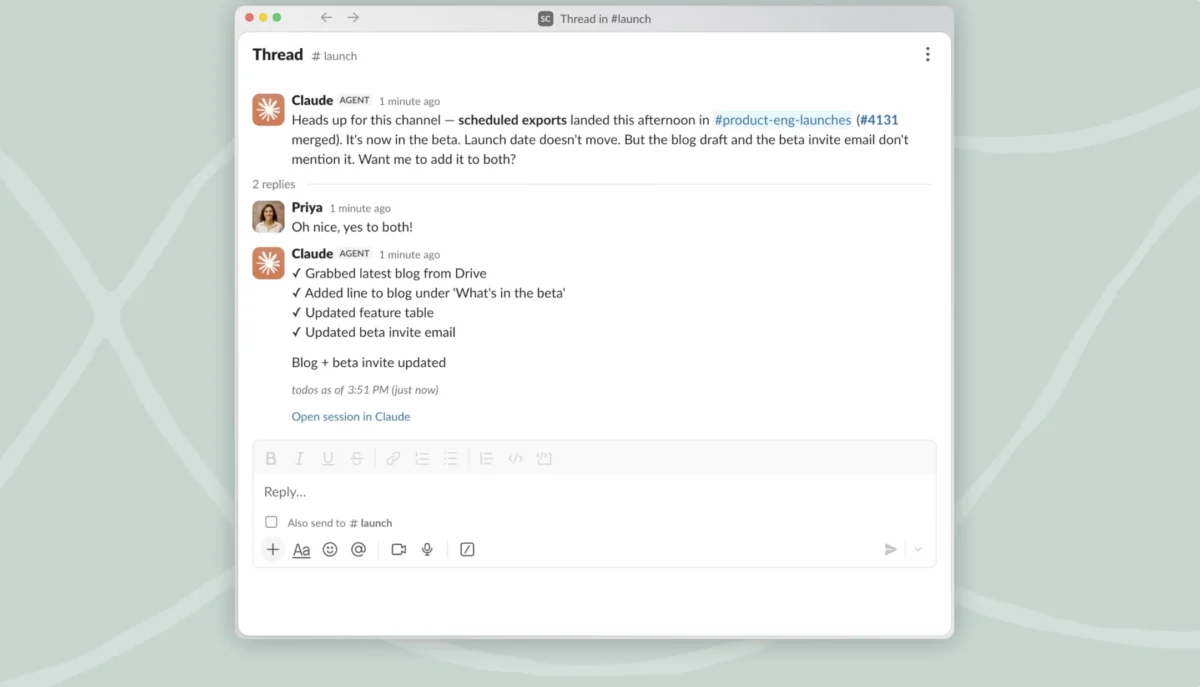
In a significant move to reshape how businesses interact with artificial intelligence, Anthropic has officially unveiled "Claude Tag." Moving beyond the traditional paradigm of AI as a standalone chatbot, Claude Tag serves as an "always-on" digital colleague embedded directly within Slack. Designed specifically for enterprise environments, the feature allows Claude to operate within shared workspaces, maintaining persistent memory and providing proactive support that bridges the gap between simple automation and true collaborative intelligence.
Currently available in beta for Claude Enterprise and Claude Team customers, Claude Tag represents a fundamental shift in the deployment of Large Language Models (LLMs) in the workplace. By allowing users to @mention Claude within channels to assign tasks or request insights, Anthropic is positioning its flagship model as a permanent, context-aware member of the team.
The Chronology of Anthropic’s Slack Integration
The arrival of Claude Tag is not an isolated development but rather the latest milestone in a calculated, iterative strategy to dominate the enterprise workflow. To understand the significance of this launch, one must look at the progression of Anthropic’s workplace tools over the past several years.
Phase 1: The On-Demand Assistant
Initially, Anthropic’s presence in Slack was purely reactive. Users could DM @Claude or tag it in a channel for quick, one-off questions or creative drafting. These interactions were siloed; each query was a "blank slate," meaning the AI lacked long-term memory of previous discussions or the evolving state of a project.
Phase 2: Functional Automation
As user demand grew, Anthropic introduced specialized integrations. A notable example was the implementation of "Claude Code" within Slack. This allowed developers to route complex coding tasks directly from a chat thread to a full-fledged coding session on the web, with updates posted back into the Slack thread upon completion. This was the first true step toward "agentic" workflows—where the AI moved from being a participant in a conversation to a driver of execution.
Phase 3: Persistent Context (The Current State)
Claude Tag represents the maturation of these earlier efforts. By establishing a persistent identity that "lives" in a channel, Anthropic has solved the "amnesia" problem. The model no longer needs to be brought up to speed on a project from scratch; it observes the flow of work, remembers prior decisions, and maintains an ambient awareness of the team’s goals.
The Mechanics of "Always-On" Intelligence
What sets Claude Tag apart from its predecessors is its ability to serve as a shared, communal entity. In a traditional setup, an AI is tethered to an individual user’s account. With Claude Tag, the AI is tethered to the channel.
Collective Memory and Shared Access
Because Claude Tag resides within a specific Slack channel, every team member has access to the same AI identity. If one team member tasks Claude with drafting a project plan, a colleague can jump into the thread hours later, review what Claude has already produced, and provide feedback or assign the next stage of the project. This continuity ensures that the AI’s labor is transparent and cumulative, effectively acting as an institutional memory bank for the group.
Security and Scoping
Enterprise security remains the primary barrier to AI adoption. Anthropic has addressed this by giving administrators granular control. Admins define exactly which tools, data sources, and channels a specific Claude instance can access. For instance, a Claude instance assigned to the Legal department can be strictly isolated from the Engineering channel, preventing cross-contamination of sensitive information. This "scoping" ensures that while the AI is helpful, it remains compliant with internal data governance policies.
Ambient Awareness
Perhaps the most ambitious aspect of Claude Tag is its "ambient mode." Rather than waiting for a direct prompt, the AI can proactively interject to provide updates, flag potential bottlenecks identified in cross-channel data, or follow up on tasks that have slipped through the cracks. This transition from "AI as a tool" to "AI as a coworker" is designed to reduce the administrative burden of project management, as the AI itself monitors the pulse of the team’s progress.
Implications for the Enterprise AI Landscape
The launch of Claude Tag highlights a broader, industry-wide race to define the "intelligence layer" of the modern corporation. As organizations move past the "novelty" phase of generative AI, they are now demanding tools that can handle the nuance of organizational context—the specific jargon, history, and internal logic that define a company’s operations.
The War for Context
Anthropic is by no means acting in a vacuum. The competition for the enterprise desktop is fierce:
- Microsoft Copilot and Graph: Microsoft continues to leverage the massive footprint of the Microsoft 365 ecosystem. By tapping into the "Graph"—the map of a company’s data, emails, and meetings—Copilot aims to be the central nervous system of the enterprise.
- Data Infrastructure Giants: Companies like Snowflake and Databricks are increasingly positioning their platforms not just as storage, but as the "tacit knowledge" centers of the company. Their argument is that for an agent to be truly useful, it must have direct access to the structured data that defines business performance.
- The Intelligence Layer: Startups like Glean are building a distinct layer between the AI model and the raw enterprise data. This layer is designed to understand company-specific context, ensuring that when an employee asks a question, the answer is grounded in the company’s internal "source of truth."
Anthropic’s strategy with Claude Tag is to provide this "intelligence layer" directly within the interface where work already happens: Slack. By bypassing the need for employees to toggle between a chatbot and their project management software, Anthropic is betting that workflow integration is the ultimate competitive advantage.
Official Responses and Future Outlook
In its briefing, Anthropic emphasized that the goal of Claude Tag is to simulate the experience of working with a highly competent, perpetually available human colleague. By producing work in a public forum—the Slack thread—the AI allows for human oversight and collaboration, which the company believes is critical for maintaining trust in high-stakes environments.
"Claude Tag isn’t just about speed," an Anthropic spokesperson noted during the announcement. "It’s about visibility. When the AI works in the open, teams can refine its output, correct its course, and build upon its contributions. It transforms the AI from a ‘black box’ into a visible, accountable participant."
The Challenges Ahead
Despite the promise, the deployment of "always-on" AI agents presents significant challenges. The risk of "AI noise"—where an over-eager agent floods a channel with redundant updates—is a primary concern for productivity-focused teams. Furthermore, the reliance on an AI to track tasks requires high-level data hygiene; if a team’s Slack culture is disorganized, the AI will likely inherit that disorganization.
Conclusion: The New Normal of Collaborative AI
The introduction of Claude Tag marks the end of the "Chatbot Era" and the beginning of the "Agentic Era." Companies are no longer satisfied with models that simply generate text; they require systems that can integrate, remember, and proactively assist in complex, multi-stage workflows.
As Anthropic rolls out this beta, the industry will be watching closely to see if the promise of "ambient intelligence" translates into measurable productivity gains. If successful, Claude Tag could set the new standard for how enterprises deploy AI, turning the chat interface into the central operating system of the digital workplace.
For now, the technology remains in its infancy, but the direction is clear: the AI of the future won’t just be a resource you go to—it will be a teammate that sits right beside you, following the thread of your work, and helping you carry the load.
 Sagoh
Sagoh  Iffa Jayyana
  Lina Hope