
 By Lina Hope
The print-on-demand (POD) landscape has undergone a seismic shift. Once defined by thin, generic blanks and low-resolution transfers, the industry has evolved into a sophisticated engine for independent brands. At the heart of this evolution stand two platforms with vastly different philosophies: Printful, the long-standing titan of global logistics, and Tapstitch, the rising challenger focused on high-end streetwear aesthetics.
Choosing between them is no longer just about price—it is about the fundamental DNA of your brand. Are you a creator looking for an expansive catalog to test diverse product ideas, or are you a fashion designer seeking the specific weight, drape, and print fidelity of a premium garment?
In this comprehensive analysis, we break down the mechanics of both platforms to help you determine which architecture best supports your business objectives.
Main Facts: Defining the Two Titans
Printful: The Global Ecosystem
Printful operates as a massive, vertically integrated logistics network. It is the "safe" choice for the vast majority of sellers. With over 12 global fulfillment centers, a staggering 479+ SKU catalog, and deep integrations with nearly every major sales channel, Printful is designed for scale and versatility. Its business model is built on reliability and consistency, ensuring that whether you are selling in Tokyo, Berlin, or New York, your product quality remains predictable.
Tapstitch: The Fashion-First Specialist
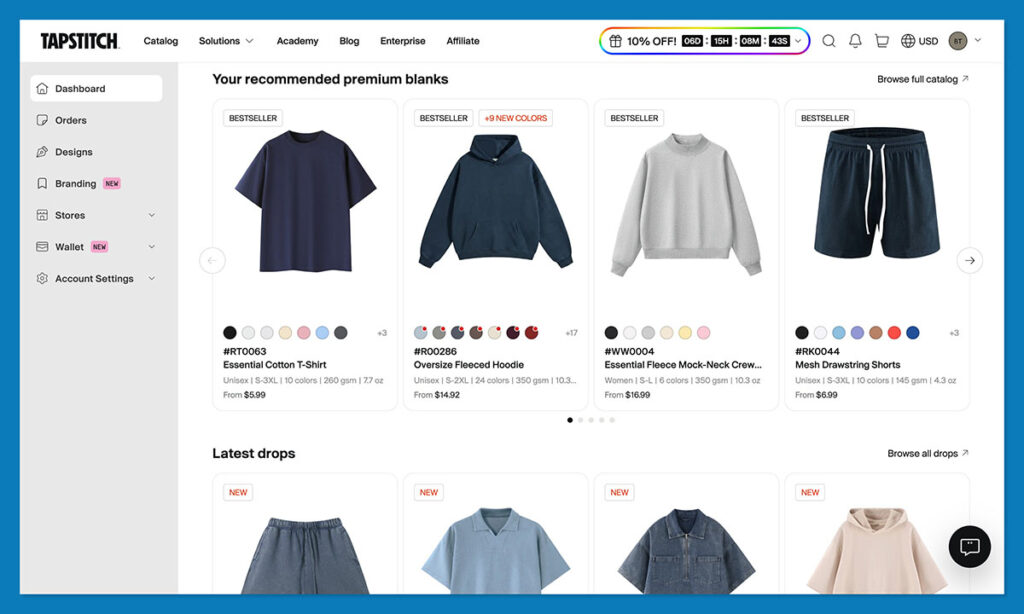
Tapstitch is the antithesis of the generalist approach. It is built for the "apparel-first" entrepreneur. Rather than offering mugs, phone cases, or yoga mats, Tapstitch restricts its catalog to roughly 400+ fashion-forward blanks. The platform emphasizes high-GSM (grams per square meter) fabrics, oversized cuts, and specific streetwear aesthetics. It operates on a leaner, more boutique-centric model, prioritizing the "retail-ready" feel of the garment over the breadth of the product range.
Chronology: The Evolution of POD Technology
The history of POD is marked by a steady progression from simple screen printing to complex digital workflows.
- The Era of Standardization (2013–2018): Printful established itself as the gold standard by standardizing quality. They proved that POD didn’t have to be "cheap" or "disposable." During this time, the focus was on establishing global fulfillment footprints to compete with traditional retail shipping speeds.
- The Rise of Niche Craftsmanship (2020–Present): As the market became saturated with basic designs, consumer expectations skyrocketed. Brands began demanding heavy-weight cotton, drop-shoulder silhouettes, and consistent white ink under-bases for DTG (Direct-to-Garment) printing.
- The Tapstitch Emergence: Recognizing a gap in the market for high-fashion aesthetics that traditional POD struggled to deliver, platforms like Tapstitch entered the fray. They shifted the focus from "what can we print on?" to "how does the garment feel to the touch?" This marked a departure from the "merch store" mentality toward a "clothing brand" methodology.
Supporting Data: A Side-by-Side Performance Audit
To understand the practical implications of choosing one over the other, we must examine the hard metrics.
| Category | Tapstitch | Printful |
|---|---|---|
| Catalog Breadth | 400+ apparel-only blanks | 479+ items (apparel, home, art) |
| Primary Markets | US & China | 12+ global locations |
| Best For | Streetwear & Fashion | General Merch & Global Scale |
| Integration | Shopify, Etsy, Wix | 21+ platforms (API available) |
| Pricing Model | Pay-per-order | Free + Optional Growth Plan |
The Pricing Paradox
While neither platform charges a mandatory entry fee, their pricing structures diverge as you scale.
- Tapstitch maintains a flat, pay-per-order model. For a boutique brand running small, high-margin drops, this is ideal. There is no overhead cost to worry about.
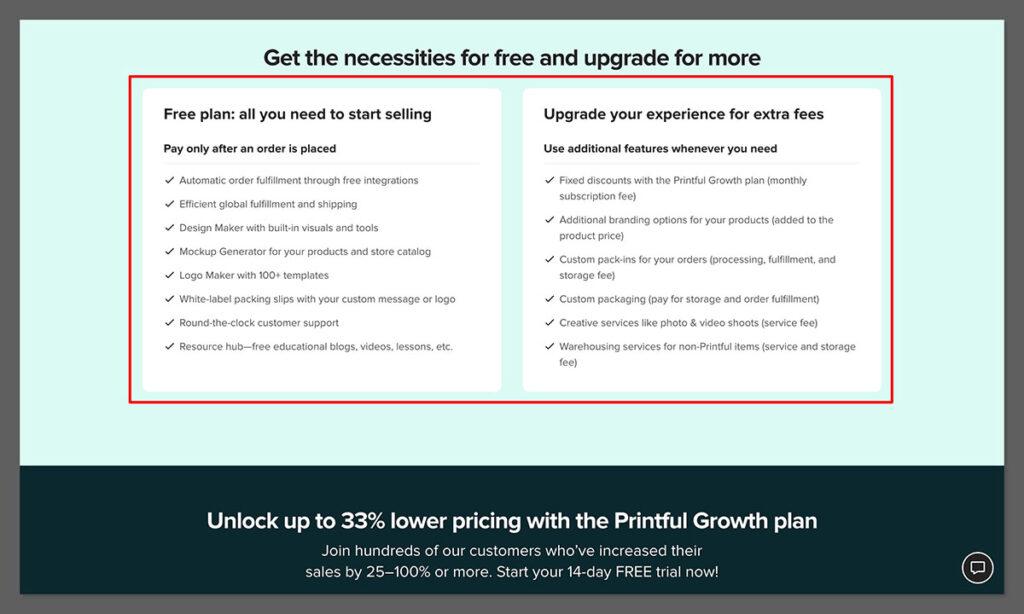
- Printful offers a "Growth" subscription (approximately $24.99/mo). For a store moving hundreds of units a month, the 33% discount on production costs makes the subscription pay for itself almost instantly.
The Quality Gap: Why "Feel" Matters
The most frequent complaint in the POD community—aside from shipping times—is the "cheap feel" of garments. Printful has largely solved the consistency problem, though users occasionally note a 0.5-inch variance in print placement due to the sheer volume of their operations.
Tapstitch, however, is being lauded for its focus on high-GSM fabrics. In the streetwear world, a 300 GSM hoodie is the baseline expectation. Tapstitch’s integration of modern DTF (Direct-to-Film) printing for dark fabrics ensures that the color vibrancy on a premium black hoodie remains sharp after repeated washes. For a brand that charges $50+ for a hoodie, this quality is not a luxury; it is a requirement.
Official Responses and Platform Philosophies
When reached for comment on their respective roadmaps, both platforms emphasize different end-goals.
Printful’s leadership consistently highlights their investment in automation and ecosystem stability. Their goal is to allow a creator to wake up, design a product, and have it listed on TikTok Shop, Amazon, and their own Shopify site simultaneously. They view themselves as the infrastructure layer of e-commerce.
Tapstitch’s representatives focus on curation. They argue that the future of POD is not in offering everything to everyone, but in providing the tools for designers to create a "retail-grade" collection. By limiting their catalog, they control the supply chain more tightly, ensuring that the specific blanks used in their collections are consistently available and of a higher caliber than the mass-market alternatives found in generalist catalogs.
Implications: Which Platform Should You Choose?
The Case for Printful: The Scaling Engine
You should choose Printful if your business model relies on:
- Marketplace Dominance: You need to sell on Amazon, eBay, or TikTok Shop.
- Global Reach: You have customers in Australia, Japan, or the UK who expect fast, local shipping.
- Diversification: You want to test the market with phone cases, canvas prints, or embroidered hats before deciding on a hero product.
- Growth Strategy: You plan to scale to thousands of orders per month and want to leverage volume discounts.
The Case for Tapstitch: The Brand Builder
You should choose Tapstitch if your business model relies on:
- Brand Identity: You are building a streetwear or fashion brand where the quality of the blank is part of your brand’s value proposition.
- Simplified Workflow: You prefer a curated, smaller catalog that allows you to master your designs without getting lost in 500+ product options.
- Aesthetic Focus: You need specific garment cuts (oversized, drop-shoulder, heavy-weight) that standard POD providers often treat as "premium" add-ons rather than a standard offering.
- US-Centric Sales: Your primary customer base is located in the United States, where Tapstitch’s LA-based production facility can provide rapid turnaround times.
Final Verdict: The Strategic Choice
The decision between Tapstitch and Printful is ultimately a reflection of your business maturity.
Printful is the gold standard for the merchant. It is the platform for the entrepreneur who wants to build a broad, multi-channel empire with as little friction as possible. Its failures are rare, its reach is global, and its infrastructure is arguably the best in the industry.
Tapstitch is the gold standard for the designer. It is for the visionary who views the garment as the canvas. If your brand lives or dies by the weight of the cotton and the precision of the fit, the minor sacrifices in integration and global reach are worth the trade-off for a superior physical product.
Our recommendation: If you are unsure, start with a sample from both. Order the same graphic on a heavy-weight tee from Tapstitch and a standard tee from Printful. Feel the difference, wash them five times, and see which one aligns with the brand image you are trying to cultivate. In the world of modern e-commerce, your product quality is your reputation—choose the platform that protects that reputation best.
 Dwi Wanna
  Lina Irawan
  Basiran