
 By Lina Hope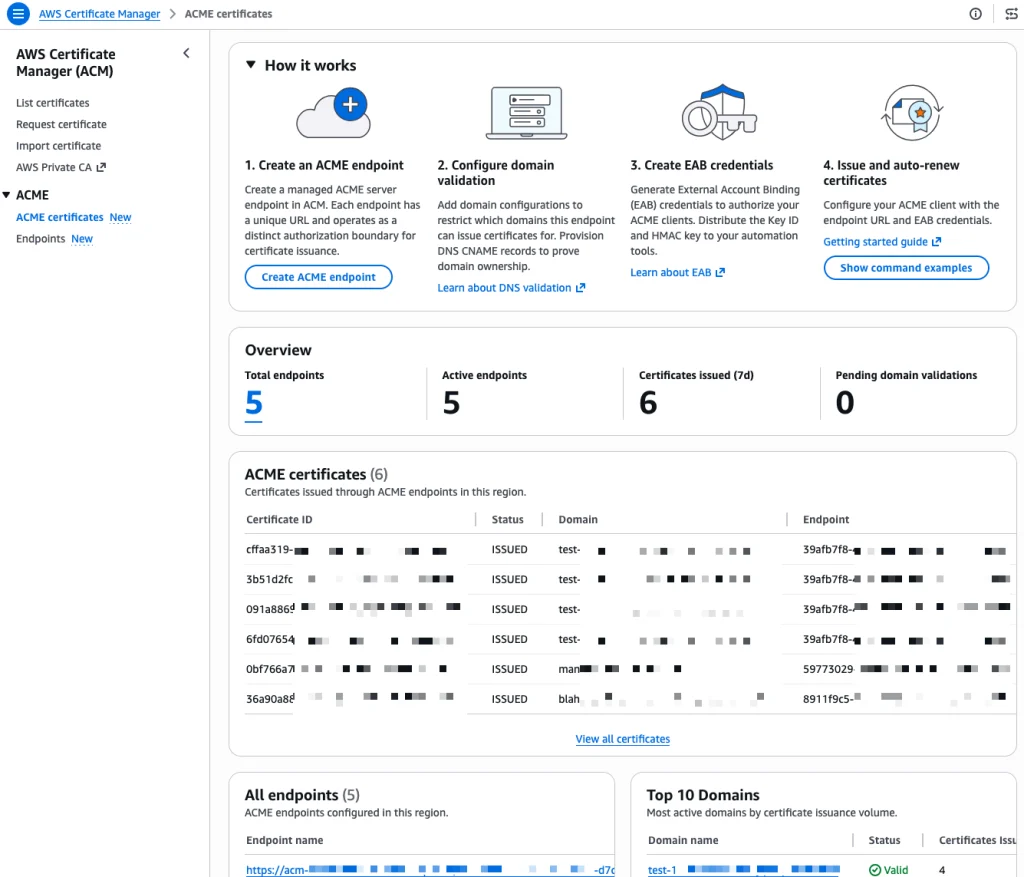
In an era where cybersecurity threats are evolving at a breakneck pace, the integrity of Transport Layer Security (TLS) has never been more critical. As industry standards push for significantly shorter certificate lifespans—moving toward a 47-day validity period by 2029—manual management of digital certificates has become a liability. Today, Amazon Web Services (AWS) has addressed this operational bottleneck by announcing native support for the Automatic Certificate Management Environment (ACME) protocol within AWS Certificate Manager (ACM).
This development represents a seismic shift for PKI (Public Key Infrastructure) administrators, offering a unified, automated, and highly governable framework for issuing and renewing public TLS certificates. By integrating ACME—the industry-standard protocol famously utilized by Let’s Encrypt—directly into the ACM ecosystem, AWS is bridging the gap between open-source automation and enterprise-grade security controls.

The Core Challenge: Why Automation is No Longer Optional
For years, the manual renewal of TLS certificates was a manageable, albeit tedious, IT task. However, the regulatory landscape is shifting. The Certification Authority/Browser (CA/B) Forum has mandated a reduction in maximum certificate validity periods to 100 days by March 2027, with further tightening to 47 days by 2029.
In this new paradigm, the margin for human error effectively vanishes. An expired certificate triggers browser warnings, halts service communication, and damages brand trust. Until today, organizations requiring automated certificate lifecycles often had to juggle fragmented solutions: using ACM for some services while relying on external, often disparate, ACME-based certificate authorities (CAs) for others. This "siloed" approach resulted in poor visibility, inconsistent security policies, and an increased risk of certificate expiration outages.

A Chronology of the Integration
The path to today’s announcement has been driven by customer demand for greater interoperability within the AWS ecosystem.
- Pre-2024: AWS customers primarily relied on ACM for managed certificates or utilized external CAs with ACME clients. The lack of an integrated ACME server meant that developers using tools like Certbot or Kubernetes
cert-managerhad to integrate with third-party providers, complicating audit trails and billing. - Early 2026: Recognizing the industry trend toward shorter lifespans, AWS development teams began testing a fully managed ACME endpoint that would allow native integration with Amazon Trust Services.
- June 2026: Official launch of ACME support for public certificates within ACM. This allows any ACMEv2-compatible client to request certificates directly from the AWS infrastructure, maintaining the high standards of Amazon Trust Services while benefiting from the flexibility of the ACME protocol.
Technical Implications: How the New System Works
The introduction of ACME support in ACM is not merely a feature addition; it is an architectural upgrade to how certificate lifecycle management is handled at scale.
The Role of External Account Binding (EAB)
Central to this new implementation is External Account Binding (EAB). EAB provides a secure handshake between the ACME client and the AWS server. By using a unique Key ID and an HMAC key, developers can authenticate their clients to the ACM endpoint. This mechanism ensures that only authorized entities can request certificates, adding a vital layer of security that prevents unauthorized domain validation.
Centralized Governance and Policy Enforcement
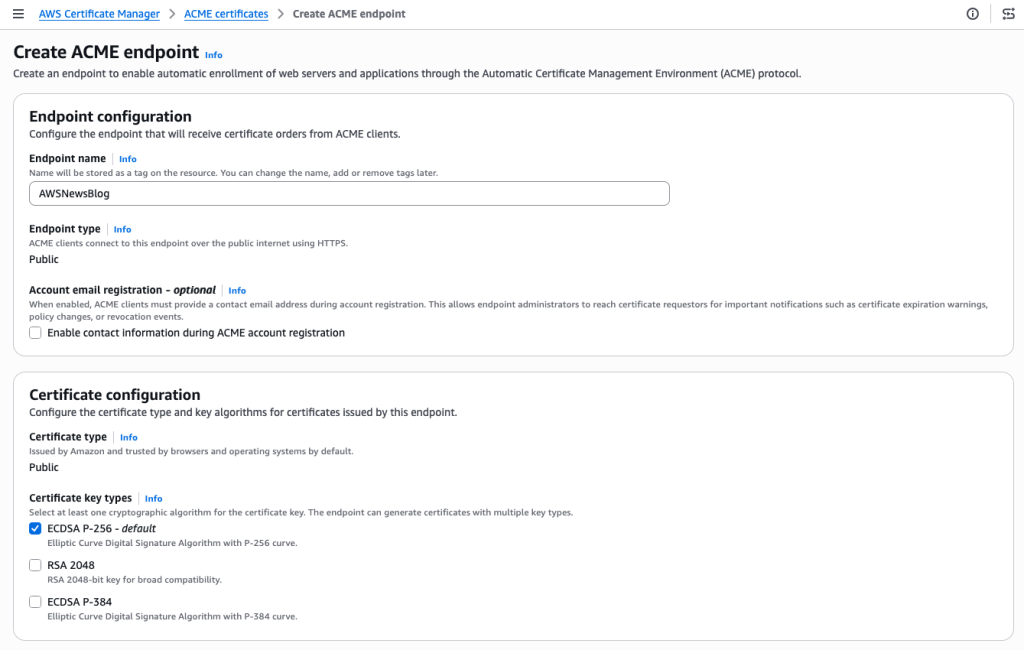
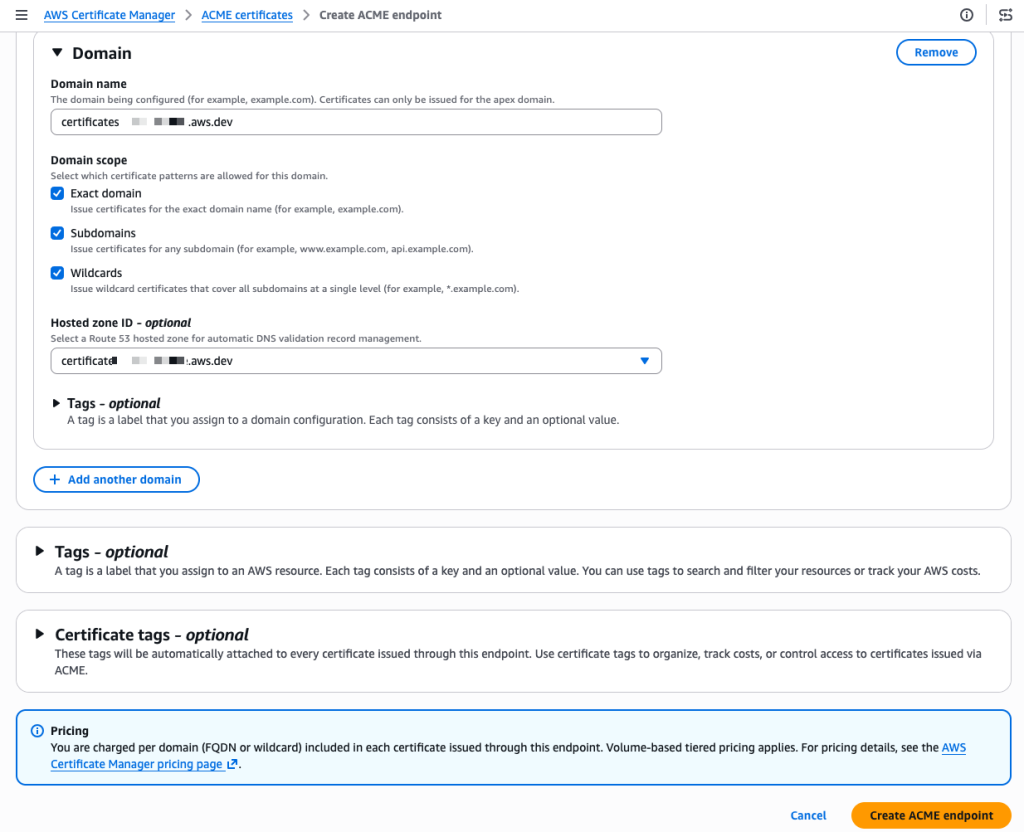
Unlike traditional, decentralized ACME setups, the AWS implementation provides a "command and control" layer. PKI administrators can define specific domain scopes at the endpoint level. For instance, a security team can authorize a specific service to request certificates for api.example.com while strictly forbidding the issuance of wildcard certificates for the entire example.com domain. This granular control allows organizations to delegate certificate issuance to development teams without surrendering control over the underlying DNS or security policies.
Seamless Integration with AWS Services
The integration extends into the broader AWS observability suite:
- AWS CloudTrail: Every request made through the ACME endpoint is logged, providing a comprehensive audit trail for compliance teams.
- Amazon CloudWatch: Administrators can track operational metrics, such as issuance frequency and error rates, to identify potential misconfigurations before they lead to service outages.
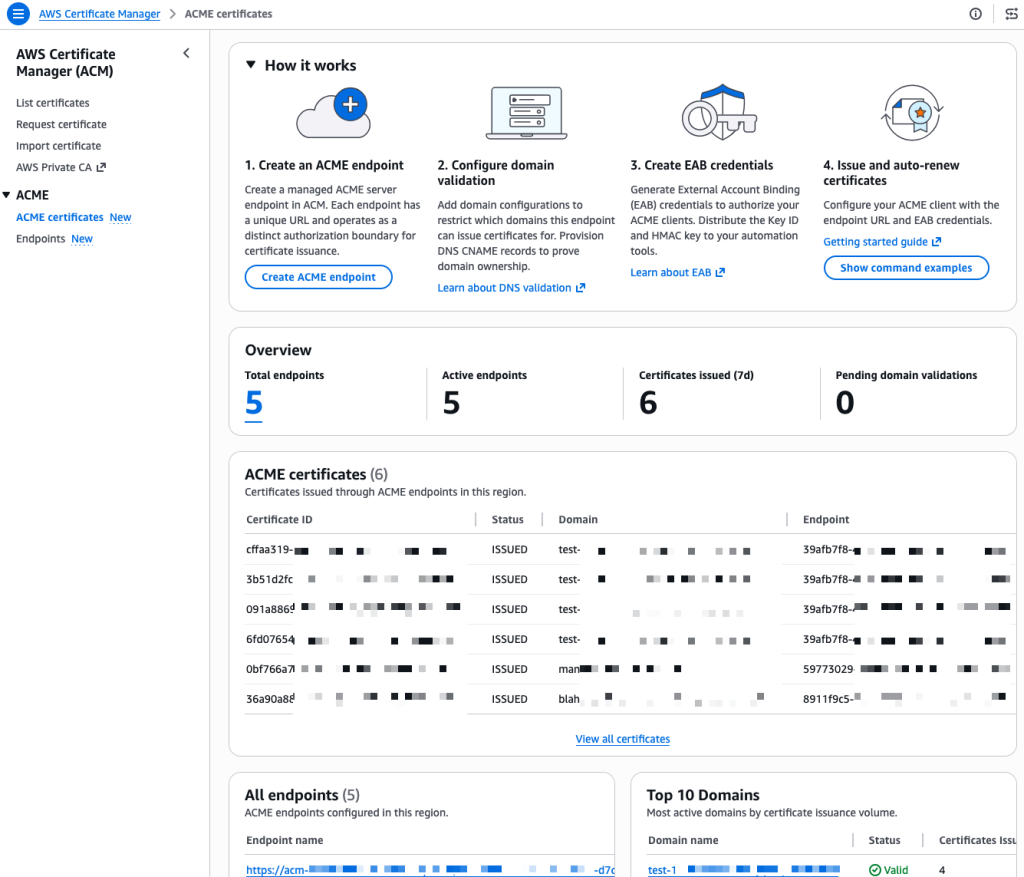
- Unified Dashboard: All certificates—whether issued via the ACM console, API, or the new ACME endpoints—appear in a single, unified view, eliminating the "hidden certificate" problem.
Implications for Developers and PKI Administrators
For the average DevOps engineer, the benefits are immediate. Tools such as Certbot, cert-manager for Kubernetes, and acme.sh now function as first-class citizens within the AWS environment.
Reducing Operational Overhead
Previously, maintaining a custom PKI layer or purchasing third-party management software was the standard way to handle large-scale certificate automation. By embedding these capabilities into ACM, AWS effectively commoditizes the management layer. Developers can configure their automation scripts to point to the new ACM ACME URL, and the rest is handled by the managed service.
Security and Compliance at Scale
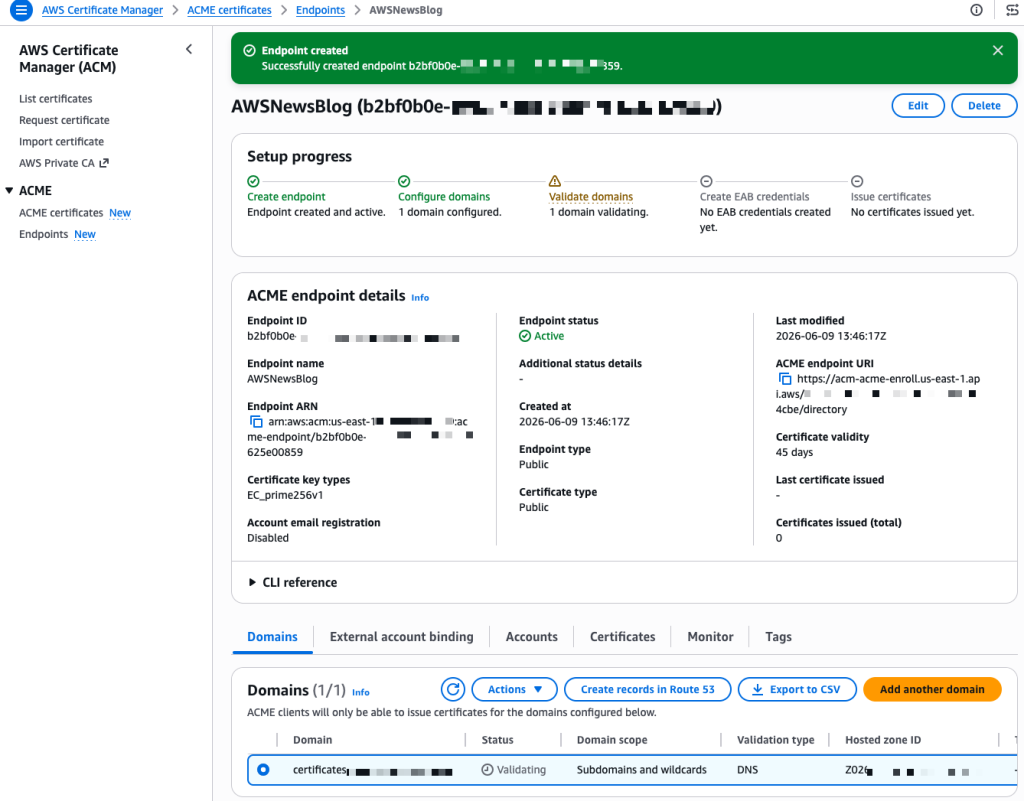
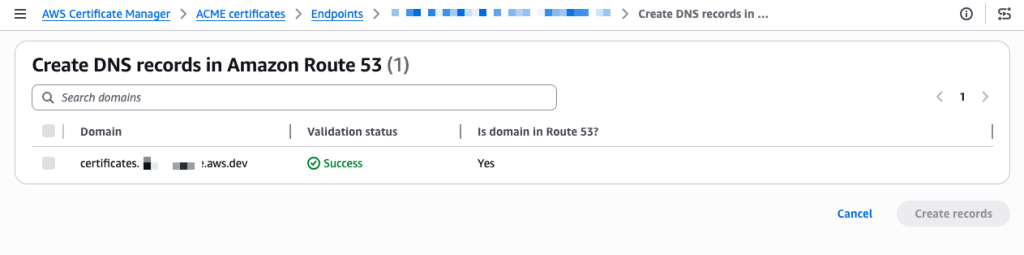
One of the most significant hurdles in automated certificate issuance is domain validation. Often, this requires exposing DNS credentials to various applications or scripts, which is a major security risk. With the AWS ACME implementation, the PKI administrator performs the domain validation once at the endpoint level. Because the endpoint handles the validation logic (often via Route 53 integration), the application owners do not need access to sensitive DNS credentials. This separation of duties is a cornerstone of modern Zero Trust architecture.
Supporting Data and Strategic Positioning
The shift toward ACME is part of a broader industry push for "Security by Default." By aligning with the ACME protocol, AWS ensures that its customers are not locked into proprietary workflows.
- Compatibility: The system is fully compliant with ACMEv2, meaning any client that supports standard RFC 8555-compliant servers can be used.
- Scalability: Because the service is managed by AWS, it scales automatically to handle thousands of requests per second, a necessity for modern microservices architectures where ephemeral containers frequently spin up and down, requiring unique certificates for each instance.
- Pricing Efficiency: Pricing is structured per domain, with volume-based tiers. This makes the service cost-effective for both startups and large enterprises, as the cost scales linearly with the number of certificates managed, rather than requiring upfront investments in dedicated management platforms.
Official Perspective and Future Outlook
While AWS has not issued a singular "CEO-level" statement on the matter, technical leadership within the AWS Certificate Manager group has emphasized that this update is about "removing the friction of security." The goal is to make the process of securing communications as invisible and reliable as possible.
Looking ahead, industry experts suggest that this move will likely accelerate the adoption of even shorter certificate lifespans. As the complexity of managing 47-day certificates is removed, organizations will be less resistant to further reducing lifespans to 30 or even 7 days, significantly narrowing the window of opportunity for an attacker to utilize a compromised certificate.
Conclusion: A New Standard for Digital Trust
The introduction of ACME support in AWS Certificate Manager is a watershed moment for the industry. It acknowledges that manual processes are no longer compatible with the speed and scale of modern cloud-native applications.
By providing a robust, highly governable, and deeply integrated ACME server, AWS has provided its users with a clear path forward. Organizations can now move away from the "firefighting" mode of certificate management and toward a proactive, automated posture that is ready for the rigorous security requirements of the coming decade. As we approach the 2027 and 2029 deadlines for reduced validity, this toolset will undoubtedly prove to be a foundational component of the secure digital infrastructure.
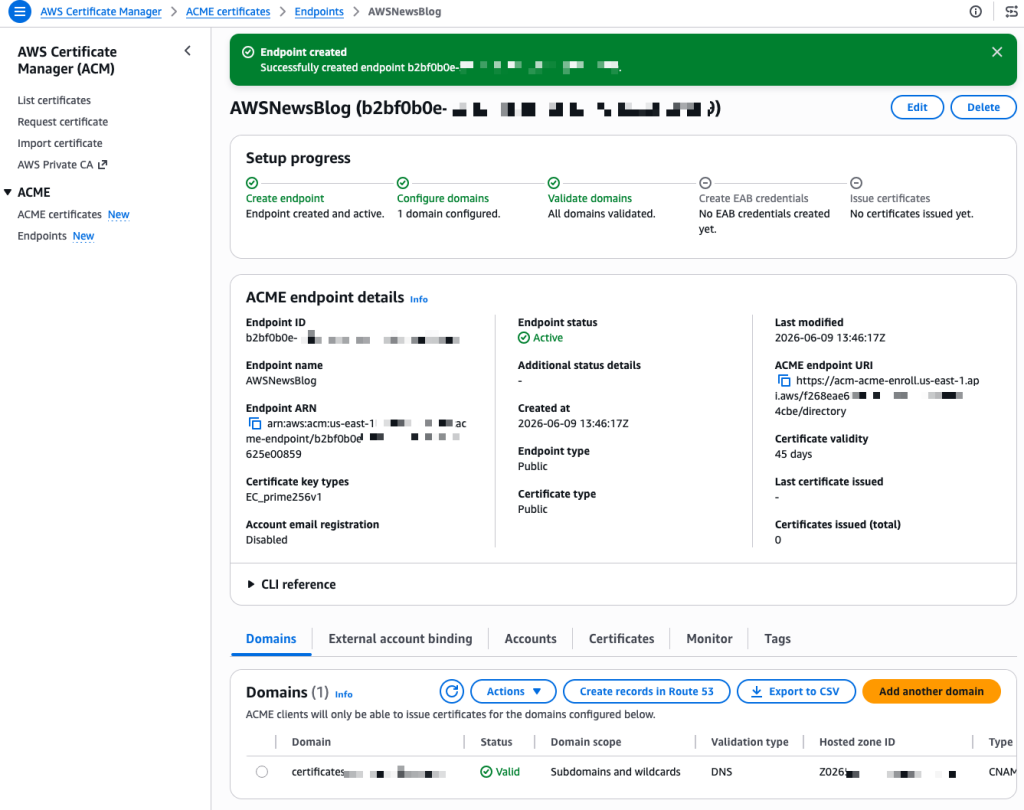
For those ready to implement these changes, the AWS Management Console now includes a dedicated "ACME certificates" section, where endpoints can be created and managed with just a few clicks. With comprehensive documentation and CLI examples available for popular clients, the transition to automated, compliant, and secure certificate management is now more accessible than ever before.
 Neng Nana
  Suro Senen