
 By Nana Muazin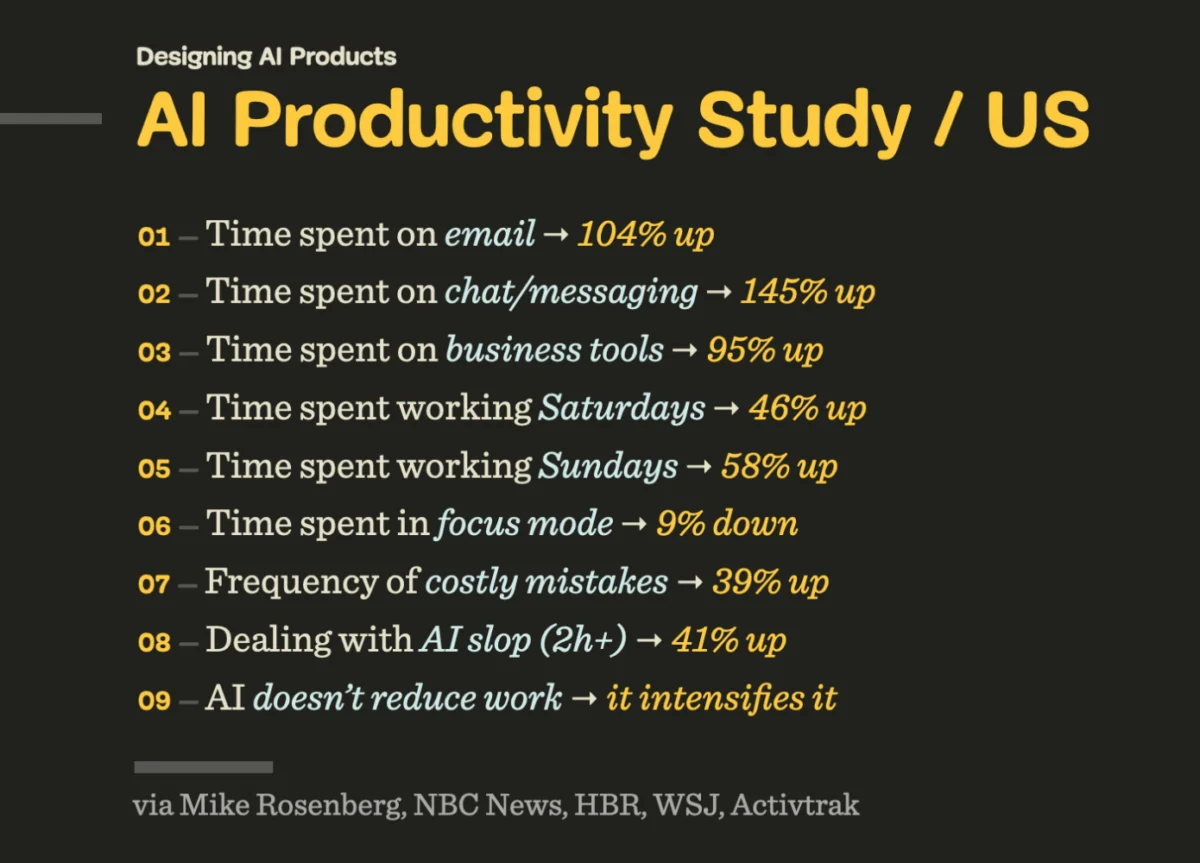
In the boardroom of almost every major technology firm and enterprise, a silent but powerful assumption has taken hold: that the modern consumer and employee are starving for more Artificial Intelligence. The prevailing narrative suggests that users are "craving" new AI features, workflows, and products—a digital panacea that will magically dissolve outdated practices and broken systems.
However, a growing body of evidence suggests a starkly different reality. Far from embracing the "AI-first" future envisioned by Silicon Valley, a significant portion of the global workforce and consumer base is experiencing what experts call "AI fatigue." The reality is that people do not necessarily want more AI; they want tools that work, systems that respect their time, and technology that augments rather than disrupts their lives. As AI features continue to suffer from low adoption and high abandonment rates, the industry is facing a reckoning: the cost of delivering these features is skyrocketing, while the value proposition remains, for many, entirely unproven.
Main Facts: The Disconnect Between Vision and Utility
The fundamental friction in the current AI landscape lies in the definition of value. Many AI "innovations" currently hitting the market are what product designers call "bolt-ons"—features added to existing software without a clear understanding of the user’s existing mental model or workflow.
The "Bolt-On" Fallacy
Rather than solving a specific pain point, many AI features are being forced into interfaces where they don’t belong. This forces users to "hop" between their regular tools and a new, often unpredictable AI interface. Instead of streamlining work, this creates a fragmented experience that increases cognitive load.
The Failure of AI as a Value Proposition
According to research from the Nielsen Norman Group (NNG), "Powered by AI" is not a value proposition in itself. For a feature to be valuable, it must solve a problem more efficiently or effectively than existing methods. Currently, many AI tools are being marketed based on the technology they use rather than the utility they provide. When AI is treated as a "Key Resource" or "Key Activity" within a business model, it can be transformative; when it is treated as the "Value Proposition" itself, it often fails to resonate with users who care more about outcomes than algorithms.
High Cost, Low Retention
The financial stakes are immense. Developing and maintaining Large Language Models (LLMs) and generative AI features requires massive capital expenditure in the form of GPUs, energy, and specialized talent. Despite this investment, studies—including a 2024 IBM study on the "AI Adoption Gap"—indicate that retention for these features is surprisingly low. Users may try a new AI chatbot once out of curiosity, but they rarely integrate it into their daily habits if it adds more work than it saves.
Chronology: The Rise and Stall of the AI Integration Trend
To understand the current state of skepticism, one must look at the rapid evolution of the AI hype cycle over the last two years.
- Late 2022 – Early 2023: The Curiosity Phase. The public release of ChatGPT and DALL-E 2 sparked a global fascination. For the first time, generative AI was accessible to the masses. Companies scrambled to announce "AI strategies" to appease shareholders, leading to a surge in experimental pilots.
- Mid 2023: The "AI-First" Mandate. Major software suites (Microsoft, Google, Adobe) began integrating AI assistants (Copilots) into their core products. The industry mantra became "AI-First," with the assumption that every text box and button should eventually be replaced by a prompt or a generative agent.
- Late 2023 – Early 2024: The Implementation Friction. As these tools reached the enterprise level, the "hidden costs" became apparent. IT departments struggled with data privacy, and employees began reporting that AI-generated drafts required more time to edit and "de-hallucinate" than writing from scratch would have taken.
- Mid 2024 – Present: The Pragmatic Backlash. We are now entering a phase of healthy skepticism. Users are pushing back against "AI slop"—unreliable, AI-generated content that litters the web. There is a growing demand for "AI-second" design, where the technology stays in the background, handling mundane tasks without demanding center stage.
Supporting Data: The Hidden Productivity Tax
While AI is often sold as a productivity booster, recent data suggests it may be having the opposite effect in its current form. A compilation of studies from sources including NBC News, Harvard Business Review (HBR), and the Wall Street Journal reveals a troubling trend in AI-saturated workplaces:

- Increased Communication Overhead: Time spent on email has increased by 104%, and time spent on chat/messaging apps has surged by 145% in some AI-enabled environments. This suggests that AI-generated content is creating a "noise" problem that requires more human intervention to manage.
- The Weekend Creep: Productivity studies have noted a 46% increase in Saturday work and a 58% increase in Sunday work among employees using certain "productivity-enhancing" AI tools.
- Quality and Reliability Issues: Costly mistakes in documentation and data entry have risen by 39%, and employees report a 41% increase in time spent "dealing with AI slop"—cleaning up errors or hallucinations produced by automated systems.
- The Focus Deficit: Despite the promise of "Focus Mode," deep work has actually decreased by 9% as users are constantly interrupted by AI suggestions and the need to manage multiple disconnected systems.
These figures highlight a critical irony: AI doesn’t always reduce work; it often intensifies it by creating more "meta-work"—the work of managing the tools that were supposed to do the work.
Official Responses and Industry Perspectives
The debate over AI’s role in society is not just a matter of productivity; it is a matter of philosophy. Industry leaders and UX experts are increasingly divided on how AI should be presented to the user.
The UX Perspective:
Vitaly Friedman, a prominent voice in the design community, argues that the industry has misjudged what people actually want. "People don’t dream of AI art museums or AI-narrated children’s books," Friedman notes. "They want features that are fast, accessible, reliable, predictable, and useful—every single time." The design community is calling for a shift toward "Ambient AI"—technology that works silently in the background to automate boring tasks like data entry or scheduling, leaving the creative and strategic work to humans.
The Corporate Leadership Stance:
Conversely, many senior leaders view AI as a necessary tool for survival in a competitive market. However, they are beginning to realize that "AI for AI’s sake" is a recipe for reputation damage. The consensus among more cautious executives is shifting toward "Augmentation over Replacement." The goal is to use AI to handle the "physical and mental labor that taxes us," as Bo Young Lee, a noted leadership expert, recently stated on LinkedIn.

The Human Element:
There is also a significant psychological component to the resistance. Employees are aware of the narrative that AI is coming for their jobs. When a tool arrives "uninvited" and at a pace they cannot control, the natural response is not excitement, but anxiety. This resistance to change is often mislabeled by management as "lack of tech-savviness," when it is actually a rational response to a tool that feels like a threat or a liability.
Implications: The Risks of the "AI-First" Obsession
If the tech industry continues to ignore the "AI adoption gap," the consequences could be severe for both companies and the broader digital ecosystem.
1. Reputation and Trust Erosion
When companies ship unreliable AI features that hallucinate or provide incorrect information, they burn through years of built-up brand trust. Unlike traditional software, which is predictable, AI is probabilistic. If a user cannot trust a tool to be right 100% of the time, they may decide it’s not worth using even 10% of the time.
2. The Loss of "Human Touch" and Reward
There is an inherent reward in human achievement—writing a poignant article, solving a complex coding problem, or designing a beautiful interface. As AI automates these "vibe-coded" changes, the feeling of achievement disappears. If work becomes nothing more than "shipping faster" without a sense of personal contribution, employee engagement will plummet.

3. Deepening Technical Debt
AI is remarkably good at amplifying existing shortcuts and shortcomings within an organization. It cannot fix years of technical debt, broken culture, or internal politics. In fact, AI often makes these inconsistencies more visible to the end-user, handing them a "mess" that they are then forced to make sense of.
4. The Shift to "AI-Second"
The long-term implication is a necessary pivot in product strategy. The most successful products of the next decade will likely be "AI-second." They will be subtle, humble, and supportive. They will not ask you to "chat" with them; they will simply ensure that your data is organized, your errors are highlighted, and your mundane tasks are handled before you even have to ask.
Conclusion: A Call for Human-Centric Automation
The future of technology does not have to be a choice between a world with AI and a world without it. Rather, it is a choice between AI that forces humans to change and AI that adapts to how humans actually think and work.
People do not need more AI in their lives; they need more time in their lives. They need AI to automate the "dull, dirty, and dangerous" aspects of digital labor so they have the headspace to engage with the things they actually love—their families, their hobbies, and their fellow humans. As we move forward, the most valuable "AI feature" a company can offer is the one that gives the user their time back, without ever making them feel like they’ve been replaced by a machine. In the end, the most sophisticated technology is the one that allows us to be more human, not less.
 Nana Wu
  Nana
Nana 