
 By Neng Nana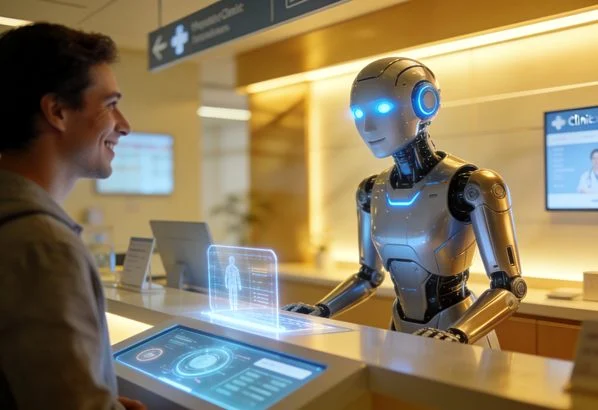
In a strategic pivot that signals a major shift in the communications-as-a-service (CaaS) landscape, Zoom Video Communications has officially announced that its "Zoom Virtual Agent (ZVA) Receptionist" is now available as a standalone product. This development marks the end of an era where advanced AI-driven front-desk automation was tethered strictly to the Zoom Phone ecosystem. By decoupling this tool from its broader telephony suite, Zoom is effectively lowering the barrier to entry for businesses seeking to modernize their customer-facing operations without the logistical and financial headache of a total technology overhaul.
The Evolution of the AI Front Desk: A Chronology of Integration
To understand the significance of this launch, one must look at how Zoom has approached the artificial intelligence space over the past several years. Initially, Zoom’s AI offerings were designed as value-added features intended to encourage customers to migrate their entire communications stack to the "Zoom Phone" platform. The philosophy was one of total ecosystem lock-in: if a business wanted the intelligence of a virtual agent, they had to be part of the Zoom family.
However, market feedback throughout 2025 and early 2026 revealed a persistent friction point. While businesses were eager to deploy AI to handle high-volume inbound calls, many were shackled by multi-year contracts with legacy providers or deeply entrenched on-premises PBX (Private Branch Exchange) systems.
"Rip and replace" strategies—where a company discards its existing infrastructure to adopt a new suite—have become increasingly unpopular in a tighter fiscal environment. Recognizing this, Zoom’s engineering and product teams pivoted their roadmap to focus on interoperability. The development of the standalone ZVA Receptionist began in earnest, focusing on the ability to layer intelligent voice automation over third-party telephony systems via SIP trunking and cloud-based integrations. The official launch this month represents the culmination of this modular strategy, transforming Zoom from a "suite-first" provider into a "solution-first" partner.
The Crisis of Customer Expectations: Why AI Matters
The business case for the standalone ZVA Receptionist is built upon a foundation of sobering industry data. According to internal research conducted by Zoom, the modern consumer’s patience for traditional phone queues has evaporated. The statistics are stark:
- The Stress Factor: 71% of consumers report that the act of calling a business is more stressful than the issue they are actually trying to resolve. This highlights a profound disconnect between business availability and consumer comfort.
- The Churn Risk: Perhaps most alarming for executives is the finding that 50% of consumers would consider switching to a competitor after a single poor experience. In an era of infinite choice, the "front door" of a business—the initial inbound call—has become a make-or-break moment for brand loyalty.
These figures underscore why Zoom is pushing the ZVA Receptionist as a critical utility rather than a luxury. By automating the initial intake process—answering FAQs, routing calls, scheduling appointments, and managing basic inquiries—the AI removes the "waiting room" anxiety that drives customers away.
Official Perspective: Simplifying the Path to AI
Chris Moss, the general manager of Zoom Phone, has been a vocal proponent of this "layering" approach. During the product’s unveiling, Moss emphasized that the primary mission of the standalone agent is to democratize access to high-level automation.
"Businesses shouldn’t have to replace their phone system to benefit from AI," Moss stated. "Every inbound call is an opportunity to serve a customer or nurture a prospect. With the standalone Zoom Virtual Agent Receptionist offering, organizations can quickly add an AI-powered front desk to their existing systems, helping them answer more calls, respond faster, and stay available around the clock."
This sentiment reflects a maturation in Zoom’s corporate strategy. Rather than forcing a "Zoom-or-nothing" ultimatum, the company is positioning itself as a layer of intelligence that can coexist with legacy systems. By doing so, Zoom is effectively positioning its AI not as a competitor to existing telecom providers, but as an optimization layer that sits on top of them.
The Mechanics of Implementation: How It Works
The standalone ZVA Receptionist is designed to be highly flexible. It functions as an intelligent gateway for inbound traffic. When a customer calls, the virtual agent manages the initial interaction. Depending on the complexity of the query, the AI can:

- Resolve: Answer common questions regarding business hours, service availability, or account status using natural language processing (NLP).
- Route: Use intent-based routing to ensure the caller reaches the right human agent the first time, reducing transfer loops.
- Capture: Log details of the call into existing CRM (Customer Relationship Management) platforms, ensuring that human staff are briefed before they even pick up the line.
For industries such as healthcare, legal services, and retail, this capability is transformative. A dental office, for instance, can now ensure that no appointment inquiry goes to voicemail after hours. A legal practice can ensure that potential clients are screened and scheduled without requiring a receptionist to be physically present at a desk 24/7.
Pricing and Accessibility: Lowering the Barrier
Zoom has adopted a competitive pricing structure to ensure that the ZVA Receptionist is accessible to businesses of all sizes, from small boutiques to mid-market enterprises.
- Standard Tier: $29.99 per month for a 100-minute allocation.
- Annual Commitment: $24.99 per month, incentivizing long-term adoption.
- Risk-Free Trial: Zoom is offering a comprehensive free trial program, allowing organizations to integrate the virtual agent into their current telephony environment to test its efficacy before committing to a paid plan.
This pricing strategy is significant. It moves the conversation from "capital expenditure" (CapEx)—which requires board-level approval and long-term planning—to "operating expenditure" (OpEx), which is easily absorbed into a monthly IT budget. By removing the upfront cost of platform migration, Zoom is making it possible for department heads to deploy AI solutions in a matter of weeks, rather than months.
Broader Implications: The Rise of the "Utility AI" Model
The release of the standalone ZVA Receptionist is a harbinger of a broader trend in the Customer Experience (CX) market. We are currently witnessing the end of the "all-in-one suite" dominance. In its place, the industry is moving toward a "best-of-breed" modular architecture.
Interoperability as a Competitive Advantage
In an era where companies are locked into long-term contracts with legacy infrastructure providers, the ability to "plug in" a modern AI layer is a major competitive advantage. Zoom is effectively entering the accounts of its competitors, proving that it can provide value even when it is not the primary phone provider.
AI as a Service, Not a Feature
For years, AI was marketed as a "check-the-box" feature—a small add-on meant to make a platform look modern. Zoom’s latest move proves that AI has graduated to become a standalone utility. Just as businesses pay for cloud storage or cybersecurity as a distinct service, they are now beginning to pay for "conversational intelligence" as a distinct service.
Driving Immediate ROI
Because the ZVA Receptionist can be deployed without replacing the underlying telephony infrastructure, the Return on Investment (ROI) is realized almost immediately. The cost of the agent is easily offset by the labor hours saved by human receptionists, the reduction in customer churn, and the increase in captured leads.
Conclusion: A New Chapter for Zoom
By decoupling its Virtual Agent, Zoom has demonstrated a sophisticated understanding of the modern business environment. The company has recognized that the path to AI adoption is not through disruption, but through integration.
For the small business owner who cannot afford to migrate their entire phone system but needs to stop losing customers to missed calls, this is a game-changer. For the IT manager at a mid-market firm who is tired of answering the same five questions from callers all day, this is a relief. And for the industry as a whole, it is a clear signal that the future of customer experience lies in modular, intelligent, and highly flexible digital tools.
As Zoom continues to iterate on this model, it will be interesting to see which other features from its expansive suite may soon be unbundled. For now, the ZVA Receptionist stands as a testament to the fact that in the world of modern communications, intelligence—not infrastructure—is the ultimate currency.
 Iffa Jayyana
  Raul Delapena Setiawan
  Laily UPN