
 By Nana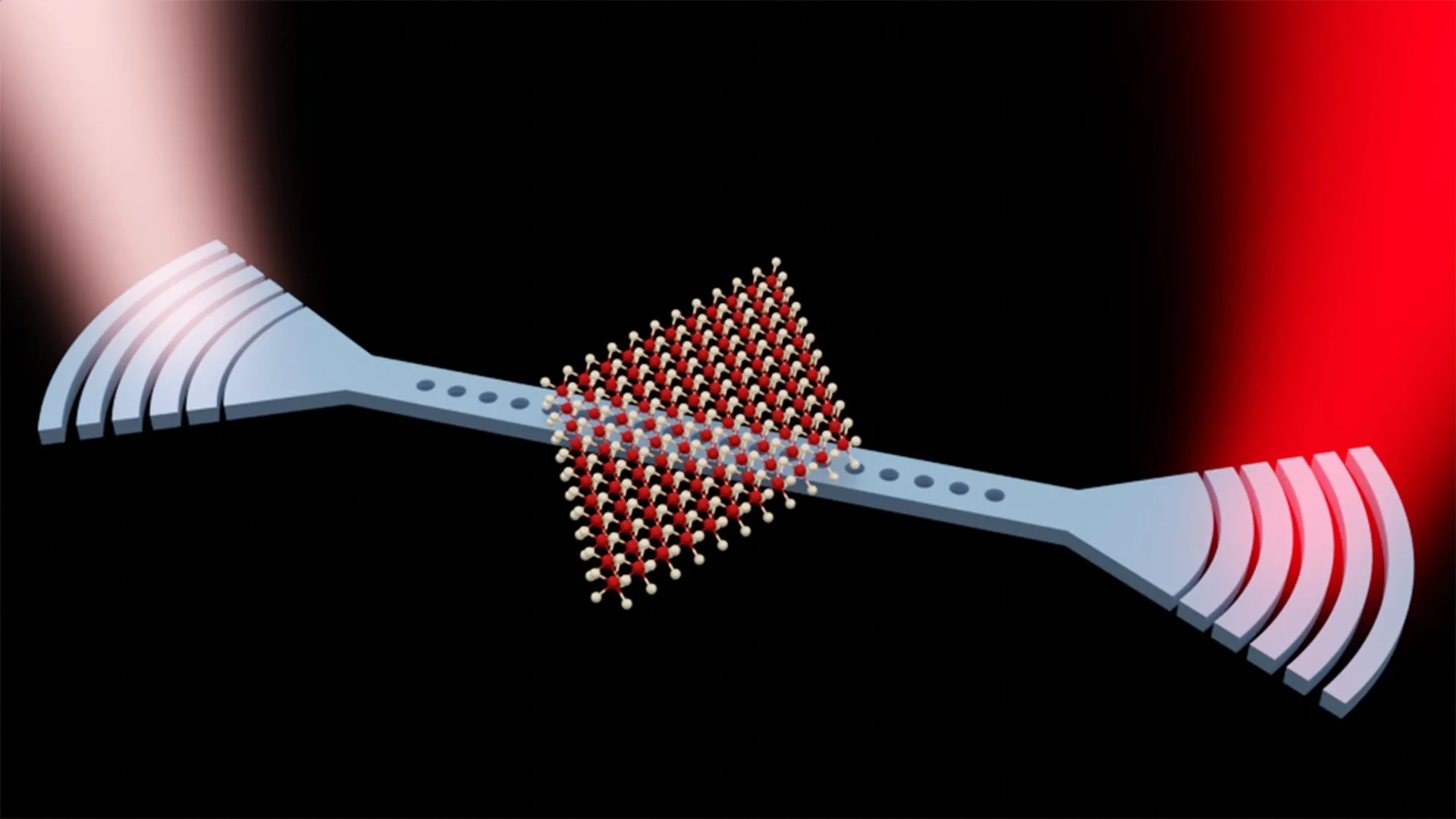
Eighty years ago, the basement of the University of Pennsylvania’s Moore School of Electrical Engineering hummed with the sound of 18,000 vacuum tubes. The Electronic Numerical Integrator and Computer (ENIAC), the world’s first general-purpose electronic computer, was a behemoth that occupied 1,800 square feet and consumed enough electricity to dim the lights of a neighborhood. Today, a device millions of times more powerful fits into a pocket, yet the fundamental principle—the movement of electrons through silicon—remains largely unchanged since the era of J. Presper Eckert and John Mauchly.
However, as the global demand for artificial intelligence (AI) computational power reaches an inflection point, the limitations of the electron are becoming glaringly apparent. In a landmark study published in Physical Review Letters, researchers at the University of Pennsylvania have unveiled a path toward a new paradigm: computing with light. By harnessing the unique properties of quasiparticles known as exciton-polaritons, the team has bridged the gap between the speed of photons and the logic of electronic switching, promising a future of AI hardware that is faster, cooler, and exponentially more efficient.
A Brief Chronology of Computing: From Vacuum Tubes to Photons
The history of computing is a story of miniaturization and efficiency, but it is also a story of physical boundaries.
- 1945: The Electronic Dawn: ENIAC officially debuted, utilizing electronic streams to perform complex mathematical calculations at speeds previously thought impossible. It established the "electronic" paradigm as the standard for all future computing.
- 1947: The Transistor Revolution: The invention of the transistor at Bell Labs replaced fragile vacuum tubes with solid-state devices, enabling the rapid scaling of computing power—a trend described by Moore’s Law.
- 1970s–2010s: The Silicon Era: As transistors shrank to the nanometer scale, electronic computing dominated everything from the desktop PC to the modern smartphone.
- 2020–Present: The AI Bottleneck: The rise of Large Language Models (LLMs) and deep learning has exposed the fragility of the silicon era. Modern GPUs, tasked with processing terabytes of data for AI training, have become massive heat sinks, hitting the "power wall" where energy consumption and thermal dissipation make further scaling difficult.
- 2024: The Photonic Pivot: Researchers led by Bo Zhen at the University of Pennsylvania demonstrate an all-light switching mechanism, potentially ending the eight-decade reliance on pure electronic processing for complex logic.
Why the Electron Has Hit a Wall
To understand why researchers are turning to light, one must understand the inherent limitations of the electron. Electrons possess mass and charge, and when they travel through the intricate copper pathways of a modern computer chip, they face electrical resistance. This resistance does two things: it slows down the processing speed and, crucially, generates waste heat.
In the context of current AI hardware, this heat is not merely a nuisance; it is a fundamental constraint. As AI models require increasingly complex matrices of calculations, the chips must run at higher frequencies, generating even more heat. To prevent hardware failure, engineers must implement massive cooling systems, which in turn consume more electricity. We have arrived at a point where the energy cost of running an AI system is often tied more to the movement of electrons than to the actual logic of the computation.
"Electrons are the workhorses of the information age," says Dr. Bo Zhen, a Jin K. Lee Presidential Associate Professor in the Department of Physics and Astronomy at Penn. "But they are heavy, they interact with everything, and they generate heat. Photons, conversely, are the sprinters of the universe. They are charge-neutral, have zero rest mass, and can travel through space with almost no energy loss."
The Photonic Paradox
The promise of optical computing has existed for decades. Light travels at the speed of the universe, and because photons do not carry a charge, they do not generate the heat associated with electrical resistance. However, there has always been a catch: the "Interaction Problem."
"Because photons are charge-neutral, they barely interact with their environment," explains Li He, co-first author of the study and a former postdoctoral researcher in the Zhen Lab. "This is perfect for fiber-optic communications, where you want to send information across the ocean without it changing. But for computing, you need signals to interact. You need a ‘switch’—a way for one signal to control another to perform logic operations. Because photons don’t naturally bump into each other, they are historically terrible at logic."
For years, researchers have attempted to solve this by creating "hybrid" systems. These systems use light to move data across the chip but then convert that light back into electricity to perform logic or "activation" functions. This conversion process is the Achilles’ heel of modern photonic computing. Every time a signal switches from photon to electron and back again, it incurs a penalty in time and energy.
The Breakthrough: The Exciton-Polariton
The Penn research team, including Zhi Wang and Bumho Kim, sought a middle ground. They focused on a quasiparticle known as an exciton-polariton. This is not a fundamental particle like an electron or a photon, but a hybrid state of matter that exists only under specific conditions.
By trapping photons inside an atomically thin semiconductor material, the researchers forced the light to interact with the electrons of the material. This "strong coupling" creates the exciton-polariton—a particle that possesses the speed and low-energy profile of a photon, but the interactivity of an electron.
Technical Specifications and Energy Efficiency
The significance of this development lies in its efficiency. In their experimental setup, the team demonstrated all-light switching using only 4 quadrillionths of a joule of energy. To put this in perspective, that is a fraction of the energy required to power a single, microscopic LED for a nanosecond. By performing the logic operation entirely within the photonic domain, they eliminated the need for costly light-to-electricity conversions.
"This is the holy grail of photonic computing," says He, who is now an assistant professor at Montana State University. "We are performing non-linear activation—the decision-making step in AI—using light itself. We don’t have to turn it back into an electron to make a decision."
Implications for the Future of AI
The implications for the technology sector, particularly for AI infrastructure, are profound. If this technology can be scaled from the laboratory bench to the manufacturing fab, the landscape of data centers could change overnight.
1. Eliminating the Thermal Ceiling
By reducing the energy cost of logic operations by orders of magnitude, photonic chips could operate with a fraction of the cooling requirements of current GPUs. This would allow for much higher transistor densities and faster processing speeds without the risk of thermal throttling.
2. Native Data Processing
Current cameras and sensors capture images using light, which is then converted into digital data, processed by electronic CPUs/GPUs, and converted back into human-readable light on a screen. A photonic chip could, in theory, process visual data in its native light state. This could revolutionize autonomous vehicle navigation, real-time image recognition, and high-speed surveillance, where every millisecond of latency saved is critical.
3. Toward Quantum Interconnectivity
While the current research focuses on classical AI computing, the use of exciton-polaritons creates a bridge toward quantum computing. The ability to control light at the single-particle level is a prerequisite for quantum information processing. By mastering these quasiparticles, the Penn team has effectively built a foundation that could one day support quantum logic gates on the same architecture as standard AI accelerators.
Official Perspective and Research Support
The study was not conducted in a vacuum; it represents a convergence of high-level physics and practical engineering. Supported by the US Office of Naval Research (N00014-20-1-2325 and N00014-21-1-2703) and the Sloan Foundation, the project underscores the strategic importance of next-generation computing for national security and technological dominance.
"The transition from electrons to light is not just an incremental improvement; it is a fundamental shift in how we approach the limits of physical reality," notes the research team in their paper. "We are moving from an era of pushing heavy particles through wires to an era of steering light through matter."
The Road Ahead
Despite the breakthrough, the transition will not happen overnight. Scaling this technology to produce mass-market chips requires overcoming significant manufacturing hurdles, including the integration of atomically thin materials into existing CMOS (Complementary Metal-Oxide-Semiconductor) fabrication processes.
"We have proven the physics works," says Dr. Zhen. "The challenge now is engineering. How do we build this into a device that can be manufactured by the millions? That is the next great hurdle."
As the world celebrates the 80th anniversary of ENIAC, the spirit of Penn’s researchers remains unchanged: they are once again looking for ways to break the boundaries of what is possible. If the vacuum tube defined the 1940s and the silicon transistor defined the turn of the millennium, the exciton-polariton may well define the next eighty years of human innovation. We are witnessing the end of the electron’s monopoly, and in its place, the dawn of a photonic future.
 Sagoh
Sagoh  Asro
Asro  Siti Muinah