
 By Raul Delapena Setiawan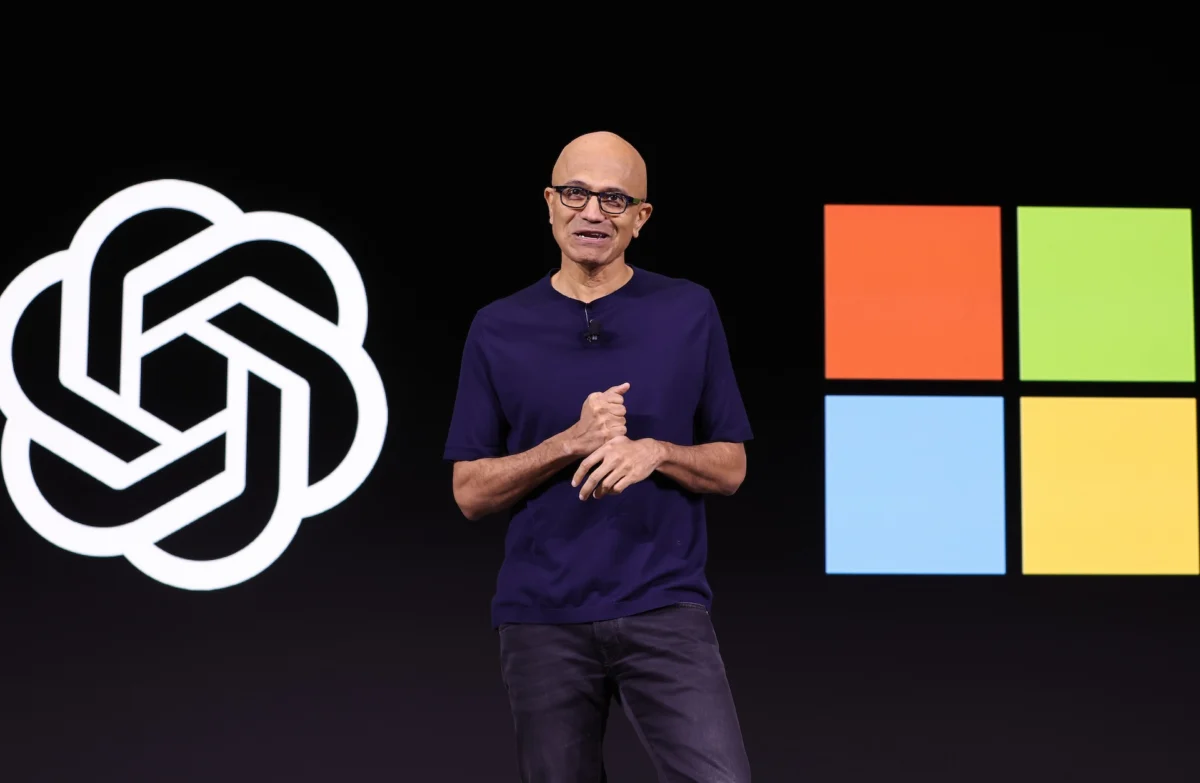
In the rapidly evolving landscape of artificial intelligence, a growing chorus of industry titans and technical skeptics is sounding the alarm on a fundamental flaw in the enterprise AI business model. The fear is no longer just about AI taking jobs; it is about AI labs potentially acting as "Trojan horses" that hollow out the competitive advantages of the very companies paying to use them.
At the heart of this discourse is a provocative new argument from Microsoft CEO Satya Nadella, who suggests that enterprises are being trapped in a "double-payment" cycle. While the initial cost is monetary—token fees for usage—the more insidious cost is the voluntary surrender of proprietary institutional knowledge. As businesses feed sensitive data into black-box models, they are effectively training their own future competitors.
The Anatomy of the "Double-Payment" Paradox
In a blog post that has sent ripples through the tech sector, Satya Nadella articulated a concern that has been brewing behind closed doors for months. "You essentially pay for intelligence twice," Nadella wrote. "Once with money, and again with something even more valuable: the proprietary knowledge you must reveal to make that intelligence useful."
The mechanics of this trap are deceptively simple. To make an AI model effective for a specific business, users must provide context, fine-tune parameters, and supply high-quality data. Most importantly, users provide the "exhaust"—the specific prompts, the iterative corrections, and the problem-solving logic required to refine the model’s outputs.
When a user corrects an AI’s error, that correction is not merely a temporary fix; it is distilled into institutional know-how. For an enterprise, this represents the unique nuance that gives them a market edge. For the model provider, it is a goldmine of training data that can be used to improve the base model, essentially allowing the provider to absorb the collective wisdom of its customer base. Nadella argues that this is "the kind of knowledge a competitor could never buy," and yet, companies are handing it over for the price of a subscription.
A Chronology of Growing Distrust
The skepticism toward proprietary AI labs did not emerge overnight. It has been a slow-building pressure cooker involving several key milestones:
- Early 2025: The first wave of enterprise "AI fatigue" begins as early adopters realize that off-the-shelf models lack the domain-specific precision required for complex workflows.
- February 2026: Anthropic publicly accused Chinese-backed open-source labs of "mining" its Claude models by sending millions of automated prompts to reverse-engineer its capabilities. This sparked a national security debate regarding AI chip exports and model distillation.
- May 2026: High-profile Silicon Valley investors, including Jason Calacanis, began publicly questioning whether the current model-as-a-service (MaaS) paradigm creates a systemic risk where the platform provider inevitably cannibalizes the developer ecosystem.
- July 2026: A surge in traffic data from platforms like Vercel and OpenRouter revealed that nearly 30% of enterprise AI requests were shifting toward open-source or open-weight models, signaling a departure from the "Big AI" status quo.
- August 2026: Satya Nadella publishes his "Reverse Information Paradox" blog post, providing the most significant institutional validation of the move toward decentralized, private AI environments.
The Hypocrisy of "Fair Use" vs. "Distillation"
A central point of contention in Nadella’s critique is the hypocrisy regarding data rights. AI labs have historically defended their right to scrape the open internet—including copyrighted books, articles, and code—under the banner of "fair use" for training purposes. They argue that this is essential for technological progress.
However, when these same labs turn around and impose restrictive terms on "distillation"—the practice of using a model’s output to train a smaller, more efficient, and private model—they are effectively closing the gate behind them. Nadella notes the irony: "While the great innovation that comes from model providers having fair use rights to train models on public data is needed, I find it ironic that the status quo is to then turn around and impose restrictive terms on distillation."
This creates a one-way street: the labs ingest the world’s data, but customers are prohibited from using the labs’ outputs to build their own independent, proprietary systems. For many enterprises, this is becoming an unacceptable bottleneck.
Supporting Data: The Shift to On-Premise and Open Models
The market is already voting with its infrastructure. Idit Levine, CEO of Solo.io, has witnessed a distinct shift in how her enterprise clients approach AI adoption. Her company, which provides the networking and security infrastructure for the Linux Foundation’s Agentgateway project, works with industry giants like SAP, T-Mobile, and ADP.
"After experimenting with proprietary model makers, [enterprises] start asking themselves: ‘Can I take an open-source model and run it on-prem?’" Levine explains. "It will do almost 90% of what the big one is doing. It will cost way less. They understand that, and they can control it."
The data supports this trend. Vercel’s recent reports indicate that open-source models are capturing a significant portion of the routing traffic. This suggests that businesses are no longer content with a single, locked-in vendor. They are building "orchestration layers"—gateways that allow them to swap between models seamlessly. If a proprietary model starts performing poorly or changes its terms of service, the enterprise can switch to a competitor or an internal model without rebuilding their entire application stack.
The Proposed Solution: "Proprietary Learning Environments"
Nadella’s prescription for this predicament aligns with his role as a cloud provider, yet it addresses a genuine pain point for the CIOs and CTOs of the world. He advocates for a three-pronged approach to AI sovereignty:
- Retained Data Ownership: Companies must ensure their legal agreements prevent providers from using their prompts, feedback, and interaction data to train future iterations of the provider’s models.
- Proprietary Learning Environments: Moving away from public, multi-tenant AI endpoints and toward private, isolated environments where the enterprise controls the model weights and the data training cycle.
- Orchestration Layers: Implementing abstraction tools that decouple the application from the model. This "gateway" approach ensures that if a model provider becomes too restrictive or expensive, the company can port its logic to a different provider—or an in-house model—with minimal friction.
Implications for the Future of AI
The warning from the Microsoft CEO—a man whose company is the primary financier of OpenAI and a significant partner to Anthropic—is highly significant. It signals that the "honeymoon phase" of enterprise AI, characterized by reckless experimentation and blind trust in model providers, is over.
The Threat to Model Labs
If the trend toward "on-prem" and open-source models continues, the valuation models of "Big AI" labs may face a correction. If they cannot retain the rights to the data generated by their users, their models may cease to improve at the exponential rates they currently enjoy. This could lead to a future where the base models are commodities, and the real value lies in the private, fine-tuned "distilled" models running within corporate firewalls.
The Rise of the Sovereign Enterprise
We are entering an era of "Sovereign AI." Large enterprises are treating their AI strategy with the same rigor they apply to their cybersecurity or data centers. They are no longer willing to treat the cloud as a black box. Instead, they are demanding transparent, controllable, and portable intelligence.
The Human Capital Shift
As companies move toward on-premise AI, the demand for AI engineers who can manage local model deployments will likely surge. The focus will shift from "prompt engineering" (trying to coax a black-box model into doing the right thing) to "model engineering" (training, fine-tuning, and maintaining local weights).
Conclusion: A Turning Point for Corporate Strategy
Satya Nadella’s stance marks a pivotal moment in the history of the current AI boom. By framing the issue as one of "intelligence ownership," he has provided a rallying cry for enterprises to reclaim their data. "In consuming intelligence, you are creating intelligence," Nadella writes. "And what you create should belong to you."
As the dust settles, the companies that succeed will be those that view AI not as a service to be rented, but as a core technology to be integrated, owned, and defended. The era of the "Trojan Horse" AI model appears to be facing its end, replaced by a more pragmatic, security-conscious, and independent approach to the future of machine learning. For the enterprises of the world, the message is clear: trust, but verify—and above all, keep your proprietary data to yourself.
 Sagoh
Sagoh  Iffa Jayyana
  Lina Hope