
 By Sagoh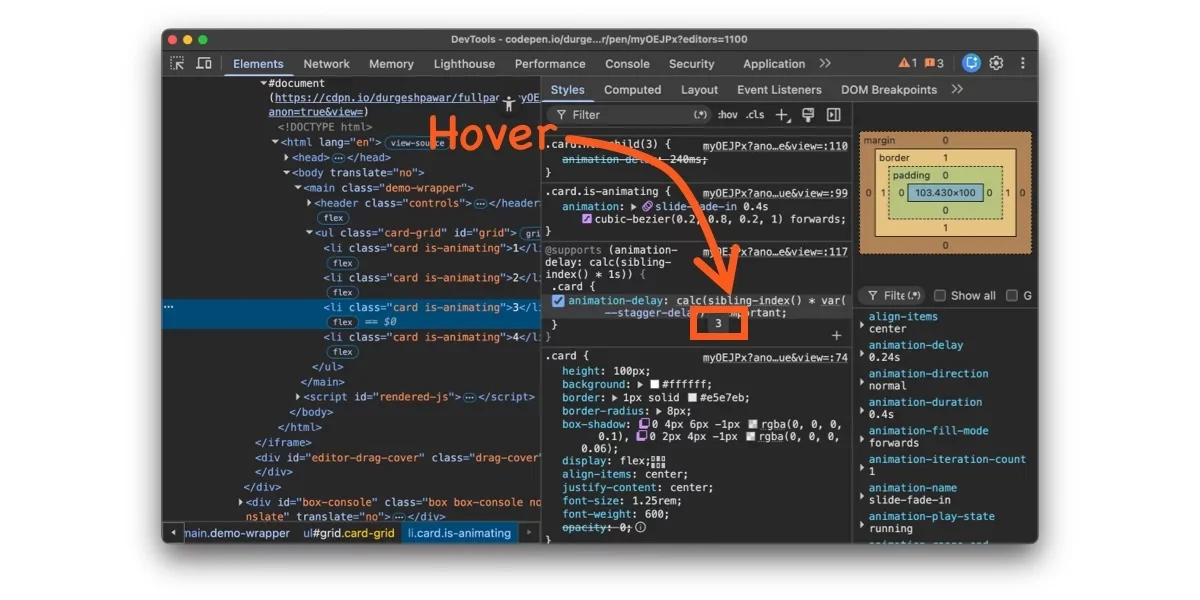
For over two decades, web developers have grappled with a fundamental limitation in Cascading Style Sheets (CSS): the language was "blind" to the structural context of the DOM tree it was styling. While a developer could select an element based on its position—using the :nth-child() selector—they could never extract that position as a numerical value to be used in calculations.
This era of architectural blindness is officially ending. With the introduction of sibling-index() and sibling-count(), CSS has finally gained "tree-awareness," allowing developers to write a single line of code that performs tasks previously requiring complex Sass loops or heavy JavaScript workarounds.
Main Facts: A New Era of Mathematical CSS
The sibling-index() and sibling-count() functions are the newest additions to the CSS Values and Units Module Level 5. At their core, these functions provide a bridge between the document structure and the styling engine.
Defining the Functions
sibling-index(): This function returns an integer representing the position of the current element among its siblings. Crucially, it is 1-indexed, meaning the first child returns1, the second2, and so on.sibling-count(): This function returns the total number of sibling elements within the same parent container.
Why This Matters
Historically, if a developer wanted to create a staggered animation—where ten cards fade in one after another—they had two sub-optimal choices. The first was to "hardcode" the index for every single element using :nth-child() selectors:
li:nth-child(1)  --idx: 1;
li:nth-child(2)  --idx: 2;
/* ...repeat for every possible item... */
This approach is brittle; if the list grows from 10 to 11 items, the CSS fails unless pre-emptively updated. The second option was to use JavaScript to inject inline styles (e.g., element.style.setProperty('--index', i)). While functional, this mixes concerns, forcing the browser’s scripting engine to handle what should be a purely visual layout concern.
The new functions resolve this by returning a true <integer>. Because the result is a number rather than a string, it can be passed directly into calc(), clamp(), and even trigonometric functions like sin() and cos(). This allows for a "set-and-forget" approach:
li
  animation-delay: calc(sibling-index() * 100ms);
This single line of code works whether the list contains five items or five thousand.
Chronology: From W3C Proposal to Browser Implementation
The journey of tree-counting functions from a theoretical "wish list" to a browser-shipped feature has been a multi-year process involving rigorous debate within the World Wide Web Consortium (W3C).
The Genesis (2020–2022)
The proposal for these functions was formally introduced in the CSS Working Group (CSSWG) issue #4559. The discussion was driven by a growing consensus that the "O(N)" strategies used by CSS engineers—legitimately clever hacks that used dozens of selectors to approximate tree counting—were a sign of a missing primitive in the language.
Approval and Specification (2023–2024)
After substantial debate regarding naming conventions and potential performance impacts, the CSSWG approved the functions for inclusion in the Level 5 Values and Units specification. The group decided that the functions should take no arguments in their initial version, focusing on providing the raw index and count of all sibling elements.
The Shipping Milestone (June 2025)
The technical landscape shifted dramatically in mid-2025. Google Chrome 138 and Microsoft Edge 138 were the first to ship the functions in their stable releases. Shortly thereafter, Apple followed suit with Safari 16.2 (via WebKit).
As of late 2025, Mozilla Firefox remains the final major holdout, though the company’s "standards position" is officially positive. Development is currently being tracked under Bugzilla issue #1953973, with implementation expected in the coming release cycles.
Supporting Data: Practical Applications and Technical "Gotchas"
The power of sibling-index() is best demonstrated through the complex layouts it simplifies. By treating the DOM position as a variable, developers can create adaptive interfaces that were previously impossible with pure CSS.
1. Dynamic Radial Layouts
Distributing items in a circle once required complex JavaScript coordinate calculations. With native CSS trigonometry and sibling-index(), it becomes a matter of simple math:
.radial-item
  --angle: calc((360deg / sibling-count()) * sibling-index());
  left: calc(50% + 120px * cos(var(--angle)));
  top: calc(50% + 120px * sin(var(--angle)));
If the developer adds a sixth or seventh item to the HTML, the circle automatically adjusts its spacing to maintain a perfect geometric shape.
2. Proportional Widths and Hue Shifts
The sibling-count() function allows for automatic grid-like behavior without the overhead of Flexbox or Grid in specific scenarios. For example, a tab bar can ensure every tab is perfectly sized: width: calc(100% / sibling-count());. Similarly, background colors can be distributed evenly across the color wheel using hsl() and the index, creating a perfect rainbow spectrum regardless of the number of items.
Technical Limitations and "The Sneaky Banana" Problem
Despite its power, the implementation has specific behaviors that developers must account for:
- The
display: nonePitfall: One of the most significant "gotchas" discovered during early testing is thatsibling-index()reads the DOM tree, not the layout tree. If a list of three items has the second item set todisplay: none, the third item still returns an index of3. It does not "slide up" to index2. This means that filters that hide elements visually will leave gaps in staggered animations or mathematical layouts. - Shadow DOM Scoping: For security and encapsulation,
sibling-index()cannot see across Shadow DOM boundaries. If a web component projects "Light DOM" content into a slot, the function only sees the internal shadow tree structure. This prevents external CSS from "probing" the internal complexity of third-party components. - Pseudo-element Behavior:
::beforeand::afterare not considered siblings in the DOM. However, if a function is used within a pseudo-element’s declaration, it correctly references the index of the originating element.
Official Responses: Security, Performance, and Philosophy
The CSS Working Group’s decision-making process during the development of these functions highlighted two primary concerns: security and performance.

On Security and Privacy
There were initial concerns that tree-counting could be used for "CSS-based fingerprinting" or to leak information about the structure of a page to malicious stylesheets. The W3C addressed this by strictly scoping the functions. By returning 0 when a stylesheet attempts to use ::part() to access internal component indexes, the browser ensures that component encapsulation remains intact.
On Engine Performance
Critics of the proposal argued that recalculating the index for thousands of elements every time a node is added to the DOM could cause "jank" (stuttering) in the browser. In response, browser engineers optimized the cascade phase. While inserting an element at the start of a 10,000-node list does trigger a recalculation, doing so within the CSS engine is significantly more efficient than the equivalent JavaScript loop, which requires multiple trips between the DOM and the scripting engine.
Implications: The Future of Browser-Native Logic
The introduction of sibling-index() and sibling-count() signals a broader shift in the philosophy of web development. We are moving away from "JS-heavy" layouts and toward a "CSS-first" mentality.
Reduction in Bundle Sizes
As these functions reach "Baseline" status (full support across all major browsers), the need for animation libraries and utility scripts will diminish. This results in smaller JavaScript bundles, faster "Time to Interactive" (TTI) scores, and more resilient codebases.
Future Extensions: The of <selector> Syntax
The most anticipated update to this feature is the planned of <selector> argument (tracked in CSSWG issue #9572). This would allow developers to write sibling-index(of .active), which would return the index only among siblings that match the .active class. This would solve the "display: none" problem, allowing for truly dynamic, filtered layouts that maintain sequential numbering.
Accessibility Warning
Experts warn that while these functions are a boon for visual design, they do not change the underlying semantics of the page. A list reordered visually via sibling-index() math will still be read in its original source order by screen readers. Developers must remain vigilant in ensuring that visual "magic" does not come at the cost of an accessible user experience.
In conclusion, sibling-index() and sibling-count() are more than just convenience functions; they represent the browser finally sharing its internal knowledge with the developer. By closing the gap between the DOM structure and the style layer, CSS has become a more logical, powerful, and independent language.
 Nana Wu
  Nana
Nana 