
 By Evan Lee Salim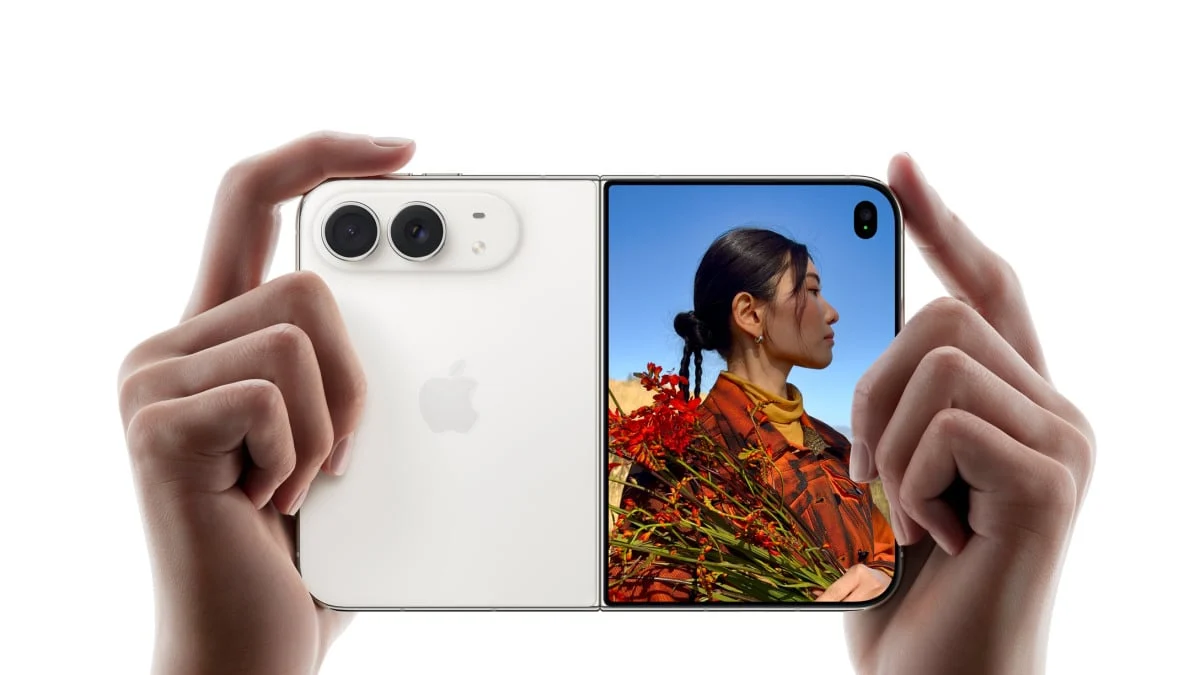
By Tech Desk Staff
Published September 20
Apple’s September hardware event delivered the monumental, long-awaited paradigm shift many industry analysts and consumers have spent half a decade anticipating: the official unveiling of the company’s first foldable smartphone, the iPhone Duo.
Positioned comfortably at the apex of Apple’s mobile hierarchy, the iPhone Duo is simultaneously the most exciting and the most financially punishing device released during the company’s autumn showcase. Starting at a staggering $1,999 for the base configuration and skyrocketing up to $3,199 for the maximum 2TB storage variant, it comfortably breaks new financial ceilings for mainstream consumer electronics.
Yet, for all its futuristic engineering, flexible mechanics, and jaw-dropping price tag, the iPhone Duo comes with a dizzying array of hardware compromises. Early prospective buyers navigating the pre-order pages for the iPhone 18 Pro, iPhone 18 Pro Max, and the new foldable are quickly realizing a bitter pill: paying top dollar for Apple’s cutting-edge folding form factor means deliberately missing out on a vast suite of the company’s best mobile innovations this year.
Main Facts: What the iPhone Duo Is—and What It Lacks
The iPhone Duo represents Apple’s maiden voyage into the foldable hardware market, a space previously pioneered and heavily iterated upon by competitors like Samsung, Google, and OnePlus. At its core, the Duo is a dual-screen marvel that merges the pocketability of a standard smartphone with the sprawling digital workspace of a small tablet.
However, structural engineering constraints, thermal management, and battery footprint realities have forced Apple to make sweeping concessions. When placed side-by-side with the standard slab-form iPhone 18 Pro and Pro Max, the foldable iPhone Duo falls remarkably short across several vital categories:
- Camera System: The Duo lacks a dedicated telephoto lens, leaving users with a restricted 0.5x to 2x zoom range. It also foregoes variable aperture control, ProRAW capabilities, Spatial photo and video recording, and advanced Pro Controls.
- Biometrics: Eschewing the ubiquitous Face ID system found on nearly all modern flagship iPhones, the Duo relies exclusively on Touch ID and Apple Watch integration.
- Audio & Sensors: The studio-quality four-microphone array and the high-precision LiDAR scanner found on the 18 Pro series are entirely absent from the Duo.
- Software & Verification: The newly introduced Apple Reference Image verification tool—designed to combat AI-generated media—is restricted strictly to the 18 Pro tier.
- Hardware Customization: The device drops the programmable Action button, offers a smaller-megapixel external selfie camera, comes in a severely limited two-color palette, and is exclusively bound to a global eSIM-only architecture.
Chronology: The Road to the Foldable Compromise
The Years of Speculation (2019–2023)
For years, Apple’s engineering teams watched quietly from the sidelines as the foldable market matured. While competitors rushed out first-generation folding devices plagued by creased displays, fragile hinges, and exorbitant pricing, Apple maintained a strict research-and-development posture. Rumors continually surfaced in supply chain reports regarding prototype folding iPads and iPhones, but Apple repeatedly prioritized perfecting slab-design ergonomics, OLED efficiency, and the integration of Dynamic Island and Face ID.
The Proliferation of the "Pro" Standard (2023–2025)
By the time the iPhone 15 and subsequent 16 and 17 generations rolled out, Apple had firmly established its Pro series as the definitive home for professional-grade features. The introduction of the customizable Action button, massive camera sensor upgrades, ProRes video recording, and sophisticated spatial audio tracking cemented the "Pro" branding not just as a marketing term, but as a technological differentiator.
The September Showcase Shock (September 2026)
At the annual September hardware event, Apple finally pulled back the curtain on the iPhone Duo. While the applause for the folding mechanism was loud, the technical specifications sheet released immediately following the keynote sent ripples of disbelief through the enthusiast community. The realization that a device costing double the price of a standard flagship omitted fundamental hardware components—such as the telephoto lens and Face ID—marked a significant turning point in how consumers view ultra-premium pricing structures.
Supporting Data: Feature Breakdown Comparison
To truly understand the value proposition of the iPhone Duo versus the iPhone 18 Pro series, one must look closely at the hardware disparity. The following data highlights the exact functional gaps between Apple’s foldable flagship and its traditional Pro counterparts:
| Feature Category | iPhone 18 Pro / Pro Max | iPhone Duo ($1,999 – $3,199) |
|---|---|---|
| Form Factor | Standard Slab / Rigid Display | Foldable Dual-Screen |
| Biometric Authentication | Face ID (TrueDepth Camera) | Touch ID & Apple Watch Unlock |
| Physical Controls | Programmable Action Button + Volume/Power | Volume & Power Only (No Mute Switch) |
| Rear Telephoto Lens | 4x and 8x Optical Zoom Options | None (0.5x to 2x range only) |
| Aperture Control | Variable Aperture on Primary Camera | Fixed Aperture |
| Camera Software Suite | Pro Controls, ProRAW, Spatial Media | Basic Capture Modes Only |
| Audio Hardware | Studio-Quality 4-Mic Array | Standard Dual-Mic Array |
| Depth & Spatial Sensing | LiDAR Scanner Included | Omitted |
| AI Verification | Apple Reference Image Tool | Not Supported |
| Color Options | Glacier, Burgundy, Space Black, Silver | Night Sky (Dark Blue), White |
| SIM Architecture | Regional Physical/eSIM Options | eSIM-Only Worldwide |
The Selfie Paradox
One of the most fascinating engineering ironies of the iPhone Duo lies in its camera capabilities. On paper, its outer display features a modest 12-megapixel Center Stage selfie camera, falling short of the 18-megapixel sensor found on the iPhone 18 Pro series. Furthermore, the under-display internal front camera is widely assumed to be similarly modest.
However, the physics of a foldable device create an unexpected loophole. Because the outer display can function as a live viewfinder while the device is unfolded, users can easily snap selfies using the primary "rear" camera sensors. For mobile creators willing to navigate this slightly unconventional workflow, the resulting image quality easily outclasses the dedicated front-facing cameras on the iPhone 18 Pro.
Official Responses and Industry Perspectives
Apple executives have historically defended hardware omissions in first-generation form factors by pointing to the intense physical constraints of miniaturization. In background briefings following the September event, company representatives emphasized that balancing battery density, structural hinge durability, and thermal dissipation left zero internal volume for components like a periscope telephoto lens or a dedicated LiDAR scanner.
Industry analysts, however, have offered more varied interpretations.
"Apple is effectively running two parallel product strategies," notes tech market analyst Sarah Jenkins. "With the iPhone 18 Pro, they are maximizing traditional computational photography and rugged utility. With the iPhone Duo, they are selling the pure fantasy of form-factor innovation. They know early adopters will pay a luxury tax for the folding screen alone, regardless of what internal features get stripped away to make it fit."
Consumer advocacy groups and photography forums have been less forgiving. The omission of the Apple Reference Image tool—a critical step forward in validating authentic media integrity in an era saturated by synthetic AI imagery—has drawn particular ire. Critics argue that a device marketed toward high-end luxury consumers and enterprise professionals should not lack fundamental security and authenticity verification tools.
Implications: Who is the iPhone Duo Really For?
The release of the iPhone Duo forces a fundamental psychological shift for Apple’s most dedicated consumer base. For years, the unwritten rule of consumer electronics was simple: the more expensive the device, the more comprehensive the feature set. If you bought the most expensive model, you received the absolute pinnacle of what the manufacturer was capable of producing.
The iPhone Duo shatters this contract. It introduces a bifurcated ecosystem where buyers must consciously choose between form and function.
The Case for the Foldable Pioneer
For enterprise executives, tech enthusiasts, and mobile-first multitaskers who prioritize screen real estate, split-screen productivity, and jaw-dropping design novelty, the iPhone Duo delivers an unmatched tactile experience. For these users, the absence of a telephoto lens or an Action button is a minor trade-off compared to the utility of carrying a pocket-sized tablet.
The Case for the Pragmatist
Conversely, mobile photographers, videographers, and power users who depend on spatial media production, ProRAW workflows, absolute audio fidelity, and biometric convenience via Face ID will find the iPhone Duo to be a deeply frustrating regression. For these buyers, the iPhone 18 Pro Max remains the undisputed flagship device, offering superior capabilities at a substantially lower price point.
Ultimately, the iPhone Duo is a bold, albeit compromised, opening salvo. It proves that Apple can successfully engineer a folding screen that meets its aesthetic standards, but it also signals that the path to a "compromise-free" foldable iPhone is still several generations away.
 Layla Zulfa
  Asro
Asro  Reynand Wu