
 By Asep Darmawan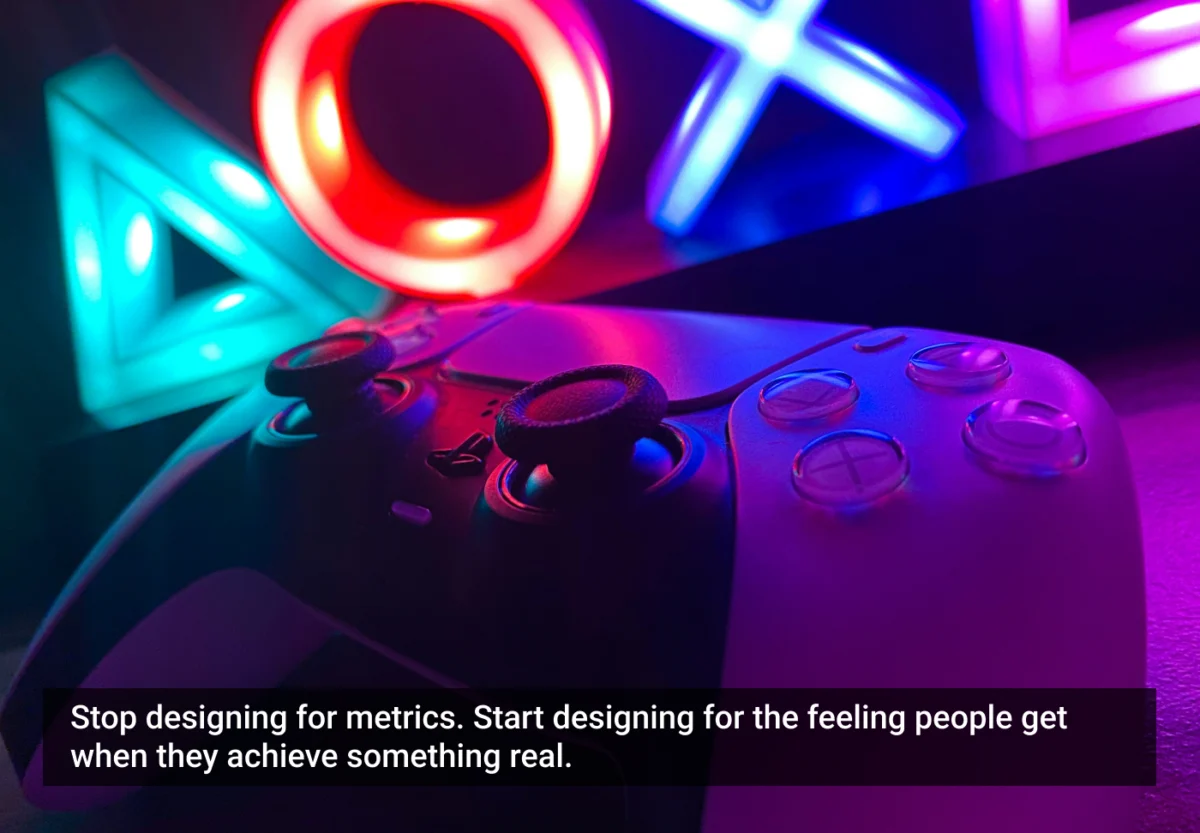
SAN FRANCISCO — For decades, the digital product playbook has relied on a predictable, albeit cynical, formula. Whether designing a fitness tracker, a language-learning app, or a project management suite, product managers borrowed a page directly from behavioral psychology laboratories: ring the bell, hand out the pellet, and watch the Daily Active Users (DAU) skyrocket.
Streak counters, arbitrary leaderboards, guilt-inducing push notifications, and superficial progress bars became the ubiquitous currency of modern software design. But as the digital landscape matures, a profound reckoning is underway. A growing chorus of UX designers, psychologists, and software architects are declaring the era of shallow engagement dead. The movement toward what industry insiders are calling "Gamification 2.0" is not merely a design trend; it is a philosophical realignment that asks product teams to stop treating users like laboratory rats and start designing for human dignity.
Main Facts: The Evolution of Play and the Trap of Metrics
At its core, the critique of traditional gamification is simple: modern apps have mistaken the shallow mechanics of games for their profound psychological engine.
While the video game industry has evolved over decades from 8-bit arcade cabinets to photorealistic, emotionally resonant cloud masterpieces, corporate software has largely remained stuck in the 1950s behaviorist paradigm of B.F. Skinner. People do not play games because they award points or leverage fear-of-missing-out (FOMO) tactics about broken streaks. They play games because games create experiences worth having—experiences that cultivate a sense of capability, creativity, and connection.
Traditional gamification flips this dynamic entirely. Instead of making an application genuinely useful or enjoyable, it layers on a veneer of manipulation designed strictly to drive short-term retention metrics. When an app relies on anxiety-inducing mechanics—such as holding a user’s 200-day streak hostage at 11:47 PM—it crosses the line from engagement to exploitation.
Gamification 2.0 posits a radical alternative: if a gamification strategy does not make an application intrinsically more worth using, it is not gamification at all. It is simply manipulation wrapped in a game aesthetic.
Chronology: From Arcade Cabinets to the Attention Economy
To understand how the software industry arrived at this crossroads, it is helpful to trace the trajectory of interactive media over the last half-century.
The Era of Intrinsic Value (1970s–1990s)
In the formative decades of video games, success was entirely dependent on the quality of the experience. Arcades required physical quarters, meaning games had to be immediately engaging, fair, and mechanically satisfying to survive. Home consoles like the NES and PlayStation rewarded players with mastery, narrative immersion, and genuine skill acquisition.
The Rise of the Attention Economy (2000s–2010s)
As the internet transitioned from static pages to interactive web applications and mobile ecosystems, the metric of success shifted. Venture capital funding and advertising models demanded constant, repeatable engagement. Product teams discovered that behavioral conditioning loops—variable reward schedules popularized by slot machines and social media feeds—could artificially inflate retention dashboards.
The Fatigue and Awakening (Late 2010s–Present)
By the late 2010s and early 2020s, digital fatigue reached a boiling point. Users increasingly reported a lingering sense of emptiness and self-loathing upon closing their apps—a visceral realization that they had spent hours feeding a streak counter for rewards that held no real-world value. This friction catalyzed the foundational principles of Gamification 2.0, champions of which argue that sustainable long-term value can only be built on intrinsic motivation, not extrinsic bribes.
Supporting Data and Industry Case Studies
The contrast between extractive design and respectful design is vividly illustrated by the applications that dominate long-term user loyalty without relying on traditional compulsion loops.
| Design Paradigm | Core Objective | Primary Mechanics | Typical User Emotional State |
|---|---|---|---|
| Traditional Gamification (1.0) | Maximize DAU & Retention | Streaks, leaderboards, points, arbitrary badges | Anxiety, guilt, relief, self-loathing |
| Gamification 2.0 | Foster Mastery & Utility | Creative sandboxes, meaningful progression, skill-building | Joy, curiosity, pride, accomplishment |
Industry giants that have achieved generational longevity—such as Minecraft, Roblox, and Notion—share a common thread: they do not rely on sophisticated reward schedules or calibrated streak mechanics. Instead, they provide authentic utility and deep agency.
- Minecraft rewards players not with digital trophies, but with the tangible pride of constructing elaborate worlds that did not exist prior to their effort.
- Notion provides flexible, powerful tools that respect the user’s intelligence and time, making organization its own reward.
Conversely, psychological research into behavioral loops demonstrates that while "Dark Patterns" and artificial urgency can drive short-term metrics up, they consistently degrade brand trust over time. Users eventually abandon apps utilizing shallow gamification, not because the mechanics failed to manipulate them, but because being treated like a lab rat fundamentally feels unpleasant.
Official Responses and Industry Perspectives
The shift toward Gamification 2.0 is prompting difficult conversations within product development circles. For years, growth hackers and product managers were trained exclusively in A/B testing, conversion funnels, and metric optimization. Asking these teams to pivot toward optimizing for "genuine user satisfaction" introduces variables that are notoriously difficult to quantify on a quarterly dashboard.
"It is deeply uncomfortable for growth-oriented teams," notes one senior UX architect who spoke on the condition of anonymity. "You are asking them to measure long-term value creation rather than immediate engagement spikes. But the apps that survive market saturation are precisely the ones that stop trying to trick their users."
Independent game developers and interaction designers have long pointed out the condescending nature of corporate gamification. Where a well-designed video game says, "You are intelligent, and here is a complex challenge that will test your capabilities," corporate software often implies, "You are a metrics-driven automaton whose behavior can be shaped through primitive reinforcement."
Gamification 2.0 advocates argue that modern software must adopt the former ethos. Before implementing any gamifying feature, product teams are increasingly encouraged to ask a litmus-test question: "Would someone who plays real, expertly designed games find this engaging, or would they see through it immediately?"
Implications for the Future of Software Design
The transition away from manipulative engagement loops carries profound implications for product development, ethical tech regulation, and consumer psychology.
1. A Redefinition of "Success Metrics"
As users grow increasingly savvy to psychological manipulation, dashboard metrics like DAU and raw screen-time will lose their supremacy. Forward-thinking companies will need to develop new frameworks for measuring success—metrics centered around user autonomy, skill acquisition, and subjective well-being.
2. Tailored Motivations Over Universal Algorithms
Current gamification often treats human motivation as a single, universal algorithm, applying the same points-and-badges approach to everyone. Gamification 2.0 recognizes that different users require entirely different paradigms: strategy players seek systems mastery, puzzle solvers crave insights, and creative explorers demand open-ended sandboxes. Software will need to respect these varied psychological profiles rather than forcing all users down a single, linear treadmill.
3. The Return of Dignity in Digital Spaces
Ultimately, the stakes of this design revolution transcend business analytics. They touch upon how humans spend the finite hours of their lives. When a user closes an application designed under Gamification 2.0 principles, they should not feel the hollow shame of an artificially maintained streak. They should feel proud of what they have learned, grateful for the capabilities they have developed, and eager to apply those skills to their actual lives.
We are not Pavlov’s dogs, salivating at bells and pressing levers for digital food pellets. We are humans seeking meaning, mastery, and connection. As Gamification 2.0 takes root, the message to product designers is clear: stop designing for the metrics, and start designing for the player.
Featured image courtesy: Cash Macanaya.
 Ammar Sabilarrohman
  Neng Nana
  Sagoh
Sagoh 